
Moru Kopjes Guide
A guide to the Moru Kopjes in the central-southern Serengeti — the dramatic granite outcrops famous for lions and rock art, one of the park's last rhino strongholds, and how Moru fits a central-southern game drive.

Photo: Kinyua Seaman / Unsplash
- ✓The Moru Kopjes are a cluster of dramatic granite outcrops on the central-southern Serengeti plains, south-west of Seronera — among the most scenic landmarks in the park.
- ✓They are classic lion country: prides use the rocks as lookout, shade and den sites, making Moru one of the better places to find big cats lounging on the kopjes.
- ✓Moru holds Maasai rock-art paintings and a natural 'gong rock', a rare cultural layer in a wilderness park.
- ✓The Moru area is part of the Serengeti's protected rhino range, one of the last places in the ecosystem where black rhino survive.
- ✓It slots naturally into a central-southern game drive from Seronera, especially when the migration is on the southern plains.
Where the plains rise into stone
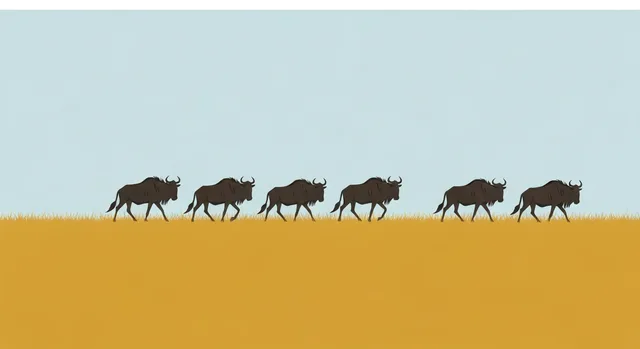
Out on the central-southern Serengeti, south-west of the Seronera valley, the endless grass is interrupted by one of the park's most striking landmarks: the Moru Kopjes. These are kopjes — 'little heads' in Afrikaans — great rounded domes and balanced boulders of ancient granite that push up through the plain like islands in a green sea. They are some of the largest and most photogenic outcrops in the Serengeti, and standing among them, with the grass running flat to every horizon and the warm rock at your back, is one of the quiet pleasures of a central-southern drive.
Moru is more than scenery, though. It is a landmark with layers — wildlife, geology and human history folded together in a way that is rare in a wilderness this vast. Lions own the rocks, rhino haunt the surrounding range, and the kopjes themselves carry the painted marks and ringing stones of the Maasai who once moved through this country. Few single places in the Serengeti reward a slow morning quite like Moru.
This guide covers what makes the Moru Kopjes special — the cats, the rhino, the rock art — and how to fold them into a central-southern game drive, with the honest expectations the Serengeti always asks you to pack.
Lions, rhino and rock art
The first reason to come to Moru is the cats. Kopjes are prime lion real estate: the rocks give shade in the heat, a commanding lookout over the plains, and safe den sites for cubs among the boulders. The Moru prides are well known for using the outcrops exactly this way, so a slow circuit of the kopjes in the cool of early morning or late afternoon is one of the better ways in the southern Serengeti to find lions draped across warm granite. Leopard use the cover too, and the rocks shelter smaller residents from hyrax to klipspringer.
Moru's second distinction is rarer and more precious. The area lies within the Serengeti's protected rhino range, one of the last refuges in the whole ecosystem for black rhino, a species poaching pushed to the brink. Their numbers are small and closely guarded, and a sighting is genuinely uncommon — but the fact that Moru is part of the country where they hold on gives the place a particular gravity. As ever, treat any rhino sighting as a rare privilege, never an expectation.
The third layer is human. Tucked among the Moru rocks are Maasai rock paintings — ochre-red and white figures and shields on a sheltered rock face — and a 'gong rock', a boulder that rings like a bell when struck, used in Maasai ceremony. In a park defined by wilderness, these marks are a reminder that people have moved through and held this land for a very long time. A guide who knows the site can take you to the paintings and tell their story.
- Lions: prides use the kopjes for shade, lookout and dens — a reliable spot for cats on the rocks.
- Rhino: Moru lies in the Serengeti's protected rhino range, a last black-rhino stronghold — sightings rare and never guaranteed.
- Rock art: Maasai ochre paintings and a ringing 'gong rock', a rare cultural layer in the park.
- Wildlife extras: leopard in the cover, plus hyrax, klipspringer and raptors around the rocks.
Moru Kopjes at a glance
A quick orientation card. Treat any seasonal note as a long-term average and confirm specifics — access, current park fees, and whether the rock-art site is open — with your operator and official sources close to travel, since these shift and we deliberately avoid quoting figures that go stale.
- Location: central-southern Serengeti, south-west of Seronera, on the open plains.
- Known for: granite kopjes, lions on the rocks, black-rhino range, and Maasai rock art with a gong rock.
- Best paired with: a central-southern game drive from Seronera, especially when the herds are on the southern plains.
- Best season: rewarding year-round for resident lions; the southern calving months (≈ January–March) add migration drama nearby.
- Getting there: by road on a game drive from Seronera, or fly-in to a central/southern airstrip then drive.
- Verify before visiting: access and any rhino-range or rock-art restrictions, plus current fees.
How Moru fits a central-southern game drive
Moru is not a place you fly into so much as a place you drive to — a highlight to build a morning or a day around from a central or southern base. The natural launch point is Seronera, the park's central hub, from which the Moru Kopjes lie out to the south-west, an easy game-drive distance across the plains. A common shape is to head out in the cool early light, work slowly around the kopjes for the lions, take in the rock art, and let the open country between deliver plains game, cheetah on the flats and birds along the way.
Timing pairs beautifully with the migration. When the herds are on the southern plains for the calving season, roughly January to March, the country around Moru fills with wildebeest and the predators that follow them, turning a scenic kopje circuit into a front-row seat on the year's most intense big-cat action. Treat those months as a long-term average — the migration follows rain, not a calendar — and verify the likely herd position for your exact dates. Outside calving, the resident Moru lions make the kopjes worth the drive in any season.
Build it into a wider trip the way the Serengeti rewards: a base in the centre or south, slow mornings and evenings rather than long transit days, and a guide who knows where the prides lie up and how to reach the rock art. Done that way, Moru becomes one of those unhurried, layered mornings — cats on the rocks, rhino country around you, ancient paintings in the stone — that stay with you long after the trip.
Common questions about the Moru Kopjes
Where are the Moru Kopjes? In the central-southern Serengeti, south-west of Seronera, out on the open plains — an easy game-drive distance from the central hub.
Why visit Moru? For the dramatic granite kopjes and the lions that lounge on them, the rare black-rhino range around the area, and the Maasai rock art with its ringing 'gong rock' — an unusual blend of wildlife, geology and human history.
Will I see rhino? Probably not — black rhino here are few and closely protected, and sightings are uncommon and never guaranteed. Treat any glimpse as a rare privilege, and come for the lions and the landscape.
When is the best time? Resident lions make Moru rewarding year-round; the southern calving months (roughly January–March) add migration drama nearby. Verify the likely herd position for your exact dates.
How do I visit? On a game drive from a central or southern base such as Seronera. Fly-in travellers land at a central or southern airstrip and drive out from there.
Related guides

Serengeti Kopjes: Islands of Rock on the Endless Plain
Why the Serengeti's granite kopjes matter — ancient rock islands that shelter lions, leopards and cheetahs, store water and shade, and give the plains their most photogenic structure. Where to find them and how to watch them.
Read guide
Seronera & Central Serengeti
Seronera is the year-round big-cat heart of the Serengeti — a valley of rivers, granite kopjes and riverine figs where lions, leopards and cheetahs hold ground in every season. A full guide to what central Serengeti offers, its lodge and airstrip access, the crowd trade-off and how to plan a stay.
Read guide
Lions in the Serengeti
A guide to Serengeti lions — pride structure, the kopjes they hold as territory, how and when they hunt, the best sectors and seasons, and how to watch them ethically without scheduling a kill that no one can promise.
Read guideMore in Park Areas
6
Best Serengeti Area for a First Safari
A first-timer's decision guide to the Serengeti's sectors — central Seronera, the southern plains, the Western Corridor and the far north — chosen by month, budget and what you most want to see, with the honest trade-offs.
Read guide
Eastern Serengeti Guide
A guide to the eastern Serengeti — the wide-open, kopje-dotted plains east of Seronera, why they are some of the best cheetah country in the park, the low vehicle density that defines them, and when the eastern side is worth it.
Read guide
Grumeti: The Western Serengeti's River Country
A guide to Grumeti — the river, the wildlife and the exclusive private concessions on the Serengeti's western edge. Migration timing in the western ecosystem, giant crocodiles, and the luxury camps that draw travellers to this quiet corner.
Read guide
Ikoma & Fort Ikoma: Edge-of-Park Value in the Western Serengeti
A guide to the Ikoma area and Fort Ikoma on the western edge of the Serengeti — gateway to the Western Corridor, with drive-in access, budget-friendly stays in the Ikoma Wildlife Management Area, night-drive options and honest caveats.
Read guide
Namiri Plains Guide
A guide to Namiri Plains in the eastern Serengeti — the open, kopje-dotted cheetah country east of Seronera, why it is one of Africa's great predator landscapes, how camps are positioned, and who should go east.
Read guide
Ndutu Safari Guide
Everything to know before a Ndutu safari — the calving heartland on the southern Serengeti edge, why it sits in the Ngorongoro Conservation Area rather than the national park, its off-road and fee implications, the best season, where to stay and how it fits a wider itinerary.
Read guide