
Mara River Crossings in the Serengeti
How to plan a Northern Serengeti river-crossing safari without false promises — when the Mara crossings happen at Kogatende, why timing is luck, where to stay, and how to watch with good wildlife etiquette.

Photo: Jorge Tung / Unsplash
- ✓Crossings happen mainly from July to October around Kogatende in the far north, where the herds gamble against crocodile-dark water and current.
- ✓No honest operator can schedule a crossing — they hinge on rain, grazing, river level and the herd's collective nerve, and a quiet day is normal.
- ✓Give yourself room: three or more nights in the north dramatically improves your odds over a single rushed day trip.
- ✓Etiquette matters — vehicles that block the herd's line to the water can stop a crossing for everyone, so a patient, experienced guide is half the trip.
- ✓The north is remote and camps are few; the crossing window is the busiest, priciest stretch of the year and books out far ahead.
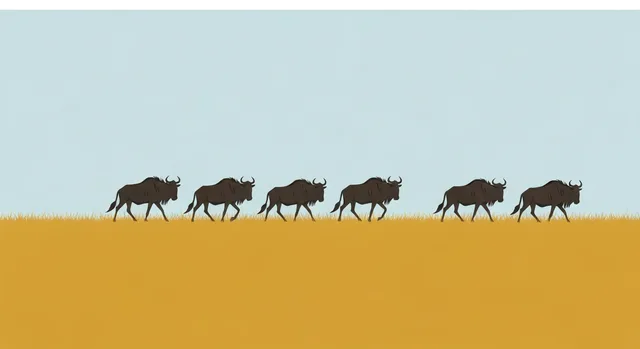
The most cinematic hour on the plains
There is a moment, somewhere on the banks of the Mara River in the far north of the Serengeti, when a column of wildebeest a thousand strong stops dead. The leaders smell the water, see the steep drop, sense the long shapes waiting in the current — and they hesitate. The pressure builds behind them as more animals arrive, until something invisible tips the balance and the whole front edge pours over the bank in a churning, bellowing stampede. Dust, spray, hooves, the bark of zebra, the splash of bodies hitting the river. It is the single most dramatic hour the Serengeti offers, and the hardest in all of Africa to time.
This is the chapter of the Great Migration that most people picture when they imagine Tanzania: the river crossing. It is worth saying plainly at the outset that it is also the chapter that disappoints the most travellers, because it cannot be booked, scheduled, or guaranteed. Understanding why is the difference between a trip built on a fantasy and one built to genuinely give you the best possible odds.
This guide is about weighting those odds honestly — the realistic window, the place to be, how long to stay, what a good day actually looks like, and how to watch in a way that does not ruin the spectacle for the herds or for everyone else parked on the bank.
What actually happens, and when
From roughly July, the leading edge of the migration reaches the Mara River, which winds through the Kogatende sector of the Northern Serengeti before crossing into Kenya's Masai Mara. As the southern and central plains dry out, the herds push north chasing greener grazing, and the river becomes the great obstacle in their path. They cross it, graze on the far side, and — crucially — often cross back again, sometimes multiple times over a season, as rain and grazing shift. This back-and-forth is why the northern crossing window stretches across several months rather than a single neat event.
Peak drama is usually August into September, with crossings continuing into October before the short rains pull the herds back south. But treat every one of those months as a 30-year average, not a promise. The migration follows rain, not a calendar, and a dry spell or an early storm can shift the timing by two weeks in either direction. Always verify where the herds are likely to be for your exact dates close to travel rather than trusting a generic month-by-month chart.
On any given day during the window, a crossing might happen at first light, in the punishing midday heat, late in the afternoon — or not at all. The herds cross when they cross. You can sit on a perfect vantage point above a known crossing point for hours and watch the wildebeest amass, drink, mill about, and then simply wander off without committing. That is not a failure of planning; it is the nature of wild animals making a life-or-death decision on their own terms.
- July: leading herds reach the Mara River; early crossings begin, often unpredictable.
- August–September: usually the peak window, with the most herds in the Kogatende area.
- October: crossings continue as herds drift back and forth before turning south.
- Any month: a quiet day with no crossing is completely normal — build your trip to absorb that.
Why timing is luck — and how to weight it in your favour
A crossing is a collective gamble. Wildebeest are not crossing for the spectacle; they are crossing because the grazing on the far bank is worth risking the crocodiles and the drowning chutes. The decision depends on river level (a high, fast river deters them), the state of the grass on either side, where other animals have already gone, the time of day, sheer numbers building up the pressure to move, and an almost herd-wide nerve that no one fully understands. Take away any one of those factors and the line that was about to plunge will turn and graze instead.
Because you cannot control the herd, you control everything around it. The single most effective lever is time: the more mornings and evenings you spend in the crossing country during the window, the more chances you give yourself. A traveller with one full day in the north might see nothing; a traveller with three or four nights based at a Kogatende camp is statistically far more likely to be in the right place when the river finally breaks. Patience is not a virtue here so much as a planning input.
The second lever is the guide. An experienced northern guide reads the herd's behaviour — the gathering at known crossing points, the drinking, the agitation — and positions the vehicle early and respectfully, then waits. The worst outcome is racing across the plain to a crossing that has already ended; the best is being quietly in place before it starts. The third lever is simply managing your own expectations: go for the whole experience of the wild north, treat a crossing as a magnificent bonus, and you will come home happy whether the river runs with wildebeest or not.

Where to base yourself: Kogatende and the northern camps
Geography is destiny for a crossing trip. The crossings happen on the Mara River in the Kogatende sector, and the only way to be there at dawn — the prime crossing hour — is to sleep nearby. A lodge in central Seronera, however beautiful, is hours of driving away and effectively rules you out of the early action. For the crossing window, you want to be in the north, full stop.
Two broad styles work. Mobile camps follow the herds and relocate to the north for the season, putting you within striking distance of the river; they trade a little permanence for proximity and atmosphere. Permanent and semi-permanent camps in the Kogatende area offer the same reach with more fixed comfort. Either way, the north has far fewer beds than the central park, so the good camps sell out a year or more ahead for peak crossing dates. Book early, and verify the camp's exact position relative to the crossing points before you commit.
A note on crowds and cost: the crossing window is the most expensive and most heavily booked stretch of the Serengeti year. The north is still far quieter than the central plains, and quieter again than the Kenyan side of the same ecosystem — that relative solitude is a large part of its appeal — but it is not empty, and popular crossing points can gather a line of vehicles. Going slightly off-peak, or with an operator who knows the lesser-used crossing points, buys back some of that space.
Crossing etiquette: how to watch without spoiling it
A river crossing is one of the few wildlife events where visitors can directly cause it to fail. Wildebeest commit to crossing along specific lines down to the water; if vehicles are parked across those lines, or engines and movement spook the leaders, the herd will balk and turn away — and not just for you, but for every other vehicle that has waited hours for the same moment. Good etiquette is therefore not a nicety; it is the price of the spectacle existing at all.
The core principles are simple and your guide should know them cold: keep well back from the bank and never between the herd and the water, switch off engines, stay quiet, do not stand up or make sudden movements, and never get out of the vehicle. Let the animals choose their moment. A patient guide who hangs back and reads the herd will, over a season, witness far more crossings than one who charges in — and they will leave the crossing point intact for the next group.
If you are choosing an operator, ask directly how they handle crossings: where they position, whether they will crowd a bank, how they balance a great photograph against the welfare of the herd. The right answer is one that puts the wildebeest first. That same ethic is why no reputable guide will ever promise you a crossing — and you should be wary of any that does.

Building the trip around the river
The cleanest way to plan a crossing safari is a fly-in to the north. A light aircraft from Arusha or Kilimanjaro hops you straight to the Kogatende airstrip, turning a long overland slog into a short flight and leaving more days at the river. Pack accordingly: light aircraft enforce strict, soft-bag-only weight limits, so travel light. Drive-in is possible for those with time and a taste for the road, but most crossing trips fly at least one leg.
Many travellers pair the north with the rest of the Serengeti and the wider Northern Circuit rather than visiting Kogatende alone. A classic shape is a few nights in central Seronera for reliable resident big cats, then a flight north for the crossings, sometimes bookended with the Ngorongoro Crater on the way in. If the river is the whole point of your trip, weight your nights heavily toward the north and keep the rest light.
However you build it, hold the plan loosely. The migration does not read itineraries. Leave buffer days, base yourself in the right sector, choose a guide and operator who put the herds first, and let the river surprise you. Get those fundamentals right and you have done everything a human can do — the rest, gloriously, is up to a million wildebeest.
How a crossing morning actually unfolds
Understanding the rhythm of a crossing morning sets honest expectations and makes the waiting bearable, even thrilling. Most crossings happen in daylight, and the herds tend to build through the morning, so a crossing safari starts before dawn: coffee in the dark, then a drive down to the river while the light comes up, to be in position when the wildebeest begin to gather. From there it is a game of patience. The herds collect on the bank in their thousands, milling, calling, edging forward and pulling back, sometimes for hours, as their collective nerve builds and breaks and builds again. Many mornings end with no crossing at all — the herd simply drifts away to graze — and that anticlimax is a normal, honest part of the experience rather than a failure of the trip.
When a crossing does come, it is sudden and overwhelming. A single animal commits, and in seconds the whole massed herd pours down the bank and into the water in a roar of hooves, dust, splashing and bellowing, the crocodiles moving in below and the predators watching from the banks. It can last minutes or much longer, and it is as chaotic and visceral as wildlife gets — calves separated from mothers, animals struggling against the current, the river churning. Then, almost as abruptly, it is over, the survivors streaming up the far bank to graze as if nothing had happened. Your guide will read the build-up, choose a position with a clean view and the light behind you, and ask everyone to stay quiet and still so as not to spook the gathering herd at the critical moment.
The practical lesson is to give the river your mornings and your patience. Be out early, carry water, snacks and warm layers for the cool dawn and the long wait, keep your camera ready through the dull hours because the action comes without warning, and resist the urge to demand the guide chase from point to point — that often just spreads the disturbance and misses the crossing that was about to happen where you were. Settle in, trust your guide's read of the herd, and let the morning unfold. The waiting is the price of the most cinematic hour on the plains, and when it pays off you will never forget it.
- Start before dawn and be at the river as the herds gather — most crossings happen in daylight.
- Expect long, tense waits; many mornings end with no crossing, which is normal, not failure.
- When it comes, a crossing is sudden, chaotic and over fast — keep your camera ready throughout.
- Stay quiet and still so the gathering herd is not spooked at the critical moment.
- Carry water, snacks and warm layers, and trust your guide's read rather than chasing point to point.
Crossings, calving and the rest of the migration
The Mara crossings are the migration's most famous chapter, but they are one act in a year-round loop, and seeing them in that context helps you plan a better trip and choose the right one for your dates. The same herds that pour across the Mara in the dry-season window were calving on the southern Ndutu plains earlier in the year, pressing west through the Grumeti country in between, and will turn south again as the short rains break. Each chapter offers something different: the calving is mass birth and intense predator action on green plains; the western corridor has its own river drama on the Grumeti; the northern Mara is the high-stakes crossings everyone pictures. None is objectively 'best' — they are different experiences with different best seasons, and the crossings simply happen to be the most photographed.
This matters because travellers sometimes fixate on the Mara crossings when their dates, budget or temperament would be better served by another chapter. If your trip falls early in the year, the southern calving is your spectacle, not the dry, empty north. If you cannot stand long waits and possible anticlimax, the reliable abundance of calving season may satisfy you more than the gamble of the crossings. If crowds and peak prices put you off, the western corridor or a green-season southern trip offer migration drama with more space and better value. The crossings are extraordinary, but they demand the dry-season window, the highest prices, the busiest northern camps, and a tolerance for waiting that not every traveller shares.
The honest way to plan is therefore to decide what you actually want and then match the chapter to it, rather than chasing the crossings by default because they are famous. If the river is genuinely your dream, weight your trip to the north in the dry-season window, give it the nights and the patience it needs, and accept the gamble as part of the bargain. If you are more flexible, let your dates and priorities point you to the right chapter of the loop. Either way, treat all migration timing as a long-term average, verify the likely herd position for your exact dates close to travel, and build the trip around the chapter that fits you — not around the photograph everyone else came for.
- The Mara crossings are one act in a year-round loop — calving, the Grumeti and the Mara each differ.
- No chapter is objectively best; the crossings are simply the most photographed.
- If your dates fall early in the year, the southern calving suits you better than the dry north.
- The crossings demand the dry-season window, peak prices, busy camps and patience for the wait.
- Match the migration chapter to your dates and temperament rather than chasing crossings by default.
Common questions about the Mara crossings
Can I guarantee I will see a crossing? No. Anyone who promises one is misleading you. Crossings depend on weather, river level, grazing and the herd's nerve, and no operator controls those. What you can control is your odds — by being in the north, during the window, for enough nights, with a patient guide.
When is the best time to try? The crossing window runs roughly July to October, usually peaking August into September, but treat these as long-term averages and verify the likely position of the herds for your exact dates close to travel. The migration follows the rain, not the calendar.
How many nights do I need in the north? Three or more is the sensible minimum to give yourself a real chance; a single day is a gamble. The more mornings and evenings you spend in the crossing country, the better the odds.
Is it very crowded? The Northern Serengeti is far quieter than the central park, but the crossing window is peak season and popular crossing points can draw a line of vehicles. Camps are limited and book out far ahead, so plan early.
Will I see crocodiles and predators too? The Mara holds large crocodiles, and the river country has resident lions, leopards and hyenas drawn to the herds. As ever, sightings are never guaranteed — go for the whole wild experience, not a checklist.
Related guides

The Great Migration, Month by Month
Where the wildebeest herds usually are in the Serengeti for each month of the year — calving in the south, the Grumeti in the west, the Mara crossings in the north — with the realistic odds of a river crossing and the right sector and camp to aim for.
Read guide
Northern Serengeti & Kogatende Guide
The complete guide to the Northern Serengeti — the Mara River, Kogatende, Lamai and the remote crossing country worth the flight. Dry-season migration timing, quieter game drives, where to stay, and how to plan a trip around the river.
Read guide
Best Time to Visit the Serengeti
The best time to visit the Serengeti depends on the event you most want to witness. Match the month to the migration — calving, river crossings or big-cat hunting — and build the rest of the trip around the herds, the weather, the crowds and your budget.
Read guideMore in When to Go
6
Best Months for Serengeti Photography
Which Serengeti months deliver the photographs you want — dramatic light and dust, emerald plains, newborns, river crossings, big cats and fewer vehicles in your frame.
Read guide
Calving Season in the Serengeti
Calving season on the southern Serengeti plains around Ndutu — when roughly half a million wildebeest are born in about three weeks, why it draws the densest predator action of the year, and how to plan a green-season safari around it.
Read guide
Calving Season in the Serengeti (Ndutu)
Calving season on the southern Serengeti plains around Ndutu — when roughly half a million wildebeest are born in about three weeks, why it draws the densest predator action of the year, and how to plan a green-season safari around it.
Read guide
Calving Season vs River Crossings
Two faces of the Great Migration: the southern Ndutu calving in the green months, and the northern Mara crossings in the dry. Decide between them by wildlife, budget, crowds, predictability and the kind of drama you want.
Read guide
Christmas & New Year in the Serengeti
How to plan a Christmas or New Year safari in the Serengeti — green December plains, gathering herds, premium festive camps, family-friendly logistics and the flights that make a holiday trip work. Romantic, festive and worth booking early.
Read guide
Great Migration Planning Mistakes
The planning mistakes that make travellers miss the herds, overspend, or book the wrong Serengeti sector — and how to avoid each one so your dates, your camp and the migration actually line up.
Read guide