
Wildlife in the Serengeti
The hub for Serengeti wildlife — the lions, leopards and cheetahs, the elephants and hippos, the wildebeest millions and the birds — with where to find each, when, and an honest sense of the odds.

Photo: Mylon Ollila / Unsplash
- ✓The Serengeti is one of the richest large-mammal ecosystems left on earth — all of the Big Five live here, alongside exceptional populations of lion, cheetah and leopard.
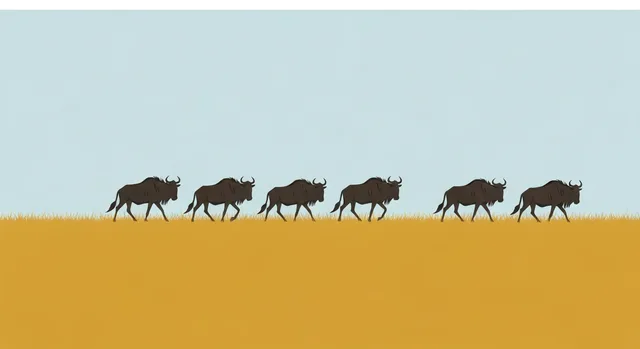
- ✓The headline act is the Great Migration: roughly 1.5 million wildebeest, plus hundreds of thousands of zebra and gazelle, looping the ecosystem in search of grass and water.
- ✓Where you go shapes what you see — Seronera's rivers and kopjes for resident big cats, the open southern plains for cheetahs, the north for crossings.
- ✓Wildlife is wild: sightings are probabilities, never promises, and a patient guide who knows the prides matters more than any checklist.
- ✓Treat all migration and seasonal timing as a 30-year average — verify the live picture for your exact dates rather than trusting a fixed calendar.
The greatest wildlife stage on earth
Few places concentrate so much life in one landscape. Across some 14,750 square kilometres of plains, rivers, woodland and granite kopjes, the Serengeti holds an abundance of large mammals that is hard to overstate — and the famous migration is only the loudest part of the story. Lions lie up on the rocks, leopards drape themselves in the riverine figs, cheetahs scan the open grass, elephants drift through the woodlands, and a vast supporting cast of giraffe, buffalo, hippo, zebra and antelope fills the spaces between. This page is the doorway to all of it: a hub that points you to the species, the sectors and the seasons, so you can plan a trip around the animals you most want to meet.
The honest framing for everything that follows is probability, not promise. The Serengeti is a working wilderness, not a zoo, and even the most reliable sightings depend on weather, season and luck on the day. What you can do is stack the odds — go to the right sector in the right month, allow enough time, and travel with a good guide. The links below break the cast into manageable chapters, each with where and when your chances are best.
The cast, chapter by chapter
Use these as the main entries in the Serengeti's wildlife collection. Each links to a deeper page, but the one-line orientation here is enough to start shaping a trip around the animals that matter most to you. The cats are the headline for most first-timers; the migration is the spectacle that sets the calendar; and the broader cast — elephants, hippos, giraffe, plains game and birds — fills out days that are never short of something to watch.
- The Big Five: lion, leopard, elephant, buffalo and the elusive rhino — the classic checklist, with honest odds on each.
- Big cats: lions on the kopjes, leopards in the Seronera figs, cheetahs on the open southern plains — the Serengeti's signature trio.
- Lions: widespread and often easy to find, with famous prides around the central rivers and rocks.
- The migration herds: ~1.5 million wildebeest plus zebra and gazelle, calving in the south and crossing in the north.
- Elephant, giraffe, buffalo and hippo: the great supporting cast, reliable across the woodlands, rivers and plains.
- Birds: hundreds of species, from ostrich and secretary bird to the lilac-breasted roller, at their best in the green season.
Where the animals are: sector by sector
The single most useful planning idea is that wildlife is not spread evenly — each sector has its own character, and matching your interest to the right area transforms your odds. Central Seronera, with its rivers, kopjes and woodland, holds the densest resident big-cat population and is the best year-round bet for lion and especially leopard. The open, treeless southern plains around Ndutu are cheetah country, particularly during the calving season when prey is concentrated. The far north around Kogatende and the Mara River is the crossing country, and the western Grumeti is the migration's first river test.
Because the migration herds move while the resident animals stay put, your trip is really two overlapping decisions: which resident wildlife you want, and which chapter of the migration you want to witness. A central base gives you reliable cats in any month; a southern base in the green season adds calving and cheetahs; a northern base in the dry season adds the crossings. Each sector page lays out the resident cast and the seasonal visitors so you can place yourself accordingly.
When to come for the wildlife you want
Timing shapes the wildlife as much as place does. The dry season, roughly June to October, thins the bush and draws animals to water, making for the easiest game viewing of the year and bringing the Mara crossings to the north. The green season — the short rains around November and the long rains of April and May — turns the plains emerald, fills the south with newborn calves and the predators that follow them in January to March, and is the best time for birds and dramatic light. There is no single best month; there is only the month that matches the event you most want.
Whatever you are chasing, two habits protect the trip. Allow enough time — a single rushed day leaves too much to luck, while several nights in the right place lets the wildlife come to you. And treat every seasonal pattern as a long-run average that the rains can shift by a fortnight, so verify the live picture for your dates before you lock anything in. Plan the place, plan the season, bring patience, and the Serengeti rarely disappoints.

Related guides

Big Cats in the Serengeti
A guide to the Serengeti's three great cats — lion, cheetah and leopard — where each is most likely, how their behaviour shapes a sighting, and why a patient vehicle and a good guide matter more than any guarantee.
Read guide
Lions in the Serengeti
A guide to Serengeti lions — pride structure, the kopjes they hold as territory, how and when they hunt, the best sectors and seasons, and how to watch them ethically without scheduling a kill that no one can promise.
Read guide
Birdwatching in the Serengeti
A traveller's guide to birding the Serengeti — the rollers, ostriches, raptors and wet-season migrants that fill the plains — and how to add birdwatching to a safari without losing the mammal focus.
Read guideMore in Wildlife
6
Black Rhino in the Serengeti
Honest expectations for seeing black rhino in the Serengeti — why sightings are rare, where the small protected population lives around the Moru Kopjes, and why the Ngorongoro Crater is often the better add-on for rhino.
Read guide
Buffalo in the Serengeti
Cape buffalo in the Serengeti — herd behaviour, the long rivalry with lions, why solitary old bulls demand respect, and why buffalo deserve more than a quick tick on the Big Five checklist.
Read guide
Camera Gear for a Serengeti Safari
A practical packing guide to camera gear for a Serengeti safari — lenses and bodies, batteries and cards, the all-important bean bag, dust protection, your phone, binoculars and how to pack it all for strict light-aircraft limits.
Read guide
Crocodiles in the Serengeti
Where the Serengeti's Nile crocodiles live, the role they play in the Grumeti and Mara River crossings, and how to watch the drama responsibly — with honest, no-guarantee expectations.
Read guide
Elephants in the Serengeti
Where elephants are most likely in the Serengeti and how sightings vary by sector and season — the woodlands of the north and centre, the rivers and Lobo — and when Tarangire is the stronger elephant add-on.
Read guide
Giraffes in the Serengeti
Maasai giraffe in the Serengeti — where they fit the park's habitats, why the wooded north and acacia country suit them best, photography ideas, and how the seasons shape your sightings.
Read guide