
Four-Day Serengeti Safari
A balanced four-day Serengeti safari: an arrival day, two full game-drive days in the central plains and a relaxed departure, with realistic flight-and-road logistics, honest pacing and the camp logic that makes a short trip feel unhurried.

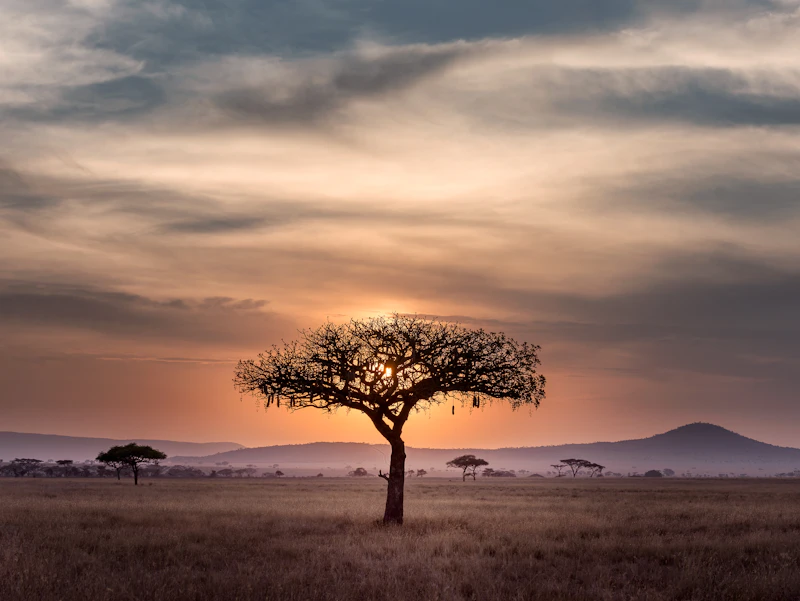
Photo: Denice Alex / Unsplash
- ✓Four days is the shortest trip that still feels like a real safari — one arrival day, two full days on the plains, and an easy departure.
- ✓Fly-in is what makes four days work: a light-aircraft hop from Arusha trades long road hours for game-viewing time in the park.
- ✓Central Seronera is the natural base for a short trip — reliable resident lions, leopards and cheetahs in every season, whatever the herds are doing.
- ✓This is an itinerary about depth over distance: pick one sector, stay put, and let a patient guide show you the country properly.
- ✓Treat any migration timing as a 30-year average and verify the live picture for your exact dates before you commit to a camp.
What a four-day safari really is
Four days is the shortest itinerary that still earns the word safari. It is not a whistle-stop tour or a day trip stretched thin — it is a genuine, if compact, immersion in the Serengeti, built around a simple, honest shape: one day to arrive and settle, two full days out on the plains from dawn light to golden hour, and a final morning that gives you one more drive before you fly home. Done well, it leaves you with the unmistakable feeling of having been somewhere wild, rather than having merely passed through.
The temptation with a short trip is to cram — to chase three sectors, tick a checklist, and spend the precious daylight bouncing between airstrips and gates. Resist it. The four-day safari rewards the opposite instinct: choose one sector, settle into one camp, and go deep. A single area explored patiently, with a guide who knows where the leopard rests at midday and which kopje the pride favours at dawn, delivers more wonder than a frantic dash across the whole ecosystem. Depth over distance is the whole philosophy of this itinerary.
A word on expectations, because they shape every safari. The Serengeti is wild country, not a zoo or a scheduled show. Sightings are probabilities, never promises, and the migration follows the rains rather than a calendar. We treat every timing here as a long-run average and encourage you to verify the live picture with your operator before booking. What four unhurried days reliably deliver is the rhythm of the bush — the cool blue of a dawn drive, the stillness of midday, the molten light of late afternoon, and the sense, growing by the hour, that you have slipped into the oldest landscape on earth.
A four-day safari at a glance
Before the day-by-day, here is the quick orientation — the facts that shape every booking decision for a short trip. Treat the migration timing as a 30-year average and verify the live picture with your operator before you commit to a camp or sector.
- Shape: 1 arrival day, 2 full game-drive days, 1 departure morning.
- Best base: central Seronera for reliable resident big cats in any season.
- Access: fly-in via Arusha or Kilimanjaro to the Seronera airstrip — the key to making four days work.
- Style: lodge or tented camp; a private vehicle and guide transforms a short trip.
- Wildlife: strong odds on lion, leopard and cheetah; the full plains-game supporting cast.
- Migration: this trip is not built around crossings or calving — those need more time and the right sector.
- Pairs well with: a tacked-on Ngorongoro Crater day, or a Zanzibar beach finish, if you have the hours.
- Verify: park fees, camp rates and herd position all change — confirm current details before booking.
Day 1 — Arrival, the flight in, and a first afternoon drive
Almost every Serengeti safari funnels through Arusha, the gateway town for northern Tanzania, reached via Kilimanjaro International Airport. For a four-day trip the single most important decision is to fly in rather than drive. A light-aircraft hop from Arusha to the Seronera airstrip in the central park takes a fraction of the time of the long overland route through the Ngorongoro highlands, and on a short trip those saved hours are not a luxury — they are the difference between a real safari and a road trip with a glimpse of grass at the end.
Plan the first day with margin. International long-haul flights often land in the small hours, and the bush flights into the park run to a fixed daily schedule, so build in buffer time for connections rather than sprinting between gates. Many travellers overnight in or near Arusha and take a morning light-aircraft flight, arriving at Seronera in time for lunch at camp and an unhurried first afternoon game drive. That afternoon drive matters: it shakes off the travel, orients you to the landscape, and almost always turns up your first big sighting — a pride dozing on a kopje, a giraffe stitching across the skyline, elephants drifting toward water as the light softens.
Settle into camp before dark. A short safari is best served by a single, well-placed base you do not move from, so your first evening is also the start of a routine: a hot shower, sundowners as the plains turn gold, dinner under a sky thick with stars, and an early night before the dawn drive. Light aircraft carry strict baggage limits — soft duffels only, with firm weight caps — so pack accordingly and leave the hard case at home.
Day 2 — A full day in central Seronera
This is the heart of the trip: a full day on the plains, dawn to dusk, in the central Seronera sector. Seronera is the beating heart of the Serengeti — a country of rivers, granite kopjes and riverine fig trees that holds the densest resident big-cat population in the park and delivers reliable game viewing in every single month, whatever the migration is doing elsewhere. For a short safari that cannot chase the herds across the ecosystem, that reliability is exactly what you want under you.
Start at first light, when the air is cool and the predators are still moving. Mornings are prime time for cats on the hunt — lions returning from a night's work, a cheetah scanning from a termite mound, a leopard slung along a fig branch with the remains of a kill. A patient guide is worth more than any checklist here; the ones who know Seronera read the alarm calls of impala, the circling of vultures and the body language of a pride to put you in the right place at the right time. Mid-morning brings the wider cast: elephant, buffalo, hippo pods jostling in the river, giraffe, and the endless plains game that feeds the whole system.
Through the heat of the day the bush quiets and so should you — a long lunch, perhaps a picnic in the shade of an acacia, and a slower pace before the afternoon comes alive again. The final hours of light are the most cinematic of the day, when the low sun gilds the grass and the cats stir for the evening. End on a sundowner somewhere with a long view, and let the day settle. One full, unhurried day in Seronera, properly guided, is the single most rewarding thing a four-day safari can offer.
- Dawn drive: best odds for cats on the move — lion, cheetah, leopard.
- Mid-morning: elephant, buffalo, hippo, giraffe and plains game.
- Midday: rest, picnic lunch, a slower pace as the bush quiets.
- Golden hour: the day's best light and a second predator window.
Day 3 — Going deeper, or a half-day reach
Your second full day is where the depth-over-distance philosophy pays off. With one day already under your belt, you and your guide know the lie of the land, and day three is the moment to follow the threads you started pulling — to return to the pride you found at dawn, to wait out a leopard that may move at dusk, or to push a little further into a corner of Seronera you have not yet seen. This is also the right day for a longer, picnic-led excursion that ranges wider without ever leaving your home sector.
If the season aligns and your operator advises it, day three can also be the day for a focused half-day reach toward whatever the migration is doing nearby — a drive toward the southern plains if calving has begun on the Ndutu short grass, for instance, on a 30-year average that you should verify for your exact dates. But be honest with yourself about geography: the Mara River crossings in the far north and the great calving pulse in the south are not reliably within reach of a four-day central trip. Chasing them on a short itinerary usually means burning a precious day on transit for an uncertain payoff. The travellers who leave happiest treat resident wildlife as the headline and any migration brush as a bonus.
For the splurge-minded, day three is the classic morning for a hot-air balloon flight over the plains at dawn — drifting silently above the grass as the light comes up, ending with a champagne bush breakfast. It is the one optional extra worth building a short trip around, and it pairs perfectly with a slower afternoon back in camp before your final night on the plains.
Day 4 — A last drive and the journey home
The final day is built around one more drive and a smooth exit. Bush flights run to a daily schedule, so the morning's shape depends on your departure time. A later flight lets you take a full dawn drive — often the best of the trip, now that you know the country and the country knows your routine — before returning to camp, packing up and transferring to the Seronera airstrip. An earlier flight means a shorter game drive, or simply a relaxed breakfast and a transfer, so confirm your timing the night before and let the camp plan the morning around it.
From Seronera the light aircraft hops back to Arusha or Kilimanjaro, where you connect to your international flight or onward leg. As on the way in, build in buffer time: missing a once-daily bush flight is a costly mistake, and a short trip leaves no slack to absorb it. Sequence the journey with margin so the last day stays calm rather than rushed — the right note to end on after the wild rhythm of the previous days.
If four days has only sharpened your appetite — as it usually does — this is the moment to think about what comes next. A two-night extension on the Ngorongoro Crater rim, descending for a morning game drive on the wildlife-packed caldera floor, turns a four-day safari into a fuller Northern Circuit trip with very little extra friction. And for many travellers the perfect coda is a short flight to the white sand of Zanzibar, trading the dust of the plains for the warm Indian Ocean.
Making four days work: pacing, camp and cost
The success of a four-day safari hinges on three decisions: fly rather than drive, choose one sector and stay put, and pick a camp by location before luxury. Flying in is non-negotiable on this length of trip — the overland route through Ngorongoro is wonderful, but it eats two full days that a four-day itinerary simply cannot spare. Staying put in central Seronera, rather than moving camp, removes the dead hours of packing and transit and hands them back as game-viewing time. And choosing your camp for where it sits — close to the action, in the right sector — matters more than its thread count, because the best lodge in the wrong place misses the day.
On camp style, a four-day trip works beautifully from a permanent lodge or a classic tented camp in Seronera, both of which offer reliable comfort and easy airstrip access. A private vehicle and guide is the single upgrade that most transforms a short safari: it lets you set the pace, linger at a sighting, skip the midday lull or chase the late light, and tailor the two full days entirely to what you most want to see. On a trip this compact, that control is worth a great deal.
Because park fees, conservation levies and camp rates change from season to season, we keep figures off this page and point you to current sources instead. The principle to plan around is that on a short fly-in trip the big cost levers are the flights, the camp style and whether your vehicle is private or shared — and that peak dry-season dates command the highest rates and book out earliest. Decide early, verify the live details, and a four-day safari delivers a remarkable amount of wild Africa for the time you give it.
Who a four-day safari is for
A four-day Serengeti safari suits a particular kind of traveller, and it is worth being honest about who that is. It is ideal for the time-poor: business travellers extending a trip, couples on a tight window, anyone who can spare a long weekend but not a fortnight. It is excellent as a focused first taste of safari — enough to know whether the bush has hooked you, which it usually has. And it is a natural module to bolt onto something larger, whether a Kilimanjaro climb, a conference in the region or a Zanzibar holiday, turning dead days into the wildest you will ever spend.
It is less suited to travellers whose hearts are set on a specific migration spectacle. If you have flown across the world primarily to witness a Mara River crossing or the calving stampede, four days in the central park is the wrong tool — those events need more time, the right sector and the right season, and a short central trip cannot reliably reach them. Be clear with yourself about the goal: if it is a real, immersive taste of the Serengeti and its resident wildlife, four days delivers handsomely; if it is a single headline event of the migration, give yourself a week and read the migration itinerary instead.
It also suits a wide range of budgets, despite the fly-in requirement. Because the trip is short, the total flight and camp cost is contained even when the per-night rate is high, and there is no long vehicle hire eating the budget. Travellers comparing a brief fly-in against a longer drive-in often find the four-day fly-in delivers more actual game viewing per day, which changes the value calculation. As always, verify current fees and rates before you commit, because they shift season to season.
Season, packing and practicalities
Because a four-day trip leans on resident wildlife rather than the migration, it works well in almost any month — Seronera's lions, leopards and cheetahs are there year-round. The dry season, roughly June to October, brings clear skies, thinning bush and the easiest game viewing, but it is also the busiest and most expensive, so central camps book ahead. The green season — the short rains around November and the long rains of April and May — flips that: lush, cinematic plains, fewer vehicles and better value, with the trade-off of heavier tracks and a real chance of afternoon storms. For a short central trip, both seasons reward you; choose on the balance of crowds, cost and weather that suits you, and verify the live picture for your dates.
Packing for a fly-in trip is governed by the strict light-aircraft baggage rules: soft duffels only, no hard cases, and firm weight caps that your operator will confirm. Pack light and in layers. Mornings on a dawn drive are genuinely cold, the midday sun is fierce at altitude, and neutral earth tones are kinder to wildlife viewing than bright colours. Bring sun protection, a warm fleece for the early starts, binoculars, any camera gear you cannot bear to miss, and a small daypack for drives. Leave the rest — camps handle laundry, and you need far less than you think.
On health and safety, the standard northern-Tanzania precautions apply: antimalarial advice from a travel clinic well before you go, routine vaccinations up to date, and good sun and insect protection. The Serengeti sits at altitude, so the light is intense and the nights cool. Drink plenty of water, follow your guide's instructions around wildlife without exception, and respect the simple rule that you are a guest in a wild place. Confirm current entry requirements, park fees and any health rules with official sources before you travel, as these change. Get the practicalities right and a four-day safari runs smooth from the first flight to the last drive.
- Any month works for a central trip — resident big cats are there year-round.
- Dry season (Jun–Oct): clear, easy viewing, busiest and priciest.
- Green season (Nov, Apr–May): lush, quieter, better value, heavier tracks.
- Pack: soft duffel only, layers, neutral tones, sun protection, binoculars, a warm fleece.
- Health: antimalarial advice, sun and insect protection, plenty of water at altitude.

Related guides

Seronera & Central Serengeti
Seronera is the year-round big-cat heart of the Serengeti — a valley of rivers, granite kopjes and riverine figs where lions, leopards and cheetahs hold ground in every season. A full guide to what central Serengeti offers, its lodge and airstrip access, the crowd trade-off and how to plan a stay.
Read guide
Arusha to the Serengeti
How to get from Arusha to the Serengeti — the overland drive through Ngorongoro, the light-aircraft fly-in, and the overnight-routing options — with the time, comfort and cost trade-offs of each.
Read guide
How Much a Serengeti Safari Costs
What a Serengeti safari really costs — the building blocks of park fees, accommodation, vehicles, flights and guiding, how season, sector and style move the total, and how to build a realistic per-person, per-day budget without quoting figures that go stale.
Read guideMore in Itineraries
6
Budget Serengeti Itinerary
A realistic budget Serengeti itinerary built on group-joining safaris, camping and smart shoulder-season timing — where to save, where never to cut corners, and how to keep the magic without the luxury price tag.
Read guide
Family Serengeti Safari Itinerary
A family-paced Serengeti itinerary built around shorter drives, family-friendly camps with pools, easier logistics and real safety — the route that keeps both the children and the parents happy on an African safari.
Read guide
First-Time Serengeti Itinerary
The safest, most rewarding route for a first Serengeti safari — how to choose between central Seronera, the migration sectors, the Ngorongoro Crater and flying versus driving, without the rookie mistakes that ruin a first trip.
Read guide
Five-Day Serengeti Safari
A classic five-day Serengeti and Ngorongoro Crater route with better pacing, more wildlife diversity and sound camp logic — how to combine the central plains with the great caldera without rushing, by road or by air.
Read guide
Fly-In Serengeti Itinerary: A Time-Efficient Plan by Airstrip and Season
A time-efficient fly-in Serengeti itinerary — how to pick the right airstrip for your month, pair it with a camp and a migration target, link light-aircraft hops, pack for the weight limits, and a sample route. Evergreen timing to verify.
Read guide
Luxury Serengeti Itinerary: Fly-In Camps, Private Guiding and the Migration in Style
A high-end Serengeti itinerary — exclusive fly-in camps placed for the migration, a private guide and vehicle, a dawn balloon flight, seamless transfers and an effortless Zanzibar finish. Evergreen timing and no quoted prices — verify for your dates.
Read guide