
Kilimanjaro and Serengeti
How to combine Kilimanjaro — a full summit climb or simply its views — with Serengeti safari days: which order to do them, how much recovery time to build in, the flights and transfers that link them, and the seasonal choices that make or break the trip. Evergreen and honest about timings.

Photo: Harshil Gudka / Unsplash
- ✓Kilimanjaro and the Serengeti are the two headline experiences of northern Tanzania — Africa's highest mountain and its greatest wildlife stage — and they share a single gateway, so pairing them is natural rather than awkward.
- ✓If you are climbing, the firm rule is mountain first, safari last: a Serengeti finish is the perfect reward for tired legs, and you never want a hard summit attempt looming over you while you are meant to be relaxing on the plains.
- ✓Build in a recovery and buffer day between the descent and the safari — altitude takes a toll, and a single day's cushion absorbs the weather and timing risks of a multi-day climb.
- ✓You do not have to climb at all: many travellers simply enjoy the mountain's views from Arusha and the lodges around it, then fly into the Serengeti, getting the silhouette without the seven hard days.
- ✓Both halves have their own seasons — drier months favour both the climb and the easiest game viewing — and the migration moves through the year, so fix the Serengeti dates to the wildlife and plan the climb around them. Verify climb routes, permits and flight times with your operator.
Why the mountain and the plains belong together
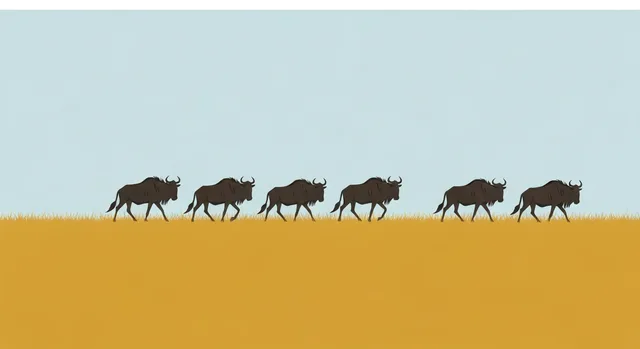
There is a reason so many once-in-a-lifetime Tanzania trips are built around these two names. Kilimanjaro is the highest mountain in Africa and the tallest free-standing mountain on earth, a snow-topped volcano that rises alone out of the savanna; the Serengeti is the stage for the greatest land-animal migration left in the world. One is a vertical journey through five climate zones to a glaciated summit; the other is a horizontal one across endless grass in pursuit of the herds. To do both on a single trip is to experience the full vertical and horizontal sweep of East Africa in a fortnight.
Crucially, they are not a logistical headache to combine. Both sit in northern Tanzania and share the same gateway — Kilimanjaro International Airport and the town of Arusha — so the same trip can carry you from the mountain's trailheads to the park's bush airstrips without a long detour. The contrast is the whole point: you earn the summit with seven days of effort and altitude, then trade boots for a game-drive seat and let the plains reward you. This page is about how to sequence that well, and how to give each half the time and respect it needs.
At a glance
A quick orientation before the detail. Keep permit costs, fares, flight times and exact schedules to the official sources and your operator — these change, so this page stays evergreen and tells you what to verify.
- Shared gateway: both the mountain and the park are reached via Kilimanjaro International Airport and Arusha.
- Order if you climb: Kilimanjaro first, Serengeti last — the safari is the reward, never the warm-up.
- Recovery: build at least one full buffer/rest day between summiting and starting safari.
- Climb length: most routes run roughly five to nine days; longer routes generally give better acclimatisation (verify the route's profile).
- No-climb option: enjoy the mountain's views from Arusha and fly into the Serengeti — the silhouette without the slog.
- Verify: route choice, permit and park fees, climb dates and the flight/transfer connection with your operator.

Mountain first, safari last — and why the order is not negotiable
If your trip includes an actual summit attempt, do the climb first and the safari second. There is no real debate here. A Kilimanjaro climb is physically and mentally demanding — successive days of walking, thinning air, cold nights and a brutal pre-dawn push to the crater rim — and you do not want that hanging over you while you are supposed to be unwinding. Putting the mountain first means you arrive fresh and strong for the hardest part of the trip, and then descend into a safari that feels like pure reward: long lie-ins by mountain standards, hot meals brought to you, and a vehicle doing the walking.
The reverse order — safari first, climb last — is the one to avoid. Ending a holiday with the single hardest thing you have ever done is poor planning, and a safari is wasted as a warm-up because it leaves you rested but not mountain-fit. There is also a quieter emotional logic to the conventional order: you grind your way to the roof of Africa, come down with the deepest sleep of your life ahead of you, and spend the back half of the trip watching lions and elephants from a comfortable seat, with nothing left to prove. Mountain to plains, effort to reward — that is the shape that works.

Build in recovery — the buffer day that protects the whole trip
The single most common mistake on a combined trip is descending the mountain and flying into the bush the very next morning. Resist it. A Kilimanjaro climb is run at altitude, and even strong climbers come off the mountain depleted: tired legs, a sleep deficit and, often, the lingering edge of mild altitude effects. A full rest day in Arusha or at a lodge near the foot of the mountain lets you shower properly, sleep, eat and reset before the early starts of safari resume.
That buffer day does double duty as insurance. Mountain itineraries are weather-dependent and can shift by a day, and a slow summit or a storm can push your descent back. If your safari flight leaves the morning after you are scheduled to come down, a single delay can topple the whole connection. One deliberate cushion day absorbs that risk for the entire trip — it is the cheapest insurance you can buy on a holiday this big. If you have summited and feel strong, you simply enjoy an easy day in Arusha; if the mountain ran long, you are quietly grateful for the slack.
The view-only option: Kilimanjaro without the climb
Not everyone who wants Kilimanjaro in their trip wants to climb it, and that is an entirely valid way to plan. The mountain is at its most photogenic from a distance — its snow-capped dome floating above the plains is one of Africa's iconic images — and you can drink that in from Arusha, from lodges on the cultivated lower slopes, and on clear-weather flights into the region without ever lacing up a single hard day. For travellers short on time, or who simply prefer their adventure horizontal, this gets you the mountain's presence as a backdrop and saves the week for wildlife.
If the views are what you are after, weather matters more than fitness. The mountain is notoriously shy, often wrapped in its own cloud, and the clearest windows tend to fall in the drier months and at the edges of the day — early morning and late afternoon. Base yourself somewhere with a good aspect toward the peak, be patient, and let the cloud lift. Then fly into the Serengeti as you would on any fly-in safari, treating the mountain as the dramatic overture rather than the main act.

Timing two seasons at once: climb, weather and the migration
Both halves of this trip have their own calendars, and the art is in lining them up. Kilimanjaro is most comfortable and safest to climb in the drier stretches of the year, when paths are firmer and summit-night skies are clearer; the heaviest rains make the climb harder and the views poorer. Happily, those same drier months are also the easiest time for Serengeti game viewing, when thinning bush and water-bound wildlife make animals simpler to find — so the two preferences often point to the same windows.
The complication is the migration, which moves through the ecosystem all year on a clockwise loop. Because the herds are in the south for calving, the west for the Grumeti, and the far north for the river crossings at different times, you should fix the Serengeti dates to the wildlife event you most want to witness, then schedule the climb around that. In practice this means deciding the migration chapter first, locking the safari nights, slotting the climb in immediately before with its buffer day, and confirming the whole chain with your operator. Treat any month-by-month migration timing as a long-run average — a swing of a couple of weeks in either direction is normal — and verify climb conditions for your route and dates separately.
How long to give each half
Kilimanjaro rewards the patient. Most reputable routes run somewhere between roughly five and nine days, and as a broad rule the longer profiles give your body more time to acclimatise, which is the single biggest factor in reaching the summit and enjoying the climb rather than enduring it. Choosing a route a day or two longer than the minimum is one of the best decisions you can make on the mountain side. Add your buffer day on top, and the climb portion of the trip is comfortably a week or more.
On the Serengeti side, three to four nights in the park is a sensible minimum, more if you want to combine sectors or build the safari around a specific migration event. Stitching the two together — climb, recovery, safari — a complete trip lands naturally at around twelve to fourteen days, sometimes more with travel at each end. The two halves do not need to be equal, and many travellers weight the trip slightly toward the safari, treating the plains as the long, satisfying decompression after the summit. Decide the safari length by what you want to witness, give the mountain the days it needs to be done safely, and never squeeze the recovery day to save time.

Common questions about Kilimanjaro and the Serengeti
Should I climb Kilimanjaro before or after the Serengeti? Before. Do the mountain first and finish on safari — the climb is the hard part and the plains are the reward, and you never want a summit attempt hanging over your relaxation.
How much time should I leave between the climb and the safari? At least one full rest and buffer day. It lets you recover from the altitude and effort, and it absorbs any weather delay on the mountain so a slow descent does not topple your safari connection.
Can I see Kilimanjaro without climbing it? Yes. The mountain's views from Arusha and the lodges on its lower slopes are spectacular in clear weather, and you can simply fly into the Serengeti afterwards. Mornings and the drier months give the best odds of a cloud-free peak.
When is the best time to do both? Drier months tend to favour both a safe climb and the easiest game viewing. But the migration moves all year, so fix the Serengeti dates to the wildlife event you want, then schedule the climb around them and verify climb conditions for your route.
How long is a combined trip? Allow roughly twelve to fourteen days as a comfortable frame — a climb of five to nine days plus a recovery day, then three to four nights or more on safari, with travel at each end.
Related guides

Kilimanjaro Airport to the Serengeti
How to route from Kilimanjaro International Airport (JRO) to the Serengeti — the transfer to Arusha, the bush flights to the park's airstrips, the overland Northern Circuit drive, and the visa basics you need first.
Read guide
Arusha before Serengeti
How to use Arusha well before a Serengeti safari — as the place to land and recover from a long flight, sort gear and last-minute shopping, sleep an overnight if your timings demand it, and meet your operator and brief your guide. The gateway town's practical role, and why a night here often pays for itself. Evergreen and honest about logistics.
Read guide
Arusha to the Serengeti
How to get from Arusha to the Serengeti — the overland drive through Ngorongoro, the light-aircraft fly-in, and the overnight-routing options — with the time, comfort and cost trade-offs of each.
Read guideMore in Combine With
6
Lake Manyara with Serengeti
When Lake Manyara is worth adding to a Serengeti safari — its groundwater forest, flamingo-fringed soda lake and birdlife — and how it slots into a shorter or richer Northern Circuit route.
Read guide
Lake Natron and Serengeti
How to add Lake Natron — its flamingos, its blood-red soda flats, the great Rift Valley scenery and the volcanic backdrop of Ol Doinyo Lengai — to a Serengeti itinerary. The routing, the timing, what the detour actually offers and who it suits. Evergreen and honest about logistics.
Read guide
Lake Victoria after Serengeti
When and how to add Lake Victoria to the end of a Serengeti safari — the city of Mwanza, the western access through the park, the lake views and the slow, water-side change of pace. The routing, who it suits and when it actually works after the Western Corridor. Evergreen and honest about logistics.
Read guide
Maasai Mara & Serengeti safari
How to combine Kenya's Maasai Mara with Tanzania's Serengeti on one safari — the two halves of a single ecosystem and the same migration. The border logistics, the flights, the visas and the seasonal timing that decides which side to watch the crossings from. Evergreen and honest about timings.
Read guide
Ngorongoro Crater Guide
A full guide to the Ngorongoro Crater on the Northern Circuit — the world's largest intact caldera, what its floor holds, how a descent day runs, how the fees compare with the Serengeti, and when to give it a night.
Read guide
Ngorongoro Crater with the Serengeti: How to Combine Them
How to combine the Ngorongoro Crater with a Serengeti safari — the route, how many nights to give each, how the fees stack up, the wildlife you'll see including black rhino, and how to time it around the migration and permits.
Read guide