
Mobile Camp vs Fixed Lodge
How to decide between a mobile migration camp that follows the herds and a permanent lodge that stays put — the trade-offs in proximity, comfort, atmosphere, cost and reliability for your Serengeti safari.

Photo: Acacia Collections / Unsplash
- ✓Mobile camps move with the herds two or three times a year; fixed lodges and permanent camps stay in one place all year.
- ✓Mobile wins on proximity to the migration; fixed lodges win on comfort, reliability and central access to resident wildlife.
- ✓For an August Mara crossing trip, a well-placed mobile or seasonal camp is hard to beat; for a year-round base, a lodge earns its keep.
- ✓Neither is better in the abstract — the right answer depends on your month, your wildlife goal and your appetite for comfort versus closeness.
- ✓Whatever the style, verify the camp's placement against the migration for your exact dates before you book.
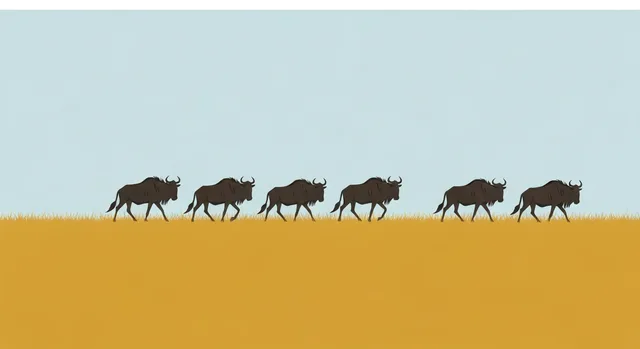
Two philosophies of sleeping in the wild
Underneath all the marketing, Serengeti accommodation comes down to a single question: should your bed chase the herds, or should the herds come to you? A mobile camp answers one way. It is a lightweight, fully serviced canvas operation that strikes its tents and relocates two or three times a year, following the migration around the ecosystem so that, in any given season, it sits as close as a camp can to the action. A fixed lodge — or a permanent tented camp — answers the other way. It is built to last, anchored to one spot, and it bets that its location is good enough, often enough, to justify staying put.
Both are legitimate, and both produce wonderful safaris. The romance of canvas walls and a herd-murmur in the dark is real; so is the pleasure of a hot rainfall shower, a proper desk and a veranda you can return to year after year. The trick is to match the philosophy to the trip you are actually taking, rather than to the fantasy in the brochure.
The case for a mobile camp
The whole point of a mobile camp is proximity. Because it relocates with the seasons — typically a southern site for the calving plains and a northern site for the Mara crossings — a good mobile camp keeps you within striking distance of the herds when most guests are watching from a fixed base hours away. In the right month, that can mean rolling out of bed and onto the riverbank, or waking to the sound of wildebeest grazing past the mess tent.
Mobile camps also tend to feel more intimate and more wild. They are usually small, often just a handful of tents, with a low-key, owner-run atmosphere and a lighter footprint on the land. The trade-offs are honest ones: the comforts are real but simpler than a lodge's, the structures are canvas rather than stone, and the very best northern and Ndutu sites are few and book out furthest ahead. They are also frequently seasonal, open only while the herds are near.
- Best for: the migration headline — August crossings in the north, February calving in the south.
- Strengths: proximity to the herds, intimacy, atmosphere, a lighter footprint.
- Trade-offs: simpler comforts, canvas not stone, limited and seasonal, books out early.
The case for a fixed lodge
A fixed lodge trades movement for permanence, and that permanence buys a lot. Solid en-suite rooms, swimming pools, reliable power and Wi-Fi, larger kitchens and a level of comfort that simply travels better with young children, older travellers or anyone who wants the safari without the rough edges. Many of the best lodges sit in central Seronera, which holds the densest resident lion and leopard population in the park and delivers excellent game viewing in every month of the year, migration or not.
That year-round reliability is the quiet strength of a lodge. Because resident wildlife stays put while the herds move, a well-placed central lodge is never empty-handed, even in the shoulder months when the migration is between sectors. The cost is the obvious one: in any single month, a fixed lodge is perfectly positioned for only part of the migration, so on a crossing-focused trip you may face longer drives to reach the river — or you simply accept that the migration is one act of a broader safari rather than the entire show.
- Best for: first safaris, families, green-season trips and travellers who prize comfort and reliability.
- Strengths: solid en-suite comfort, year-round operation, central access to resident big cats.
- Trade-offs: fixed location means longer drives to the herds when the migration is elsewhere.
Who each style genuinely suits
Style choice is less about taste than about who is travelling and why. Mobile camps reward the migration purist: the traveller for whom a river crossing or the calving plains is the entire reason for the trip, who is comfortable with canvas and simpler comforts, and who is travelling in a peak window when the herds are concentrated. They also suit honeymooners and small groups chasing intimacy and a sense of genuine wildness, and photographers who want to be on the riverbank at first light without a long transfer eating the golden hour.
Fixed lodges reward almost everyone else at least some of the time. Families with young children, multi-generational groups, travellers nervous about roughing it, and anyone on a first safari tend to be happier with solid rooms, a pool, reliable power and a kitchen that can cater to every age and appetite. Green-season travellers, who are there for resident wildlife and dramatic skies rather than a specific crossing, are well served by a comfortable central base. And anyone who values returning to the same familiar veranda each evening will find a lodge's permanence a feature, not a limitation.
- Lean mobile: migration purists, photographers, honeymooners, peak-season crossing or calving trips.
- Lean fixed: families, mixed-age groups, first-timers, green-season and resident-wildlife trips, comfort-seekers.
- Either way: place the camp by your month first, then let style and comfort decide between the contenders.

Comfort, atmosphere and the things photos don't show
Brochure photographs flatten the real differences between these styles, so it helps to know what they leave out. A mobile camp's intimacy comes with the textures of camping done well: canvas that breathes with the night, bucket or solar showers, paraffin or solar light, and the unfiltered sound of the bush — including, sometimes, animals moving through camp after dark. For many travellers that immersion is the whole magic; for others it is a step further into the wild than they want their bed to be.
A lodge's comfort comes with a gentler buffer between you and the wilderness: walls, glass, consistent hot water, sometimes air conditioning and a swimming pool. That buffer is a genuine gift on a long trip or with a tired child, but it can also feel a degree removed from the plains the trip was meant to be about. Neither is right or wrong — but knowing which immersion you want, before you book, prevents the quiet disappointment of arriving somewhere that does not match the safari you pictured.
Cost, and where it actually goes
It is tempting to assume mobile camps are cheaper because they are made of canvas, but that is not reliably true. The spectrum runs both ways: there are simple, no-frills seasonal mobile camps and there are ultra-luxury mobile suites with private guides that sit at the very top of the price ladder, just as fixed lodges range from solid mid-market to opulent. The bigger cost levers are the same for both styles — whether your vehicle is private or shared, whether you fly or drive, and the fixed park and concession fees that fall on every itinerary.
Rather than quote prices that go stale, the useful rule is this: you are paying for placement and exclusivity more than for the building material. A small, perfectly sited northern mobile camp in peak crossing season can cost as much as a grand lodge, because what you are really buying is a front-row seat. Verify current rates and fees with the operator, and weigh value by how well the camp's location matches your month.

At a glance: the trade-offs side by side
Strip away the marketing and the decision comes down to a short list of trade-offs. Use this as a quick scorecard, then weight the rows that matter most to your trip — proximity to the herds for a crossing safari, comfort for a family one.
- Proximity to the migration: mobile wins — it relocates to stay near the herds; a fixed lodge is well placed for only part of the year.
- Comfort and reliability: fixed wins — solid rooms, pools, consistent power and water, year-round operation.
- Atmosphere and immersion: mobile wins for many — intimate, wild, lighter footprint.
- Resident wildlife and easy access: fixed wins — central lodges sit among year-round big cats with simple logistics.
- Availability: both are limited in peak sectors; the best-placed mobile camps book out furthest ahead.
- Cost: not a clean win either way — both span simple to ultra-luxury; placement drives price more than material.

How to decide — and a way to have both
Decide by working backward from your month and your wildlife goal. If the migration is the reason you are going and you are travelling in a peak window — calving in February, crossings in August — lean mobile, and put the camp's placement above its polish. If you want a comfortable, reliable base for resident big cats, are travelling in a shoulder or green-season month, or have a mixed-age group to keep happy, lean fixed. When the answer is genuinely 'both,' it often is.
Many of the best itineraries combine the two: a couple of nights in a central lodge for resident wildlife and an easy first taste of the bush, then a flight north to a mobile camp for the crossings. You get the comfort and the proximity, in the right order, and you sidestep the false choice entirely. Whichever way you lean, the same non-negotiable applies — confirm the camp's location against the migration for your exact dates, because the herds answer to rain, not to brochures.
Common questions about camp versus lodge
Are mobile camps less comfortable than lodges? Generally simpler, not necessarily less comfortable. A good mobile camp offers proper beds, en-suite bathrooms with bucket or solar showers, and excellent food — but in canvas rather than stone, with a lighter, more elemental feel. Luxury mobile camps can rival lodges for comfort while keeping the proximity advantage.
Are mobile camps cheaper? Not reliably. Both styles span simple to ultra-luxury, and a perfectly placed mobile camp in peak crossing season can cost as much as a grand lodge, because you are paying for the front-row location. Material matters less to price than placement and exclusivity do.
Can families stay in mobile camps? Many can and do, but lodges tend to suit young children and mixed-age groups better thanks to solid rooms, pools and easier logistics. Some mobile camps have minimum-age policies, so check before booking.
Can I combine both on one trip? Yes, and it is one of the best moves available. A common pattern is a comfortable central lodge for resident wildlife and an easy start, then a flight to a mobile camp for the crossings — comfort and proximity, in the right order.

Related guides

How to Choose a Migration Camp
Match a Serengeti camp to your month, the migration phase, the nearest airstrip, your budget and your wildlife goal — so you sleep where the herds will be, not where the brochure photo was taken.
Read guide
Best Serengeti Safari Lodges & Camps
How to choose the best Serengeti lodge or camp — what separates a permanent lodge, a classic tented camp and a mobile camp, and how to match each to your sector, your season, your migration goal and your budget from honest value to ultra-luxury. The right lodge is the one in the right place for your dates.
Read guide
Where to Stay in the Serengeti
Where to stay in the Serengeti — how to choose the right sector, lodge or camp by your month, your migration goal, your budget, whether you fly or drive, and the wildlife you most want to see. Camp placement matters as much as comfort, so match the bed to the herd.
Read guideMore in Where to Stay
6
Accessible Lodges in the Serengeti
Accessibility-aware planning for a Serengeti safari — how to read a lodge for steps, showers, paths and vehicle transfers, where fly-in helps, what medical support exists in a remote park, and the questions to ask before you book.
Read guide
All-Inclusive Serengeti Lodges
What 'all-inclusive' actually means at a Serengeti lodge or camp, what tends to be quietly excluded, and how to read two quotes side by side so you are comparing the same trip — not the same word.
Read guide
Best Serengeti Camps for Big Cats
Where to stay in the Serengeti for the best lion, cheetah and leopard viewing — from the kopjes and river valleys of Seronera to the eastern plains and the calving grounds — and how to read placement, season and guiding before you book.
Read guide
Best Serengeti Camps for Photographers
How to choose a Serengeti camp if photography is the point of the trip — placement near the action, the right vehicle and bean-bag set-up, guides who think like photographers, and the logic of a private vehicle and the golden hours.
Read guide
Best Small Camps in the Serengeti
Why the Serengeti's smallest camps — often just a handful of tents — deliver quieter guiding, attentive hosting and a more immersive sense of wilderness, who they suit, and how to choose and book an intimate camp well.
Read guideBest Tented Camps in the Serengeti
How to choose the best tented camp in the Serengeti — classic, mobile, luxury and family-friendly canvas compared across the park's sectors, with honest, no-guarantee guidance on placement and season.
Read guide