
Ruaha or Serengeti? How to Choose Between Tanzania's Two Faces
How to choose between the Serengeti's migration fame and Ruaha's wilder, quieter southern wilderness — by season, budget, crowds, wildlife and the kind of safari you want.

- ✓The Serengeti is the famous Northern Circuit centrepiece — the Great Migration, easy access and the classic first-safari plains.
- ✓Ruaha is Tanzania's vast southern wilderness — wilder, quieter, far fewer vehicles, and a stronghold for big predators and large elephant herds.
- ✓Choose the Serengeti for the migration, the Big Five and an easy combine with Ngorongoro; choose Ruaha for solitude and a wilder, repeat-safari feel.
- ✓They sit in different circuits — Serengeti in the north, Ruaha in the south — so combining both means more flying and a longer trip.
- ✓Season matters for both: verify the Serengeti migration's likely position and Ruaha's dry-season concentrations for your exact dates.
- ✓Keep park-fee amounts and lodge prices to official sources and your operator; verify close to travel.
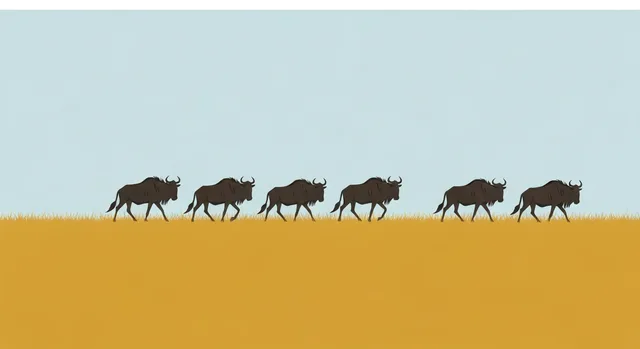
Two different ideas of a safari
Ruaha and the Serengeti are both superb, but they answer different questions. The Serengeti is the headline act of northern Tanzania — the endless plains, the Great Migration, reliable Big Five viewing and the easiest access of any park in the country. It is the natural choice for a first safari, for travellers who want the iconic spectacle, and for anyone building the classic Northern Circuit with the Ngorongoro Crater alongside. The trade-off is that fame brings vehicles: in peak season and the busy central sectors, you share the great sightings with other cars.
Ruaha is the opposite proposition. It is Tanzania's largest national park, deep in the wild south, and it trades the Serengeti's polish and crowds for raw, low-traffic wilderness. The country is more rugged — baobab-studded hills, seasonal sand rivers, a blend of southern and eastern African species — and the safari feel is remote and uncrowded, with strong populations of lion, leopard, cheetah, wild dog and big elephant herds. There is no great migration to anchor the calendar, but there is solitude: you can spend a morning on a sighting with no one else in view. The choice between them is really a choice between spectacle and seclusion.
At a glance: Ruaha vs Serengeti
A quick side-by-side to frame the decision. Everything here is evergreen — confirm current park fees, lodge prices, flight schedules and the herds' likely position with official sources and your operator close to travel.
- Circuit: Serengeti is the Northern Circuit; Ruaha is the Southern Circuit — different regions, different access.
- Headline draw: Serengeti has the Great Migration; Ruaha has wild, uncrowded big-predator country.
- Crowds: Serengeti can be busy in peak sectors; Ruaha is remote and low-traffic.
- Access: Serengeti is easy from Arusha by road or air; Ruaha is mainly reached by flying from the south.
- Best for: Serengeti suits first safaris and the Big Five; Ruaha suits repeat travellers wanting solitude.
- Combine: pairing both means more flying and a longer trip, not a quick add-on.
- Season: both reward the dry season — verify migration timing and Ruaha's concentrations for your dates.

Common questions: Ruaha or Serengeti?
Which is better, Ruaha or the Serengeti? Neither is universally better — they suit different travellers. Choose the Serengeti for the Great Migration, the Big Five and an easy first safari; choose Ruaha for remote, uncrowded wilderness and a wilder, repeat-safari feel.
Which should I pick for a first safari? Usually the Serengeti. It offers the iconic spectacle, reliable game viewing, easy access from Arusha and a natural combine with the Ngorongoro Crater — everything a first-timer pictures.
Which is quieter and wilder? Ruaha, by a wide margin. As Tanzania's largest park in the remote south, it sees far fewer vehicles, so you can have major sightings almost to yourself — the appeal for travellers who have done the headline parks.
Does Ruaha have the migration? No. The Great Migration belongs to the Serengeti–Mara ecosystem in the north. Ruaha's draw is its resident wildlife — strong predator populations, including wild dog, and large dry-season elephant herds.
Can I combine both in one trip? Yes, but they sit in different circuits — Serengeti in the north, Ruaha in the south — so combining means more flying and a longer, more expensive trip rather than a quick add-on. Many travellers do one circuit per trip.
When should I go to each? Both reward the dry season, when wildlife concentrates around water and the bush thins. For the Serengeti, build around the migration's likely position for your dates; for Ruaha, the dry months bring the strongest concentrations. Verify timing for your exact window.
Which is more expensive? It depends on lodge style and how you travel more than on the park itself. Ruaha's remoteness usually means flying in, which adds cost, while the Serengeti can be reached overland on a budget. Keep specific amounts to official sources and your operator.
What if I want the Big Five? The Serengeti is the surer bet, holding all of the Big Five with exceptional cats. Ruaha has superb predators and elephants but is not a classic rhino destination, so for a Big Five focus the northern plains win.

Related guides

Where to Combine With the Serengeti
The destinations that pair best with a Serengeti safari — the Ngorongoro Crater, Tarangire, Lake Manyara, Lake Natron, the Maasai Mara, and the beaches of Zanzibar or the summit of Kilimanjaro — and how to choose what to add.
Read guide
Luxury Serengeti Safari
High-end Serengeti planning — private guides and vehicles, fly-in camps in the most exclusive concessions, the finest lodges and mobile camps, and the migration placement that turns a beautiful trip into a flawless one.
Read guide
Serengeti or Maasai Mara?
Serengeti or Maasai Mara? They are two halves of one ecosystem split by the Tanzania–Kenya border. How to choose by migration timing, river crossings, budget, flights, crowds and trip length — with honest, evergreen guidance and no guarantees.
Read guideMore in Combine With
6
Arusha before Serengeti
How to use Arusha well before a Serengeti safari — as the place to land and recover from a long flight, sort gear and last-minute shopping, sleep an overnight if your timings demand it, and meet your operator and brief your guide. The gateway town's practical role, and why a night here often pays for itself. Evergreen and honest about logistics.
Read guide
Kilimanjaro and Serengeti
How to combine Kilimanjaro — a full summit climb or simply its views — with Serengeti safari days: which order to do them, how much recovery time to build in, the flights and transfers that link them, and the seasonal choices that make or break the trip. Evergreen and honest about timings.
Read guide
Lake Manyara with Serengeti
When Lake Manyara is worth adding to a Serengeti safari — its groundwater forest, flamingo-fringed soda lake and birdlife — and how it slots into a shorter or richer Northern Circuit route.
Read guide
Lake Natron and Serengeti
How to add Lake Natron — its flamingos, its blood-red soda flats, the great Rift Valley scenery and the volcanic backdrop of Ol Doinyo Lengai — to a Serengeti itinerary. The routing, the timing, what the detour actually offers and who it suits. Evergreen and honest about logistics.
Read guide
Lake Victoria after Serengeti
When and how to add Lake Victoria to the end of a Serengeti safari — the city of Mwanza, the western access through the park, the lake views and the slow, water-side change of pace. The routing, who it suits and when it actually works after the Western Corridor. Evergreen and honest about logistics.
Read guide
Maasai Mara & Serengeti safari
How to combine Kenya's Maasai Mara with Tanzania's Serengeti on one safari — the two halves of a single ecosystem and the same migration. The border logistics, the flights, the visas and the seasonal timing that decides which side to watch the crossings from. Evergreen and honest about timings.
Read guide