
Calving Season vs River Crossings
Two faces of the Great Migration: the southern Ndutu calving in the green months, and the northern Mara crossings in the dry. Decide between them by wildlife, budget, crowds, predictability and the kind of drama you want.

Photo: Denice Alex / Unsplash
- ✓Calving is the southern story (Ndutu, roughly January to March); crossings are the northern story (Kogatende, roughly July to October).
- ✓Calving is more predictable and predator-rich; crossings are more dramatic but far more dependent on luck and timing.
- ✓Green-season calving tends to be quieter and better value; dry-season crossings are peak price and book out earliest.
- ✓Cheetahs on open plains define calving; great churning river drama defines crossings — different photographs, different pace.
- ✓If you cannot choose, a longer trip can chase both faces of the migration across the year — but most travellers pick one.
Two faces of the same journey
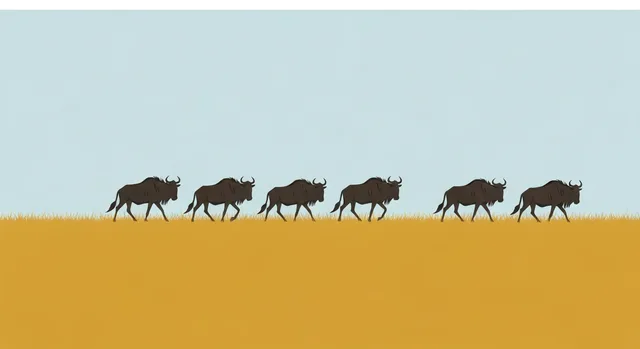
The Great Migration is a single year-round loop, but it offers two utterly different headline events, and most travellers can realistically build a trip around only one. In the green months at the start of the year, around half a million wildebeest are born in a few short weeks on the southern Ndutu plains — calving season. In the dry months later in the year, the herds reach the Mara River in the far north and gamble across crocodile-dark water — the river crossings. They are the same animals on the same journey, but the experiences could hardly be more different.
Choosing between them is one of the first real decisions of planning a Serengeti safari, and there is no universally right answer — only the right answer for what you want, when you can travel, and what you are willing to risk. This page lays the two side by side across the factors that actually matter: wildlife, predictability, crowds, cost, landscape and pace.
Calving season: the southern plains in the green months
Calving unfolds on the short-grass plains around Ndutu, on the Ngorongoro edge of the southern Serengeti, usually from January into March and peaking in February. The grass here is fed by volcanic ash from the highlands, and the open, treeless ground lets the herds see predators coming — which is exactly why they choose it to give birth. In a window of roughly three weeks, a vast pulse of calves arrives, and the plains fill with new life.
For visitors, calving is the most predator-intense window of the Serengeti year. Where there are vulnerable newborns there are lions, cheetahs and hyenas, and the open plains make the action visible in a way the bush rarely allows. This is the best time of year to watch a cheetah hunt across clear ground. The mood is green, fertile and dramatic — and, crucially, it is relatively predictable: the herds are reliably in the south in these months in most years, so you are far less dependent on luck than at a river crossing.
- Best months: roughly January to March, peaking in February (verify for your exact dates).
- Landscape: open, green, short-grass plains — wide skies, long sightlines.
- Signature sighting: cheetahs hunting in the open; predators working the calving herds.
- Predictability: high — the herds are reliably in the south in these months in most years.
River crossings: the northern drama in the dry months
The crossings happen on the Mara River in the Kogatende sector of the far north, usually from July to October and often peaking August into September. As the southern and central plains dry out, the herds push north for greener grazing, and the river becomes the great barrier in their path. They cross, graze, and frequently cross back, sometimes many times over a season. The reward for the traveller is the single most cinematic hour the Serengeti offers — and the hardest in all of Africa to time.
Here is the trade-off that defines the choice: a crossing cannot be scheduled or guaranteed. It hinges on rain, river level, grazing and the herds' collective nerve, and a quiet day with no crossing is entirely normal. You weight the odds by basing yourself in the north for several nights during the window with a patient guide — but you are buying a chance, not a certainty. Calving gives you reliable, visible drama; crossings give you the possibility of the most spectacular drama of all, at the price of real uncertainty.
- Best months: roughly July to October, often peaking August–September (verify for your dates).
- Landscape: rolling northern hills and the forest-lined Mara River.
- Signature sighting: the great churning river crossing — if the herd commits.
- Predictability: low — crossings depend on luck; build in several nights to improve the odds.
Crowds, cost and access
The two events sit at opposite ends of the Serengeti's busy-and-expensive scale. The dry-season crossing window is peak season: the most heavily booked and most expensive stretch of the year, with northern camps selling out a year or more ahead. The north is still far quieter than you might fear — much less crowded than the central park — but popular crossing points can gather a line of vehicles. Calving, falling in the green season, is generally quieter and better value, with gentler rates and fewer travellers competing for the same sightings.
Access differs too. The far north is remote, so crossing trips lean toward fly-in itineraries — a light aircraft to the Kogatende airstrip rather than a long overland drive. Calving country in the south is reachable both by road from Arusha (via Ngorongoro) and by air to the Ndutu area, which makes it a touch more flexible to combine with the rest of the Northern Circuit. As ever, do not quote yourself fixed prices from memory: fees and rates change, so verify current numbers with official sources and operators close to travel.
So which should you choose?
Choose calving if you value predictability, intense and visible predator action, open-plain photography and cheetahs in the clear, quieter camps and gentler rates — and if you can travel early in the year. It is the more reliable of the two: you are very likely to find the herds and the drama, even if you cannot script the exact scene.
Choose the crossings if the great river spectacle is your dream and you accept the gamble that comes with it — if you can travel in the dry months, book far ahead, budget for peak season, spend several nights in the north, and keep your expectations honest. The crossing is the more spectacular event when it happens, and the more disappointing when it does not, so it suits travellers who go for the whole wild experience rather than a single guaranteed photograph.
And if you genuinely cannot choose? A longer, well-routed trip can chase both faces of the migration in different years, or you can simply accept that the Serengeti will pull you back. Most travellers pick one event and build the trip around it — which is exactly the right instinct. Decide the event first, then the month, then everything else.
Related guides

Calving Season in the Serengeti
Calving season on the southern Serengeti plains around Ndutu — when roughly half a million wildebeest are born in about three weeks, why it draws the densest predator action of the year, and how to plan a green-season safari around it.
Read guide
Mara River Crossings in the Serengeti
How to plan a Northern Serengeti river-crossing safari without false promises — when the Mara crossings happen at Kogatende, why timing is luck, where to stay, and how to watch with good wildlife etiquette.
Read guide
The Great Migration, Month by Month
Where the wildebeest herds usually are in the Serengeti for each month of the year — calving in the south, the Grumeti in the west, the Mara crossings in the north — with the realistic odds of a river crossing and the right sector and camp to aim for.
Read guideMore in When to Go
6
Best Months for Serengeti Photography
Which Serengeti months deliver the photographs you want — dramatic light and dust, emerald plains, newborns, river crossings, big cats and fewer vehicles in your frame.
Read guide
Calving Season in the Serengeti (Ndutu)
Calving season on the southern Serengeti plains around Ndutu — when roughly half a million wildebeest are born in about three weeks, why it draws the densest predator action of the year, and how to plan a green-season safari around it.
Read guide
Christmas & New Year in the Serengeti
How to plan a Christmas or New Year safari in the Serengeti — green December plains, gathering herds, premium festive camps, family-friendly logistics and the flights that make a holiday trip work. Romantic, festive and worth booking early.
Read guide
Great Migration Planning Mistakes
The planning mistakes that make travellers miss the herds, overspend, or book the wrong Serengeti sector — and how to avoid each one so your dates, your camp and the migration actually line up.
Read guide
How to Choose a Migration Camp
Match a Serengeti camp to your month, the migration phase, the nearest airstrip, your budget and your wildlife goal — so you sleep where the herds will be, not where the brochure photo was taken.
Read guide
Mara River Crossing Etiquette
How to watch a Mara River crossing responsibly — keeping back from the banks, following TANAPA vehicle rules, and never pressuring the herds into or out of the water.
Read guide