
Christmas & New Year in the Serengeti
How to plan a Christmas or New Year safari in the Serengeti — green December plains, gathering herds, premium festive camps, family-friendly logistics and the flights that make a holiday trip work. Romantic, festive and worth booking early.

Photo: Sammy Wong / Unsplash
- ✓Christmas and New Year fall in the green season, with lush plains, gathering herds and the first hints of calving on the southern short-grass country.
- ✓The festive window is one of the busiest and most premium of the year — the best camps fill many months ahead, so book early.
- ✓On a 30-year average the herds are settling south toward Ndutu, making southern and central bases the natural choice; verify the live picture before booking.
- ✓Many camps lay on special festive dinners, bush celebrations and family activities — a holiday safari is as much an occasion as a wildlife trip.
- ✓Plan flights and connections carefully: the holidays are peak travel season worldwide, so international and light-aircraft seats go early.
Why the Serengeti makes an extraordinary holiday
Trading tinsel for a lantern-lit tent on the open plains is one of the most romantic ways to spend the holidays. A Christmas or New Year safari in the Serengeti swaps the familiar rituals for something elemental: dawn game drives across green, rain-washed grass; festive dinners under a sky thick with stars; and the slow, gathering drama of the migration settling toward its calving ground. For families, couples and groups who want a holiday that feels like a once-in-a-lifetime occasion, it delivers in a way few destinations can.
December places the Serengeti at its lushest. The short rains have greened the country, the southern plains are carpeted in fresh grass, and the herds are drawing together ahead of the great birthing pulse of late January and February. The light is soft and cinematic after rain, the air is clean, and the whole ecosystem feels charged with renewal. It is a quieter season for wildlife traffic than the famous dry-season crossings, but the atmosphere — green plains, big skies, gathering herds and festive warmth — is its own reward.
The honest framing matters here as everywhere on these pages: a safari is a wild experience, not a scheduled show. The migration follows the rains, not the calendar, and even at the holidays the herds can be more scattered or more concentrated depending on the season. We treat every timing as a long-run average and encourage you to verify the live picture with your operator. What you can count on is the green-season beauty, the festive spirit of the camps and the sense of occasion that makes a holiday safari unforgettable.
Where the herds usually are over the holidays
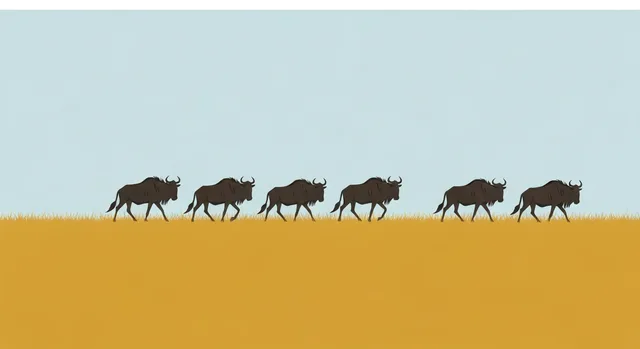
On the long-run average, the Christmas and New Year window catches the migration completing its return to the south. After greening through November, the southern short-grass plains around Ndutu draw the herds down off the central Serengeti, and large numbers typically spread across this open, nutrient-rich country by late December. This is the staging ground for calving: the wildebeest fatten on the new grass and concentrate, and the very first newborns can appear in the final days of the year, foreshadowing the birthing pulse to come.
Because the herds are settling south, the natural bases for a holiday safari are the southern plains and the central Serengeti. An Ndutu or southern-leaning camp puts you closest to the gathering herds and any early calving; a central Seronera base keeps you flexible and strong on resident wildlife — lions on the kopjes, leopards in the riverine figs, cheetahs on the open ground. There are no Mara River crossings at this time of year, so a festive trip is about renewal, gathering herds and big-cat action rather than the river spectacle of the dry season.
- Most likely pattern: herds gathering on the southern short-grass plains around Ndutu.
- Possible bonus: the first calves in the final days of December.
- No Mara crossings — the holidays are calving build-up, not river drama.
- Resident wildlife in central Seronera is reliable year-round, a strong holiday base.
A festive safari at a glance
Before the detail, here is the quick orientation for a Christmas or New Year trip — the facts that shape every booking decision. Treat the migration timing as a 30-year average and verify the live picture with your operator before committing to a camp or sector.
- Season: green season — lush plains after the short rains, generally easing into lighter showers.
- Herds (long-run average): gathering on the southern short-grass plains toward Ndutu.
- Spectacle: gathering herds, renewal and reliable big cats; first calves possible late month.
- No Mara crossings: the river drama belongs to the dry season, July to October.
- Demand: festive week (around Christmas to New Year) is peak and premium — book early.
- Best bases: southern/Ndutu camps for the herds; central Seronera for flexibility and resident cats.
- Access: fly-in via Arusha/Kilimanjaro to Seronera or southern airstrips; book seats early.
- Pairs well with: Ngorongoro Crater, Tarangire, and a Zanzibar beach finish.

Travelling as a family over the holidays
The holidays are when many travellers come as families, and the Serengeti can be a superb family safari — with a little planning. Some camps welcome children warmly, with family tents, flexible meal times, shorter or interest-led game drives, and activities pitched at younger guests; others are adults-focused or have minimum-age policies. The festive season is exactly when family-friendly camps fill, so confirm a camp's child policy early and book ahead. A private vehicle and guide, while a step up in cost, transforms a family trip: it lets you set the pace, take breaks and tailor drives to short attention spans.
Comfort and logistics matter more with children in the mix. Permanent lodges and well-appointed tented camps in central Seronera offer reliable facilities and easy access, making them sensible holiday bases for families, while still keeping you close to resident big cats and the gathering herds. Build in downtime — the heat of the day, a pool where one exists, a slower rhythm — rather than packing every hour with drives. Antimalarial precautions, sun protection for the fierce high-altitude light and sensible packing apply to every age. Done thoughtfully, a festive family safari becomes the holiday everyone remembers.
Flights, connections and timing the journey
Holiday timing collides with the busiest travel season on earth, so flights need early attention. Almost every Serengeti safari funnels through Arusha, reached via Kilimanjaro International Airport, with onward light-aircraft hops to the park's bush airstrips — Seronera in the centre and the southern strips near Ndutu for a festive trip. Both international long-haul seats over the holidays and the small light-aircraft seats into the park can sell out, so the rule is to lock in flights as early as your camp. Build in buffer time for connections; missing a once-daily bush flight over the holidays is a costly mistake.
For a festive trip, a fly-in itinerary saves the long overland hours and maximises game-viewing time — valuable on a holiday that may also include family at home before or after. A drive-in itinerary from Arusha shows you more of the country and folds in the Ngorongoro Crater and Tarangire naturally, at the cost of long road days. Light aircraft carry strict baggage limits — soft duffels only, with firm weight caps — so pack accordingly. Whichever you choose, sequence the journey with margin so the holidays stay relaxed rather than rushed.
Building the perfect holiday itinerary
A festive Serengeti safari shines when it is unhurried. Three to four nights in the park is a sensible minimum; a week lets you combine sectors and add the wider Northern Circuit without the trip feeling rushed over the holidays. A classic festive route flies in for several nights in the south and centre — close to the gathering herds and reliable big cats — and adds a night on the Ngorongoro Crater rim, descending for a morning game drive on the wildlife-packed caldera floor. For a contrast at the end, a short flight drops you on the white sand of Zanzibar to see in the New Year by the sea.
However you build it, plan around two truths: the herds follow the rains, so verify their likely position for your exact dates and choose your sector accordingly; and the festive season is the year's busiest green-season window, so the camps you want and the placement you need both reward early booking. Get those two things right and a Christmas or New Year safari becomes the rare holiday that lives up to its billing — green plains, gathering herds, festive warmth under the stars, and a sense of occasion you carry home long after the season ends.
A final word on expectations, because they make or break a holiday trip. A festive safari is not a guaranteed parade of the migration's headline moments — there are no Mara crossings at this time of year, and the great calving pulse is still weeks away. What December reliably delivers is a green, brimming park, herds drawing together in vast numbers, dependable big-cat viewing in the centre, dramatic skies and the warmth of camps in full festive flow. Come for that, rather than a checklist of must-see spectacles, and the season rarely disappoints. The travellers who leave happiest are those who embrace the slower, atmospheric rhythm of the green season and let the wild Serengeti unfold the holiday on its own terms.
Practically, that means giving the trip enough time to breathe. Resist the temptation to cram too many camps or parks into a short festive window; a couple of unhurried bases, sequenced with margin for the once-daily bush flights, makes for a far more relaxed holiday than a frantic dash. Confirm child policies and family tents early if you are travelling with children, lock in international and light-aircraft seats as soon as your camp is held, and pack for warm days, fresh mornings and the odd passing shower. Do the planning early and well, and the reward is a holiday measured not in the usual rituals but in dawn light on green plains and a star-thick sky over a lantern-lit tent.
Related guides

Serengeti in December
December settles the herds back toward the south: green plains, gathering wildebeest ahead of calving, and the festive-season buzz that lifts demand at the better camps. A lush, lively month that rewards booking early.
Read guide
Family-Friendly Serengeti Camps
How to choose a family-friendly Serengeti camp — family tents and interconnecting rooms, pools, sensible child policies, flexible meals and gentler drive pacing — so a safari with kids works for everyone.
Read guide
Luxury Camps in the Serengeti
How to choose a luxury camp in the Serengeti — high-end tented camps and lodges compared by sector, migration season, guiding quality, privacy and fly-in logistics, with honest, no-guarantee guidance.
Read guideMore in When to Go
6
Best Months for Serengeti Photography
Which Serengeti months deliver the photographs you want — dramatic light and dust, emerald plains, newborns, river crossings, big cats and fewer vehicles in your frame.
Read guide
Calving Season in the Serengeti
Calving season on the southern Serengeti plains around Ndutu — when roughly half a million wildebeest are born in about three weeks, why it draws the densest predator action of the year, and how to plan a green-season safari around it.
Read guide
Calving Season in the Serengeti (Ndutu)
Calving season on the southern Serengeti plains around Ndutu — when roughly half a million wildebeest are born in about three weeks, why it draws the densest predator action of the year, and how to plan a green-season safari around it.
Read guide
Calving Season vs River Crossings
Two faces of the Great Migration: the southern Ndutu calving in the green months, and the northern Mara crossings in the dry. Decide between them by wildlife, budget, crowds, predictability and the kind of drama you want.
Read guide
Great Migration Planning Mistakes
The planning mistakes that make travellers miss the herds, overspend, or book the wrong Serengeti sector — and how to avoid each one so your dates, your camp and the migration actually line up.
Read guide
How to Choose a Migration Camp
Match a Serengeti camp to your month, the migration phase, the nearest airstrip, your budget and your wildlife goal — so you sleep where the herds will be, not where the brochure photo was taken.
Read guide