
Klein's Gate: The Serengeti's Far-Northern Entrance
A full guide to Klein's Gate, the Serengeti's remote north-eastern entry toward Loliondo — the road routes in, the private concession context that gives it special significance, how it serves the Lobo and Kogatende country, and when this specialist gate matters.

Photo: Magdalena Kula Manchee / Unsplash
- ✓Klein's Gate sits in the remote north-east of the Serengeti, serving the far-northern park and the neighbouring Loliondo country.
- ✓It is a specialist gate, not a mainstream one — most visitors reach the far north by light aircraft, so the great majority never use it.
- ✓It opens toward the Lobo and Kogatende sectors: rolling hills and the Mara River crossing country of the dry season.
- ✓The gate matters most for self-drivers and operators working the northern and Loliondo routes, and for trips touching the private concessions in the wider northern ecosystem.
- ✓Park fees, opening hours and cashless payment systems change — always verify current Tanzania National Parks (TANAPA) details before you travel.
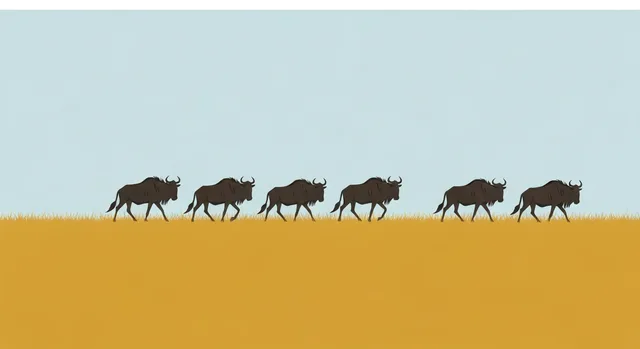
The edge of the wild north
Far from the busy southern front door, in the remote north-eastern reaches of the Serengeti, a quieter gate marks the boundary between the national park and the rolling Loliondo country beyond it. Klein's Gate is the Serengeti's far-northern entrance, and it has a flavour entirely its own: where Naabi Hill is the crowded threshold of the southern plains, Klein's is a specialist gate at the edge of the wildest, least-travelled part of the ecosystem. This is the country of long hills and open savanna, of the Lobo and Kogatende sectors, and of the Mara River crossings that draw travellers from around the world in the dry season. The gate that serves this corner is, fittingly, a remote and uncrowded one.
Klein's Gate is not a gate most visitors will ever use, and that is the first thing to understand about it. The overwhelming majority of travellers reach the far-northern Serengeti by light aircraft, flying into the Kogatende or Lobo airstrips and skipping the road gates entirely. But for the smaller number who come overland from the Loliondo side, who move between private concessions in the wider northern ecosystem, or who are routing a self-drive expedition through the remote north, Klein's matters a great deal. This guide explains where it sits, the road routes that use it, the private concession context that gives it special significance, and the practical checks that apply at any Serengeti gate.
At a glance: Klein's Gate
Use this quick read to understand where Klein's fits, then read the detail below. Everything here is evergreen — verify current park fees, opening hours and payment methods with official TANAPA sources and your operator close to travel.
- Where: the remote north-east of the Serengeti, on the boundary toward the Loliondo country.
- Serves: the far-northern park — the Lobo and Kogatende sectors and the Mara River crossing country.
- Best for: overland approaches from the Loliondo side, self-drive expeditions in the north, and trips touching the private concessions of the wider northern ecosystem.
- Traffic: a specialist, low-volume gate — most northern visitors fly in and never use it.
- Context: the Loliondo area beyond the gate includes private concession land with its own access arrangements.
- Payment: the Serengeti uses cashless payment at its gates; your operator handles this on a guided trip.
- Watch out for: long, remote driving distances and gate opening hours that limit late arrivals.
Where Klein's Gate sits in the northern map
To understand Klein's Gate you have to picture the far north of the Serengeti, which is a different landscape from the open southern plains. The north is a country of rolling hills, granite outcrops, wooded valleys and open savanna, climbing toward the Kenyan border and the Mara River. Two named sectors dominate it: Lobo, with its dramatic kopjes and strong resident wildlife, and Kogatende further north and west, the prime Mara River crossing country. Klein's Gate sits on the eastern edge of this northern region, where the park meets the Loliondo lands, making it the relevant boundary point for approaches from that direction.
Because the north is so far from the southern and central park, the way travellers reach it shapes everything. A road journey from Seronera to the far north is long — a full traverse of much of the park — while a flight to the Kogatende or Lobo airstrip takes a fraction of the time. This is exactly why most northern itineraries are fly-in, and why Klein's Gate sees so little traffic relative to its strategic position. It comes into its own for the specific routes that approach the north overland from the east, rather than from the central park or from the air.
The road routes that use Klein's
Klein's Gate matters chiefly for overland travel that approaches the northern Serengeti from the Loliondo side to the east, rather than from the central park. For operators and self-drivers routing a trip through that eastern country — moving between the wider northern ecosystem and the national park, or accessing camps positioned toward the Loliondo boundary — Klein's is the natural entry or exit point. It is the gate that connects the park's remote north-east to the lands beyond it, and on the specific routes that use it, there is no closer alternative.
It is worth being clear-eyed about the driving involved. The far north is remote, the distances are long, and the tracks demand a capable vehicle and a guide who knows the country. This is expedition territory, not a quick hop, and a road journey through Klein's is a serious undertaking best left to experienced operators. For most travellers the practical conclusion is simple: if your trip is fly-in to the north — as the majority are — Klein's Gate is largely academic; if you are part of the smaller cohort coming overland through the Loliondo side, it is the gate your route turns on.
- Used for: overland approaches to the northern Serengeti from the Loliondo country to the east.
- Used for: self-drive expeditions and operator routes touching the park's remote north-east.
- Less relevant for: the majority of northern trips, which are fly-in to Kogatende or Lobo airstrips.
- Expect: long, remote driving distances and demanding tracks — experienced operators only.
The Loliondo and private concession context
Part of what gives Klein's Gate its particular significance is what lies beyond it. The Loliondo area to the east of the national park is a distinct landscape with its own management and access arrangements, including private and community concession land used for tourism in the wider northern ecosystem. These concessions can offer experiences the national park itself does not always permit — and they sit in beautiful, remote country adjoining the far-northern Serengeti. Klein's Gate is one of the threshold points between this concession world and the national park proper.
For travellers, the practical upshot is that a trip touching the northern concessions may involve Klein's Gate as the connecting point between concession land and the park, with access governed by both park rules and the concession's own arrangements. This is more complex than a straightforward drive-in through a public gate, which is another reason such trips are firmly the territory of specialist operators who know the area and its permissions. If a northern concession stay is part of your plan, the operator will handle the gate and concession logistics; your job is simply to understand that this remote north-east corner works differently from the busy southern circuit.
When Klein's Gate actually matters for your trip
Set against the whole sweep of Serengeti planning, Klein's Gate is a gate you should know exists but will probably never use, and being honest about that is more helpful than overstating it. It matters when your trip is built around the far-northern Serengeti and you are approaching overland from the Loliondo side; when you are visiting a private concession in the north-east that connects to the park through this gate; or when you are part of a self-drive expedition routing through the remote north. In those specific cases it is the right and often the only sensible entry point.
It does not matter for the great majority of safaris. If you are flying into the north for the Mara River crossings — as most crossing-focused travellers do — you land at a bush airstrip and never touch a road gate. If your trip centres on the southern plains, central Seronera or the western corridor, a different gate entirely serves you. The takeaway is the one that runs through all the gate guides: your entry point is a function of your route, your camp and how you travel, and for the far north that usually means an airstrip, not Klein's. Let your operator decide whether the gate features at all.
The far north and the migration
Whatever way you reach it, the far-northern Serengeti that Klein's Gate serves is the chapter of the migration most people travel to Tanzania to witness. In a typical year the herds reach the Mara River in the far north from about July, and the famous river crossings unfold around the Kogatende country through the dry months, with peak drama usually in August and crossings continuing into September and October as the herds move back and forth across the Kenyan border. The north is also quieter at the river than the Kenyan side, one of its strongest draws.
As everywhere in this ecosystem, the timing is a long-term average rather than a schedule, and crossings are never guaranteed — they hinge on weather, grazing, river level and the herds' collective nerve, and no honest operator can promise one on a given day. Treat any month as a 30-year average, verify the likely picture for your exact dates close to travel, and give yourself several nights in the north to weight the odds in your favour. Whether you arrive by air or, on the right route, overland through Klein's, the reward is the same: the most cinematic spectacle in the Serengeti, in its most remote and beautiful corner.
Fees, payment and the practical checks
At Klein's, as at every Serengeti gate, the practical realities are consistent. Park entry fees are charged per person for a set period and are separate from your accommodation — a fixed, unavoidable layer of cost. The Serengeti operates cashless payment at its gates, so fees are settled electronically rather than in cash; on a guided trip your operator handles this without you noticing, but self-drivers in this remote country should confirm the current payment method and have it arranged well in advance, because there is no margin for surprises so far from anywhere. Permits are checked, visitor numbers logged, and then the wild north opens ahead.
Because fees, payment systems and opening hours all change over time, we deliberately do not quote fee amounts here — a number that is right this year will be wrong next year, and stale figures are worse than none. The reliable rule is to verify current park fees, conservation levies, payment methods and gate hours with official Tanzania National Parks (TANAPA) sources and your operator close to travel. Plan around the principle that fees are a real, separate cost, confirm the specifics shortly before you go, and — especially on a remote northern route — let an experienced guide handle the paperwork on the day.
Common questions about Klein's Gate
Where is Klein's Gate? In the remote north-east of the Serengeti, on the boundary toward the Loliondo country, serving the far-northern park.
What does Klein's Gate serve? The far-northern Serengeti — the Lobo and Kogatende sectors and the Mara River crossing country of the dry season.
Do most visitors use Klein's Gate? No. It is a specialist, low-volume gate; most northern travellers fly into the Kogatende or Lobo airstrips and never use a road gate.
Why does Klein's Gate matter? It is the connecting point for overland approaches from the Loliondo side and for trips touching the private concessions of the wider northern ecosystem.
Can I drive in through Klein's? On the right route, yes — but the far north is remote, the distances are long and the tracks are demanding, so it is firmly the territory of experienced operators.
How do I pay fees at Klein's? The Serengeti uses cashless payment at its gates. On a guided trip your operator handles it; self-drivers should confirm the current method with TANAPA in advance and verify fee amounts close to travel.

Related guides

Northern Serengeti & Kogatende Guide
The complete guide to the Northern Serengeti — the Mara River, Kogatende, Lamai and the remote crossing country worth the flight. Dry-season migration timing, quieter game drives, where to stay, and how to plan a trip around the river.
Read guide
Lobo Serengeti Guide
A guide to the Lobo area of the northern-central Serengeti — its hills, woodlands and granite kopjes, the return-migration possibilities that make it a strategic October–November base, and how Lobo fits a northern itinerary.
Read guide
Driving to the Serengeti: Roads, Timing and the Long-Haul Reality
What driving to the Serengeti is really like — the road route from Arusha through Ngorongoro, gate timing, road conditions in the dry and the rains, vehicle choice, and why nearly everyone travels with an operator rather than self-driving.
Read guideMore in Serengeti Gates
2
Naabi Hill Gate: The Serengeti's Southern Gateway
A full guide to Naabi Hill Gate, the Serengeti's busy southern entrance — the route in from Ngorongoro and Arusha, drive timing, the famous viewpoint, fee and payment checks, and how the gate fits a Northern Circuit road safari.
Read guide
Ndabaka Gate: The Serengeti's Western Entrance
A full guide to Ndabaka Gate, the Serengeti's western entry near Lake Victoria — the route in from Mwanza, when this gate saves serious driving, how it opens onto the Western Corridor, and the practical fee and timing checks.
Read guide