
Lobo Serengeti Guide
A guide to the Lobo area of the northern-central Serengeti — its hills, woodlands and granite kopjes, the return-migration possibilities that make it a strategic October–November base, and how Lobo fits a northern itinerary.

Photo: Helena Pfisterer / Unsplash
- ✓Lobo sits in the northern-central Serengeti, south of the Mara River country and north of Seronera — a transition zone of wooded hills, valleys and granite kopjes.
- ✓It is classic return-migration territory: as the short rains break, the herds drift back south from the Mara and often pour through the Lobo hills, making it a strategic October–November choice.
- ✓The broken, rocky terrain holds strong resident wildlife — lions on the kopjes, leopard in the woodland — so Lobo rewards visitors even outside the migration.
- ✓Quieter and less developed than Seronera, with a small number of camps and an airstrip serving fly-in trips to the area.
- ✓All migration timing here is a 30-year average — the herds follow rain, not a calendar — so verify the likely position for your exact dates.
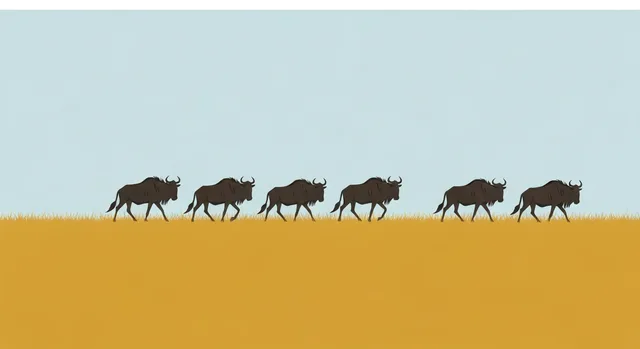
The hills where the herds turn for home
Lobo is one of the Serengeti's most strategic and least-hyped corners. It lies in the northern-central reach of the park, below the Mara River crossing country and above the central Seronera valley — a transition zone of rolling wooded hills, hidden valleys and the dark granite kopjes that the north does so well. It does not have the flat, infinite-plain drama of the south or the headline crossings of Kogatende, and that is precisely why people who know the Serengeti love it.
The romance of Lobo is in its timing. This is return-migration country: when the short rains break in roughly late October and November, the great herds turn away from the Mara and begin streaming south again toward the calving grounds, and their route often funnels them straight through the Lobo hills. For a few weeks the woodland valleys fill with wildebeest and zebra on the move, watched by far fewer vehicles than the crossing crowds further north. To stand among that southbound river of animals is to catch a chapter of the migration most travellers never see.
This guide covers what defines the Lobo area, why it is a clever October–November base, the resident wildlife that makes it worthwhile year-round, how to reach it, and the honest expectations to bring — because Lobo's strength is also its catch: it is brilliant when the timing lands, and you have to plan to give that timing the best chance.
Where Lobo sits, and what the country looks like
Picture the Serengeti as a vertical loop and Lobo sits on the eastern shoulder of the northern half — south of the Lamai wedge and Kogatende, north and slightly east of Seronera. The drive between Seronera and the far north passes through this country, which is part of why Lobo has long been a natural staging point on a northern itinerary. It is less a single landmark than a region: the Lobo hills, the wooded valleys around them, and a scatter of kopjes that break up the horizon.
The terrain is the key to Lobo's character. Where central Seronera is river-and-plain and the south is open short grass, Lobo is broken, hilly, wooded ground. Acacia and broad-leaved woodland cloak the slopes; granite outcrops rise out of the valleys; seasonal watercourses thread between the ridges. This is excellent ambush and lookout country, which is why it holds such good resident predator populations — lions that den and survey from the kopjes, leopard that hunt the woodland edges.
That structure also shapes the migration's path. As the herds move south off the Mara, the hills and valleys around Lobo act as a corridor, concentrating animals along certain routes. It does not happen on a fixed date, and in some years the herds skirt wide, but in a good year the return migration through Lobo is a genuine spectacle in a sector that stays refreshingly quiet.
- Position: northern-central Serengeti, between the Mara River country and Seronera, on the eastern side of the loop.
- Landscape: wooded hills, valleys and granite kopjes — broken, ambush-rich terrain, not open plain.
- Resident wildlife: strong lion and leopard populations year-round, plus general plains game.
- Migration role: a return-migration corridor as the herds stream south on the short rains.
Why Lobo is a strategic October–November choice
The case for Lobo rests on a window most planning charts gloss over. Through the high crossing months, attention — and almost every vehicle — is glued to the Mara River in the far north. But as the short rains arrive, usually from late October into November, the migration reverses: the herds leave the river, turn south, and begin the long walk back toward the calving plains. Lobo's hills sit squarely on a common return route. Base yourself here in that window and you can find yourself watching the southbound herds stream through wooded valleys, with a fraction of the crowds that lined the river weeks earlier.
This makes Lobo a clever choice for travellers whose dates fall in the awkward shoulder between the dry-season crossings and the southern calving — the very stretch when a lot of itineraries struggle to place the herds. Rather than chasing a crossing that has mostly wound down, you position for the return movement instead. It also pairs neatly with a late-season northern trip: a few crossing-window nights up at Kogatende or Lamai, then a move down to Lobo as the herds begin to follow you south.
The usual honesty applies, and it matters more here than almost anywhere: this is a 30-year-average pattern, not a guarantee. The short rains do not arrive on a fixed date, and the herds' exact route varies year to year — some years they pour through the Lobo hills, some years they swing wide. Treat the October–November timing as an educated bet, verify the likely position for your exact dates close to travel, and choose Lobo for its quiet hills and resident wildlife as much as for the chance of the return migration.
Lobo at a glance
A quick orientation card for planning. Treat the seasonal notes as long-term averages and confirm specifics — airstrip transfers, camp opening months, current park fees — with your operator and official sources close to travel, since these shift and we deliberately avoid quoting figures that go stale.
- Location: northern-central Serengeti, between the Mara River country and Seronera.
- Landscape: wooded hills, valleys and granite kopjes.
- Best for: the return migration (≈ October–November), strong resident lions and leopard year-round, and a quieter alternative to Seronera and the crossing sectors.
- Getting there: fly-in via the Lobo airstrip, or overland as part of a northern drive-in route through Seronera.
- Stay: a small number of lodges and camps; quieter and less developed than the central park.
- Verify before booking: herd position and short-rain timing for your exact dates, camp opening season, and current fees.

Resident wildlife: why Lobo works year-round
Even with the migration absent, Lobo is rewarding country, and that resident wealth is what makes it more than a one-season bet. The granite kopjes are prime lion territory — prides den and survey from the rocks, and the broken ground gives them cover to hunt. The woodland and valley edges favour leopard, which the hilly terrain hides and supports well. Elephant move through the valleys, buffalo gather at water, and a strong supporting cast of giraffe, plains game and birds fills the slopes.
The honest framing, as everywhere in the Serengeti, is probabilities rather than promises. What Lobo offers the patient visitor is good odds on big cats in a beautiful, broken landscape, with few other vehicles to share a sighting. A leopard draped in an acacia at dusk, watched by your vehicle alone in the gold light off the kopjes, is the kind of moment Lobo trades in — quieter and more intimate than the busier central park.
That low traffic is a recurring theme. Lobo has never been heavily developed, so even in the migration window it stays calmer than Seronera or the crossing points. For travellers who value solitude and the feeling of a wilder Serengeti over the guarantee of crowds-and-action, the trade is a happy one.

Getting to Lobo and where to stay
Lobo is reachable both ways, which adds to its usefulness on a northern itinerary. By air, the Lobo airstrip takes light aircraft from Arusha, Kilimanjaro and the other Serengeti airstrips, dropping you within easy reach of the area's camps — the fly-in route that suits shorter, focused trips and saves the long road hours. By road, Lobo sits naturally on the overland drive between Seronera and the far north, so it slots into a drive-in itinerary without a detour; many classic northern road trips overnight here on the way up or down.
Accommodation is deliberately limited. A handful of lodges and tented camps serve the area, ranging from long-established hilltop lodges with sweeping valley views to smaller seasonal camps that lean into the wild. The scarcity keeps Lobo quiet, but it also means good beds book ahead for the return-migration window. As with any migration-led choice, position matters: ask where a camp sits relative to the usual southbound routes, and verify it against where the herds are expected for your dates.
Many travellers treat Lobo as one leg of a larger northern loop rather than a sole destination. A satisfying late-season shape is a few crossing-window nights up at Kogatende or in the Lamai wedge, then a move down to Lobo to meet the return migration, perhaps finishing in central Seronera for reliable resident big cats. Lobo's position makes it the natural pivot between the far north and the centre.
Common questions about Lobo
When should I visit Lobo? Its standout window is the return migration, roughly October into November, when the herds stream south off the Mara and often pour through the Lobo hills. Treat that as a long-term average and verify the likely herd position for your exact dates. Outside the window, Lobo is quiet and strong on resident wildlife year-round.
Will I definitely see the migration there? No. The return route varies year to year with the short rains, and some years the herds swing wide of the hills. Choose Lobo for its quiet, its resident lions and leopard, and the good chance — not the guarantee — of the southbound herds.
How is Lobo different from Seronera? Seronera is the busy central river-and-plain heart of the park; Lobo is quieter, hillier and more wooded, north and east of Seronera, with fewer camps and fewer vehicles. Both hold excellent resident big cats.
How do I get there? By light aircraft to the Lobo airstrip for a fly-in trip, or overland on the drive between Seronera and the far north — Lobo sits naturally on that route.
Is it a good base for a northern crossing trip? It can be the second half of one. Many late-season itineraries spend the crossing window up at Kogatende or Lamai, then drop down to Lobo to meet the return migration as the herds turn south.

Related guides

Northern Serengeti & Kogatende Guide
The complete guide to the Northern Serengeti — the Mara River, Kogatende, Lamai and the remote crossing country worth the flight. Dry-season migration timing, quieter game drives, where to stay, and how to plan a trip around the river.
Read guide
Serengeti in October
October is the late-season turn: the herds begin drifting back south through the north and the Lobo country, crossings grow patchier, heat builds, and the camps quieten. The dry season's last, calmer act before the rains.
Read guide
The Migration in the Northern Serengeti
How the Great Migration plays out in the Northern Serengeti — dry-season timing, Mara River strategy, the Kogatende camps, and why staying close to the river for several nights matters more than anything else.
Read guideMore in Northern Serengeti
2
Kogatende: Gateway to the Mara Crossings
A guide to Kogatende — the airstrip, the camps and the Mara River access that make it the key base for crossing-season safaris in the Northern Serengeti. Why this is where most northern trips begin, and how to plan around it.
Read guide
Lamai Serengeti Guide
A guide to the Lamai wedge in the far northern Serengeti — the triangle of rock-strewn hills between the Mara River and the Kenyan border, its remote crossing-season camps, and how to plan a trip to the quietest corner of the park.
Read guide