
Northern Serengeti & Kogatende Guide
The complete guide to the Northern Serengeti — the Mara River, Kogatende, Lamai and the remote crossing country worth the flight. Dry-season migration timing, quieter game drives, where to stay, and how to plan a trip around the river.

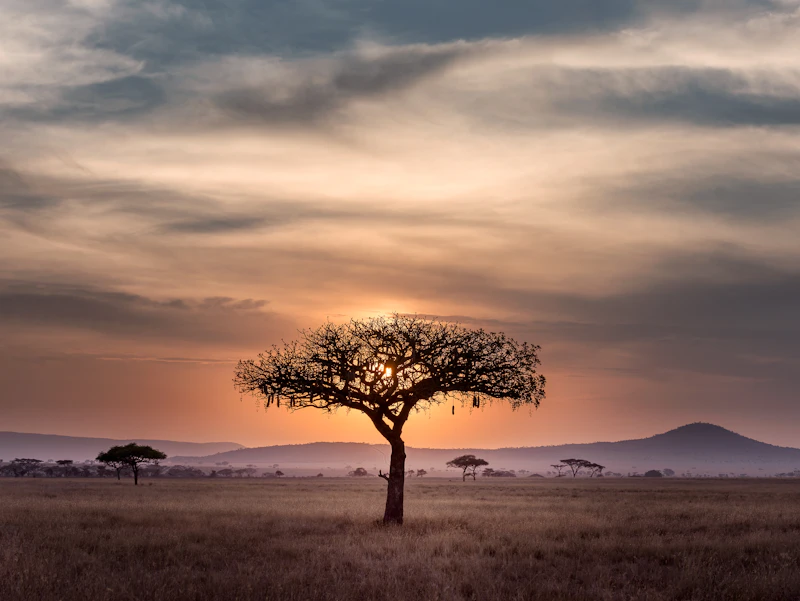
Photo: David Clode / Unsplash
- ✓The Northern Serengeti holds the Mara River and its crossings — the remote, rolling, quietest crossing country in the ecosystem.
- ✓The two key sectors are Kogatende, just south of the river, and the Lamai Wedge, the triangle of land between the Mara and the Kenyan border.
- ✓Best from roughly July to October, when the herds reach the river and crossings are most likely — treat this as a 30-year average and verify.
- ✓Crowds are far thinner than the central park, but camps are limited and the best book out a year or more ahead.
- ✓Most travellers reach the north by light aircraft to the Kogatende airstrip rather than the long drive, which is why northern trips lean fly-in.
- ✓Even outside the crossing window, the north rewards visitors with resident wildlife, sweeping scenery and a sense of genuine remoteness.
The far edge of the endless plain
The Northern Serengeti is where the great park stops being a plain and becomes a country of hills. Drive or fly north from the open grasslands of Seronera and the land begins to fold — rolling green ridges, wooded valleys, granite outcrops, and threading through it all the dark, deceptively quiet water of the Mara River. This is the most remote part of the Serengeti, and remoteness is precisely its gift. In the dry season, when the herds are here, you can watch one of the planet's great wildlife spectacles with only a handful of other vehicles, a world away from the busier central park.
For many travellers, the north is the Serengeti they came for. The image that draws people to Tanzania — wildebeest pouring across a crocodile-dark river in a churning, desperate rush — happens here, on the Mara, and almost nowhere else in this ecosystem at that scale. But the north is more than its crossings. It is a landscape of extraordinary beauty and space, and it rewards the traveller who comes for the place as much as the event.
At a glance
A quick orientation before the detail below. Keep park fees and camp availability to official sources and your operator — figures change, and this page stays evergreen by design.
- Where: the far north of the park, around the Mara River, against the Kenyan border.
- Key sectors: Kogatende (south of the river) and the Lamai Wedge (between the river and the border).
- Best for: the Mara River crossings, low crowds, and dramatic rolling scenery.
- Best months (30-year average): roughly July to October, peaking around August — verify for your exact dates.
- Getting there: usually a light-aircraft hop to the Kogatende airstrip; the road drive is long.
- Style of trip: fly-in safaris, mobile camps that move with the herds, and a small number of permanent camps.
- Watch out for: limited beds that book out a year or more ahead, and the honest fact that crossings can never be guaranteed.
Kogatende and the Lamai Wedge
The Northern Serengeti is best understood as two adjoining stages either side of the Mara River. South of the river lies Kogatende, the practical hub of the north: it holds the main airstrip, the largest cluster of camps, and the most accessible stretches of river bank for watching crossings. When people talk about basing themselves in the north, Kogatende is usually what they mean. It is the gateway and the heart of the crossing country.
North of the river, pressed up against the Kenyan border, is the Lamai Wedge — a triangle of high, rolling, beautiful country between the Mara and the international line. Lamai is quieter still than Kogatende, with a handful of camps and a real sense of being at the very edge of the map. The herds move back and forth between the two as they cross and re-cross the river through the season, so a camp on either side can put you within reach of the action, depending on where the wildebeest are on a given week.
The river itself is the dividing line and the main event. The Mara is broad, muddy and unpredictable, and the crossing points shift from year to year as the banks erode and the herds find new lines. A guide who knows the current crossing points and reads the herds' mood is the difference between a long, patient wait that pays off and one that does not — which is exactly why local knowledge matters so much in the north.
The Mara River crossings
The crossings are the reason most travellers make the journey north, and they deserve a clear-eyed description. From about July, the leading edge of the migration reaches the Mara River. Columns of wildebeest, with zebra mixed among them, gather on the banks, hesitate, mill, and then — triggered by something no human fully understands — pour across in a churning rush through water that hides enormous crocodiles. It is chaotic, loud, dusty and utterly compelling, the single most cinematic hour in the Serengeti and the hardest of all to time.
Peak drama is usually August, with crossings continuing into September and often October as the herds move back and forth across the Kenyan border between the Serengeti and the Maasai Mara. But — and this is the part every honest guide will tell you — a crossing can happen at dawn or not at all on any given day. The herds cross when they cross. No ethical operator can schedule one, and anyone who promises a guaranteed crossing is selling you something they cannot deliver.
The way to weight the odds in your favour is straightforward: base yourself in the north for several nights during the window rather than passing through for a day, travel with a patient guide who knows the river, and accept that the waiting is part of the experience. Three or more nights dramatically improves your chances over a single rushed visit. And remember that even the approach — the herds massing nervously on the bank, the tension building — is a spectacle in itself, crossing or no crossing.
- July: the leading edge reaches the river; the first crossings usually begin.
- August: the usual peak of crossing drama at Kogatende and Lamai.
- September–October: crossings continue as the herds move across the Kenyan border.
- Always: crossings cannot be scheduled or guaranteed — give yourself several nights and a patient guide.
When to go, month by month
The north is fundamentally a dry-season destination, and its calendar is the inverse of the southern plains. While Ndutu fills with newborn calves in the early year, the north is quiet; while the north thunders with crossings in the dry months, the south has emptied. Getting the timing right is everything, because a beautiful northern camp in the wrong month puts you hours of empty country away from any herds at all.
In broad terms: the herds typically arrive from July, the crossings peak around August, and the action continues into September and October before the short rains begin to pull the herds back south toward the central and southern Serengeti. Come too early — say, May or June — and the herds are usually still well to the south and west. Come too late — November onward — and they have generally moved on. As always, this is a 30-year average and not a schedule; the migration follows the rain, and a fortnight's swing in either direction is entirely normal. Verify the herds' likely position for your exact dates close to travel.
- May–June: herds usually still south and west; the north is quiet and green.
- July: the leading edge arrives; crossings begin in most years.
- August: peak crossing season and peak demand.
- September–October: crossings continue; the herds shuttle across the border.
- November onward: short rains begin and the herds drift back south.
Beyond the herds: resident wildlife and scenery
It would be a mistake to think of the north only as a crossing venue. The landscape itself is among the most beautiful in the Serengeti — open, rolling, golden in the dry season, dotted with granite kopjes and stitched together by wooded river lines. For photographers, the scenery alone justifies the journey, and the lower vehicle density means cleaner backgrounds and unhurried light at every sighting.
The wildlife is more than wildebeest, too. The north holds resident lions, leopards in the riverine thickets, cheetahs on the open ground, and good numbers of elephant and giraffe. The Mara and its tributaries support hippo pods and those famous crocodiles year-round. Outside the crossing window the north is genuinely quiet in the visitor sense, which suits travellers who prize solitude and scenery over sheer density — though those whose single aim is the migration should be honest that they need to come in the dry-season window to find the herds.
Where to stay in the north
Accommodation in the north falls into a few clear styles. Mobile camps — also called seasonal or migration camps — are the classic northern choice: they set up for the crossing season near the river and pack down when the herds move on, putting you as close as possible to the action. A small number of permanent camps and lodges operate year-round, trading the mobility for more substantial comfort and reliable bases. Both Kogatende and the Lamai Wedge hold a mix.
The decisive rule in the north is placement over photographs. Because the herds shuttle back and forth across the river through the season, you want a camp positioned for where the wildebeest are expected during your dates, on the side of the river they are likely to favour. Confirm this with your operator before booking. The other hard truth is scarcity: the north has relatively few beds, and the best camps in peak season book out a year or more in advance, so a northern crossing trip rewards early planning above almost any other Serengeti journey.
Getting to the Northern Serengeti
The north's remoteness shapes how you reach it. The overland drive from Arusha or even from central Seronera is long — many hours over rough roads — which is why the great majority of northern trips are fly-in. Light aircraft connect Arusha, Kilimanjaro and other points on the circuit to the Kogatende airstrip, dropping you within reach of your camp and the day's game drives. For travellers on limited time, flying is not a luxury but a near-necessity, buying back precious hours that the road would consume.
If you do drive, treat the journey as part of the safari rather than a transfer to endure: the route north shows you the changing face of the Serengeti, from open plains to rolling hills. But for most, a light-aircraft hop is the sensible choice, and it pairs naturally with a fly-in itinerary that strings the north together with other sectors. Bear in mind the strict baggage rules of small planes — soft duffels only, with firm weight limits — and pack accordingly.
Combining the north with the rest of your trip
A northern leg slots into a wider Tanzania journey in several ways. The most natural pairing is with central Seronera for resident big cats earlier in the trip, then a flight north for the crossings — a sequence that gives you the Serengeti's two great faces. Some travellers combine the Serengeti's north with the Maasai Mara across the border in Kenya, since the herds move between the two, though that is a more complex, two-country undertaking.
On the way in from Arusha, the classic Northern Circuit additions of the Ngorongoro Crater and Tarangire add variety and a different landscape, and many travellers finish a northern safari with a flight to the beaches of Zanzibar to decompress. However you build it, sequence the parks around the season: a northern crossing trip belongs in the dry-season window, so plan the rest of the route to deliver you there at the right time.
Practical planning notes
A few honest, practical points to carry into your planning. First, book early — the north's scarce, in-demand camps in peak crossing season are among the first things to sell out anywhere in Tanzania, often a year or more ahead. Second, give yourself time: three or more nights in the north dramatically improves your odds of witnessing a crossing over a single rushed visit, and the extra nights are rarely wasted given the scenery and resident wildlife.
Third, manage expectations. The crossings are luck as much as planning; come with a patient mindset and a guide you trust, and treat the building tension and the resident wildlife as guaranteed rewards while the crossing itself remains a hoped-for bonus. Fourth, verify everything against your exact dates — the migration is an average, not a timetable, and the herds' position can swing by weeks. Finally, pack for cool mornings and warm days, bring soft luggage for the flights, and confirm current park-fee and conservation-levy details through official sources rather than relying on numbers that quickly go stale.
Budget and what shapes the cost
The north is not the cheapest part of the Serengeti, and it is worth understanding why before you plan. Two structural factors push northern costs up: the remoteness, which means most travellers fly rather than drive and adds light-aircraft legs to the budget, and the scarcity, since limited beds in high demand during the crossing season command premium peak-season rates. A northern crossing trip in August is, dollar for dollar, among the more expensive Serengeti experiences you can book.
That said, the range is real. Seasonal mobile camps span from relatively pared-back, value-focused operations to lavish luxury under canvas, and the choice of camp style is usually the single biggest lever on the budget for the same dates. Private versus shared vehicles, the number of nights, and whether you fly or drive all move the figure too. Because park fees, conservation levies and camp rates change, the sensible approach is to keep planning evergreen and confirm current numbers through official sources and your operator rather than relying on quoted figures that quickly go stale. The principle to hold onto: in the north, location and timing drive cost more than luxury labels do.
- Flights add up: fly-in legs are near-standard in the north and form part of the budget.
- Peak season is premium: August crossing dates command the highest rates.
- Camp style is the biggest lever: seasonal mobile camps span value to ultra-luxury.
- Verify fees: keep park-fee and levy figures to official sources close to travel.

Safari styles that suit the north
The north lends itself to particular styles of safari, and matching the style to the place is part of planning well. The fly-in safari is the default here: light aircraft to the Kogatende airstrip, transfers to a camp near the river, and game drives focused on the crossings and the surrounding hills. It suits travellers on limited time and anyone for whom the long overland drive holds no appeal. The premium of flying buys back hours that translate directly into time at the river.
Mobile or seasonal camping is the other signature northern style. These camps follow the migration's rhythm, setting up near the river for the crossing season and moving with the herds, which is exactly why they so often deliver the closest access to the action. For travellers who want the romance of canvas close to the wild and the best odds at a crossing, a well-run mobile camp is hard to beat. Permanent camps and lodges offer more substantial comfort and a reliable year-round base, trading a little proximity for solidity; they suit those who prefer a fixed, fully built home in the bush.
Photographic safaris find a natural home in the north too. The combination of dramatic light, sweeping scenery, the river drama and the low vehicle density gives photographers cleaner backgrounds and more patient sightings than the busier central park. Specialist photographic vehicles, with bean bags and room to work, are worth seeking out if images are your priority. Whichever style you choose, the underlying logic of the north holds: stay close to the river, stay several nights, and trust an experienced guide.
- Fly-in safaris: the default northern style, saving the long road hours.
- Mobile or seasonal camps: follow the herds and deliver the closest crossing access.
- Permanent camps and lodges: more comfort and a fixed base, slightly less mobility.
- Photographic safaris: the north's light, scenery and low density suit serious photographers.
How the north compares with the rest of the park
Travellers often ask whether they should base a whole trip in the north or fold it into a broader circuit, and the answer turns on how the north differs from the Serengeti's other faces. Central Seronera is the all-rounder: open, accessible, reliable for resident lions and leopards, and the natural choice for a first safari, though busier with vehicles. The southern Ndutu plains are calving country in the early year, dense with newborns and predators. The Western Corridor in the west is the migration's quieter first water test, strong in the early-to-mid year.
The north stands apart as the dry-season crossing country — the most remote, the most dramatic during the window, and the quietest in terms of crowds, at the cost of seasonality, scarce beds and the need to fly in. For most travellers the ideal is not either-or but a combination: a few nights in the central park for resident game and a first taste of the plains, then a flight north for the crossings. That pairing gives you the Serengeti's two great faces and hedges against the north's one real risk, which is that the river drama, by its nature, can never be guaranteed.
What a day in the north looks like
A typical day in the Northern Serengeti starts before dawn. In crossing season, guides like to be out early, because the cool morning hours often see the herds on the move toward the river, and the soft light is at its most generous. You set off from camp with a packed breakfast, the hills emerging from the dark, and make for the stretches of bank where the wildebeest are massing or where crossings have come in recent days. Then begins the patient work of the north: positioning, watching, waiting, reading the herds' nerve.
Some mornings the river erupts within the hour; others it stays quiet and you turn your attention to the broader wildlife and scenery, returning to the bank later or the next day. Midday is often spent back at camp through the heat, with afternoon drives picking up again as the light softens. Sundowners on a ridge over the Mara valley, the plains turning gold and then rose, are one of the quiet pleasures of a northern trip — and a reminder that the place itself, crossing or no crossing, is the reward. This unhurried rhythm, repeated over several nights, is what gives you both the best odds at the river and the deepest sense of the country.

Common questions about the Northern Serengeti
When is the best time for the Northern Serengeti? Roughly July to October, peaking around August, when the herds reach the Mara River and crossings are most likely — but treat this as a 30-year average and verify for your exact dates.
Where exactly do the crossings happen? Along the Mara River around Kogatende and the Lamai Wedge, in the far north against the Kenyan border. Exact crossing points shift from year to year.
Are crossings guaranteed if I come in August? No. Crossings depend on weather, grazing and the herds' nerve, and cannot be scheduled. Several nights and a patient guide give you the best odds.
How do I get to the north? Usually by light aircraft to the Kogatende airstrip; the overland drive is long. Northern trips lean fly-in for good reason.
Is the north worth visiting outside the crossing season? For scenery, solitude and resident wildlife, yes — but if your sole aim is the migration, come in the dry-season window when the herds are present.
How far ahead should I book? As far as you can. The north's limited camps in peak crossing season book out a year or more in advance.

Related guides

Mara River Crossings in the Serengeti
How to plan a Northern Serengeti river-crossing safari without false promises — when the Mara crossings happen at Kogatende, why timing is luck, where to stay, and how to watch with good wildlife etiquette.
Read guide
Kogatende: Gateway to the Mara Crossings
A guide to Kogatende — the airstrip, the camps and the Mara River access that make it the key base for crossing-season safaris in the Northern Serengeti. Why this is where most northern trips begin, and how to plan around it.
Read guide
The Migration in the Northern Serengeti
How the Great Migration plays out in the Northern Serengeti — dry-season timing, Mara River strategy, the Kogatende camps, and why staying close to the river for several nights matters more than anything else.
Read guideMore in Park Areas
6
Best Serengeti Area for a First Safari
A first-timer's decision guide to the Serengeti's sectors — central Seronera, the southern plains, the Western Corridor and the far north — chosen by month, budget and what you most want to see, with the honest trade-offs.
Read guide
Eastern Serengeti Guide
A guide to the eastern Serengeti — the wide-open, kopje-dotted plains east of Seronera, why they are some of the best cheetah country in the park, the low vehicle density that defines them, and when the eastern side is worth it.
Read guide
Grumeti: The Western Serengeti's River Country
A guide to Grumeti — the river, the wildlife and the exclusive private concessions on the Serengeti's western edge. Migration timing in the western ecosystem, giant crocodiles, and the luxury camps that draw travellers to this quiet corner.
Read guide
Ikoma & Fort Ikoma: Edge-of-Park Value in the Western Serengeti
A guide to the Ikoma area and Fort Ikoma on the western edge of the Serengeti — gateway to the Western Corridor, with drive-in access, budget-friendly stays in the Ikoma Wildlife Management Area, night-drive options and honest caveats.
Read guide
Moru Kopjes Guide
A guide to the Moru Kopjes in the central-southern Serengeti — the dramatic granite outcrops famous for lions and rock art, one of the park's last rhino strongholds, and how Moru fits a central-southern game drive.
Read guide
Namiri Plains Guide
A guide to Namiri Plains in the eastern Serengeti — the open, kopje-dotted cheetah country east of Seronera, why it is one of Africa's great predator landscapes, how camps are positioned, and who should go east.
Read guide