
Serengeti Conservation Guide
Why the Serengeti matters and what threatens it — its World Heritage status, the migration corridors that keep the ecosystem alive, the pressures of tourism, poaching and a changing climate, and the concrete ways a visitor can help.

Photo: Uzuri Safaris Tanzania / Unsplash
- ✓Serengeti National Park is a UNESCO World Heritage Site and a designated Biosphere Reserve — recognition of one of the most important and intact large-mammal ecosystems left on earth.
- ✓The Great Migration survives only because the herds can move freely across a vast, connected landscape; protecting the corridors that link the park to its neighbours is the heart of Serengeti conservation.
- ✓The pressures are real and overlapping: poaching, human–wildlife conflict at the park's edges, infrastructure and development proposals, tourism congestion, and a warming, more variable climate.
- ✓Tourism is part of the solution as well as a pressure — well-managed, low-impact safaris fund the park and give the ecosystem an economic value worth protecting.
- ✓As a visitor you have real leverage: choose responsible operators, behave well in the field, pay your fees willingly, and support the conservancies and communities that share the land with the wildlife.
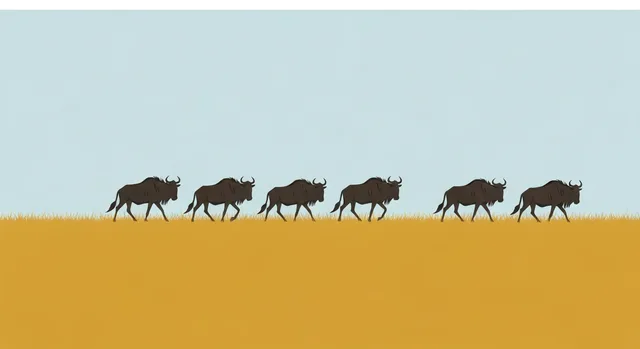
An ecosystem worth protecting
The Serengeti is not simply a beautiful place; it is one of the last functioning examples of a great savanna ecosystem operating at the scale it evolved at. Roughly 1.5 million wildebeest, hundreds of thousands of zebra and gazelle, and the full complement of African predators move across these plains in an annual migration that has continued for hundreds of thousands of years. That is extraordinarily rare. Almost everywhere else, fences, farms, roads and cities have broken the great animal movements that once shaped the continent. Here, against the odds, the system still works.
Conserving the Serengeti, then, is not about preserving a single species or a single view. It is about keeping a vast, interconnected machine running — the grass that depends on grazing, the grazers that depend on the rains, the predators that depend on the herds, the scavengers and the soils and the rivers that knit it all together. Pull out one thread and the whole tapestry frays. Understanding that is the starting point for understanding why everything from a poached elephant to a proposed road to a crowded river crossing carries weight far beyond itself.
World Heritage status and what it means
Serengeti National Park was inscribed as a UNESCO World Heritage Site in 1981, and it forms part of a larger Biosphere Reserve. That status is more than an honour. It is an international recognition that the Serengeti holds outstanding universal value — that its migration, its biodiversity and its ongoing ecological processes belong, in a sense, to all of humanity and deserve protection on those terms. It also brings a measure of scrutiny: major development proposals that could damage the property's integrity draw global attention and pressure from the World Heritage Committee and conservation bodies.
The park sits within a far larger protected landscape. To the southeast lies the Ngorongoro Conservation Area, itself a World Heritage Site, where people, livestock and wildlife share the land. To the north, across the Kenyan border, the Serengeti connects directly to the Maasai Mara National Reserve — the two are a single ecosystem split by a political line, and the migration crosses between them every year. Game reserves and controlled areas, such as Grumeti and Ikorongo to the west and Loliondo to the east, buffer the core park. Conservation here is therefore never about one park in isolation; it is about keeping this whole mosaic of protected and community lands connected and functioning.

The migration corridors: the ecosystem's lifeline
If there is one idea at the centre of Serengeti conservation, it is connectivity. The migration is not a loop that happens to fit inside the park — it spills across the park's boundaries into reserves, conservancies and community lands, following the rains wherever they fall. The herds need to move freely between the southern calving plains, the Western Corridor along the Grumeti, the far northern crossing country and the Mara beyond. Anything that severs those routes — a fence, a major road, a wall of settlement or unchecked agriculture — risks collapsing the migration that defines the ecosystem.
This is why proposals for hard infrastructure across the migration's path have drawn such fierce international concern over the years. A road or barrier in the wrong place would not just inconvenience the herds; ecologists warn it could fragment the population, cut grazing routes and trigger a cascade of decline through every species that depends on the migration. Keeping the corridors open — through land-use planning, community conservancies and the buffer reserves around the park — is arguably the most consequential conservation work in the whole system. Always check current developments via the park authority and reputable conservation organisations, as the situation evolves.
The pressures: poaching, conflict and development
The Serengeti faces a familiar set of overlapping threats. Poaching takes several forms: bushmeat poaching, often with wire snares set for wildebeest and other plains game, which kills indiscriminately and can maim animals that escape; and the targeting of high-value species, with elephants under pressure from the ivory trade and rhinos perennially at risk for their horn. Anti-poaching ranger patrols, intelligence work and community engagement are a constant, resource-hungry effort, and the results swing with the level of funding and political will behind them.
Around the park's edges, human–wildlife conflict is a daily reality. Growing human populations press against the boundaries; lions and other predators sometimes take livestock, elephants raid crops, and the people who lose animals or harvests understandably resent the wildlife responsible. Where communities bear the costs of living alongside dangerous animals but see few of the benefits, conservation becomes far harder. Schemes that channel tourism revenue and employment to local people — and that compensate or prevent losses — are central to easing this tension and giving communities a stake in the ecosystem's survival.
- Bushmeat snaring: indiscriminate wire snares set for plains game, a persistent and difficult-to-police threat.
- Ivory and rhino-horn poaching: targeting elephants and the few remaining rhinos for the illegal wildlife trade.
- Human–wildlife conflict: livestock predation and crop-raiding at the park edges, straining relations with neighbouring communities.
- Infrastructure and development: roads, fences and settlement that could fragment the migration corridors if poorly sited.
- Habitat pressure: expanding agriculture and land conversion around the buffer zones, narrowing the wildlife's room to move.
Tourism: pressure and lifeline at once
Tourism sits awkwardly at the centre of all this, because it is both a problem and a large part of the solution. On the pressure side, congestion is real: in peak season, popular sightings and the Mara crossing points can draw too many vehicles, off-road driving by careless operators scars the grass, and the footprint of lodges, airstrips and traffic accumulates. Too many people behaving badly can degrade the very wildness they came to see.
On the other side of the ledger, well-managed tourism is one of the strongest forces keeping the Serengeti intact. Park fees and concession payments fund rangers, anti-poaching work and park management. Lodges and camps employ thousands of Tanzanians and create a powerful economic argument for keeping the land wild rather than converting it to farmland or grazing. Conservancies and community-run areas around the park turn wildlife into a livelihood for the people who live alongside it. The goal is not less tourism but better tourism — lower-impact, well-distributed, and channelling more of its value to conservation and communities.
Climate and the long view
Underlying all of this is a changing climate. The migration is choreographed by the rains — the herds move where and when the rain falls and the grass greens. As rainfall becomes more variable and less predictable, the timing and routes of the migration may shift, and the calving and crossing windows that travellers plan around become harder to forecast. This is one reason every responsible guide treats migration timing as a long-term average, never a guarantee, and tells you to verify against recent conditions before you book.
Drought, more erratic rains and rising temperatures also stress the wider system — the rivers, the grazing, the predators at the top of the chain. Climate change is a threat no single park can solve alone, but a large, connected and well-managed ecosystem is far more resilient to it than a small, fragmented one. That, ultimately, is the strongest argument for keeping the Serengeti whole: a healthy, connected landscape is the best insurance the wildlife has against an uncertain future.
How a visitor can genuinely help
The good news is that thoughtful travellers are part of the solution, and the choices you make have real weight. Start before you even leave home: choose an operator and camps with a genuine, demonstrable conservation and community record — not just green marketing, but real investment in anti-poaching, employment, training and local partnership. Ask where your money goes. Reputable operators will tell you plainly.
In the field, behave impeccably. Keep your distance, stay quiet, never feed wildlife, never litter, and never pressure your guide to drive off-road or break the rules for a photograph. At a river crossing, hold back and give the herds room. Pay your park and conservation fees willingly — they are not a tax to resent but the direct funding of the protection you are benefiting from. And consider the wider trip: spending time and money in community conservancies, buying from local artisans, and supporting reputable conservation organisations all extend the benefit of your visit beyond the lodge gate.
- Choose operators and camps with a real, verifiable conservation and community track record.
- Behave well in the field: keep distance, stay quiet, no feeding, no littering, no off-road pressure.
- Give the herds room at a river crossing — restraint protects the spectacle.
- Pay park and conservation fees willingly; they fund rangers and anti-poaching directly.
- Support community conservancies, local employment and reputable conservation charities.
- Travel in shoulder seasons where you can, easing peak-season congestion on the park.
A landscape held in trust
It is easy to assume that somewhere as famous as the Serengeti is safe forever. It is not. Its survival is the result of constant, often underfunded effort by rangers, scientists, park authorities, communities and conservation organisations — and of decisions, made again and again, to keep the land connected and wild rather than to carve it up. Every traveller who comes here becomes, briefly, a stakeholder in that effort.
The romance of the Serengeti — the dust and the thunder of a crossing, the lion's roar carrying across the dark plain — is inseparable from its fragility. To witness it is a privilege, and the most fitting response to a privilege is care: to tread lightly, to give back, and to leave this extraordinary place as whole as you found it for the herds and the travellers who come after.

Related guides

Responsible Safari in the Serengeti
How to travel the Serengeti responsibly — choosing ethical operators and guides, viewing wildlife without disturbing it, reducing your footprint, supporting conservation and communities, and understanding the pressures this ecosystem faces. Honest, evergreen guidance to verify before you go.
Read guide
Wildlife in the Serengeti
The hub for Serengeti wildlife — the lions, leopards and cheetahs, the elephants and hippos, the wildebeest millions and the birds — with where to find each, when, and an honest sense of the odds.
Read guide
Serengeti Park Rules: How to Travel the Plains Responsibly
The rules that govern a Serengeti safari — staying on the roads, off-road restrictions, keeping your distance from wildlife, speed limits, gate hours, drones, litter and quiet, ethical viewing — and why they protect both the animals and the magic of the place.
Read guideMore in Wildlife
6
Big Cats in the Serengeti
A guide to the Serengeti's three great cats — lion, cheetah and leopard — where each is most likely, how their behaviour shapes a sighting, and why a patient vehicle and a good guide matter more than any guarantee.
Read guide
Birdwatching in the Serengeti
A traveller's guide to birding the Serengeti — the rollers, ostriches, raptors and wet-season migrants that fill the plains — and how to add birdwatching to a safari without losing the mammal focus.
Read guide
Black Rhino in the Serengeti
Honest expectations for seeing black rhino in the Serengeti — why sightings are rare, where the small protected population lives around the Moru Kopjes, and why the Ngorongoro Crater is often the better add-on for rhino.
Read guide
Buffalo in the Serengeti
Cape buffalo in the Serengeti — herd behaviour, the long rivalry with lions, why solitary old bulls demand respect, and why buffalo deserve more than a quick tick on the Big Five checklist.
Read guide
Camera Gear for a Serengeti Safari
A practical packing guide to camera gear for a Serengeti safari — lenses and bodies, batteries and cards, the all-important bean bag, dust protection, your phone, binoculars and how to pack it all for strict light-aircraft limits.
Read guide
Crocodiles in the Serengeti
Where the Serengeti's Nile crocodiles live, the role they play in the Grumeti and Mara River crossings, and how to watch the drama responsibly — with honest, no-guarantee expectations.
Read guide