
Western Corridor of the Serengeti
The Western Corridor is the Serengeti's long western arm reaching toward Lake Victoria — Grumeti River country, the migration's first water test, giant crocodiles and quieter, lower-crowd camps. When the west is worth the detour, and when it is not.

Photo: Nad Hemnani / Unsplash
- ✓The Western Corridor is the Serengeti's long western arm, running from the central plains toward Lake Victoria and threaded by the Grumeti and Mbalageti rivers.
- ✓It is the migration's first major water test of the year — the herds usually reach it around May to July, before the famous Mara crossings far to the north.
- ✓The Grumeti is home to some of Africa's largest crocodiles, which lie up through the dry months waiting for the herds to come down to the water.
- ✓Crowds are thinner here than in central Seronera or the peak northern crossing country, which is much of the corridor's quiet appeal.
- ✓Treat all migration timing as a 30-year average and verify the herds' likely position for your exact dates before you book — the season swings by weeks.
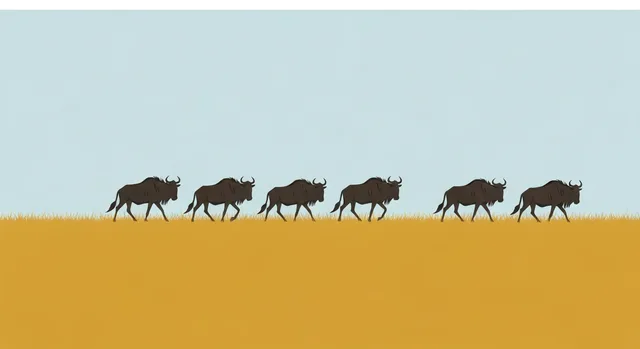
A river of grass reaching for the lake
Most first-time visitors picture the Serengeti as a single endless plain, but the park is really a set of distinct neighbourhoods, and the Western Corridor is the one that breaks the shape. It is a long, tapering arm of protected land that reaches west from the central park toward Lake Victoria, narrowing as it goes, hemmed by two rivers — the Grumeti to the north and the Mbalageti to the south — and a green-black ribbon of riverine forest that feels almost tropical against the surrounding gold.
That geography gives the corridor a mood all its own. Where Seronera is open and busy and the far north is remote and rolling, the west is intimate and watery, a place of wooded valleys, black-cotton soil that turns heavy in the rains, and long horizons that finally soften toward the largest lake in Africa. It is the part of the Serengeti that rewards the traveller who wants the migration's drama without the crush, and who is willing to plan their dates with a little care.
At a glance
Use this quick read to decide whether the Western Corridor belongs in your itinerary, then dig into the sections below for the detail. Everything here is evergreen — verify current park fees and camp availability with official sources and your operator close to travel.
- Where: the Serengeti's long western arm, running toward Lake Victoria, threaded by the Grumeti and Mbalageti rivers.
- Best for: the migration's first river crossings, giant Grumeti crocodiles, and quieter game viewing than the central or northern park.
- Best months (30-year average): roughly May to July, as the herds push west and north out of the central plains — verify for your exact dates.
- Getting there: by road from Seronera as part of a drive-in circuit, or fly-in via the corridor's airstrips.
- Style of trip: a quieter, lower-crowd leg that suits early-season travellers and photographers; less suited to a single August crossing-focused trip.
- Watch out for: heavy black-cotton tracks after rain, and a real chance the herds have already moved on if you come too late in the year.
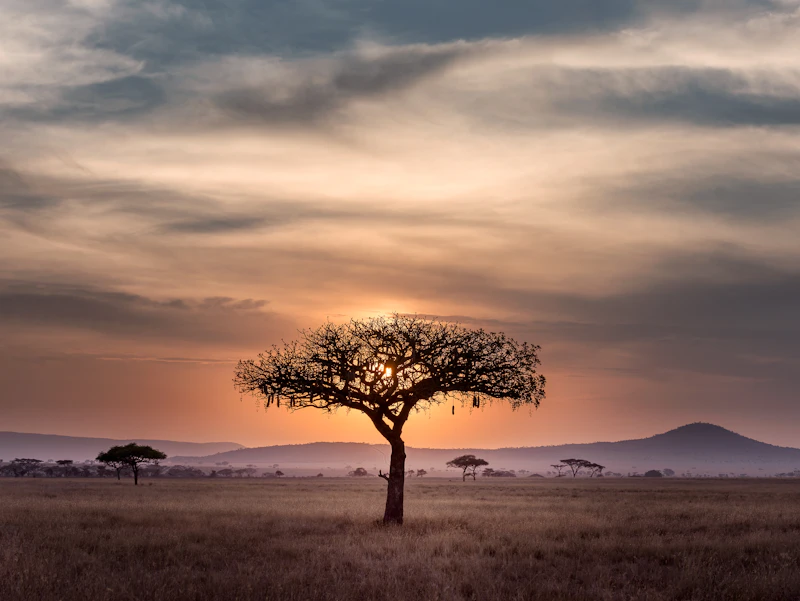
The migration's first water test
The Western Corridor's claim to fame is that it hosts the migration's first serious river drama of the year. After the southern calving season ends and the short-grass plains around Ndutu dry out, the roughly 1.5 million wildebeest, with their zebra and gazelle companions, drift west and north through the central Serengeti and funnel into the corridor. There they meet the Grumeti, and the long, tense negotiation between herd and water begins.
A Grumeti crossing is a different creature from the famous Mara crossing far to the north. The river is narrower and forest-lined, and the herds tend to cross in smaller, scattered groups at many points rather than piling into one great churning spectacle. The result is less of a single cinematic event and more of a days-long drama unfolding in pockets you have to be positioned for. It can be intensely rewarding, but it is genuinely harder to catch in the act, and no honest operator can promise it — crossings hinge on rain, grazing, river level and the herds' collective nerve.
When the herds reach the west
In a typical year — and the word typical is doing a lot of work here — the herds move into the Western Corridor around May, June and into July, before the leading edge pushes on toward the Mara River in the far north. That makes the corridor an early-to-mid-year proposition, a window that conveniently falls before the high-season crush descends on the northern crossing country.
Because the migration follows the rain rather than a calendar, that timing is a long-term average, not a schedule. An early or late season can shift the herds' arrival by a couple of weeks in either direction, and a corridor that is full of wildebeest in one June can be quiet the next. The single most useful thing you can do is verify the herds' likely position for your exact dates with your operator close to travel, rather than trusting a generic month-by-month chart — including ours.
- April–May: the long rains ease and the herds begin drifting west out of the central plains; tracks can still be heavy.
- May–June: the corridor fills as the herds reach the Grumeti and the river tension builds.
- June–July: the usual peak window, before the leading edge moves north toward the Mara.
- August onward: the bulk of the herds are typically gone north — come for resident wildlife and solitude, not crossings.

Giant crocodiles and the river's deeper draw
Even on days when no full crossing materialises, the Grumeti rewards patience. The river is famous for its crocodiles — among the largest on the continent — which spend the long dry months conserving energy in the river's deeper pools, waiting for the migration to arrive. Watching a colossal crocodile lie motionless in the dark water while a column of wildebeest hesitates on the bank above is its own slow, electric kind of spectacle.
The corridor's rivers and forests also support resident wildlife that has nothing to do with the migration. Hippo pods crowd the pools, crocodiles bask on the sandbars, and the gallery forest holds black-and-white colobus monkeys, a primate you will not see out on the open plains. Resident lions work the woodland edges, and the riverine thickets offer leopard country. Come for the herds, but stay alert to the river's permanent cast.
Lower crowds, and why that matters
One of the corridor's quiet selling points is space. In the central Seronera valley, a good leopard sighting can draw a queue of vehicles; at the peak Mara crossings, the banks can be lined with safari cars. The Western Corridor, by contrast, sees a fraction of that traffic. For travellers who came for wilderness as much as wildlife — and especially for photographers who want clean backgrounds and unhurried light — that solitude is worth a great deal.
The trade-off is that the corridor's appeal is seasonal and conditional. Outside the early-to-mid-year migration window, the west can feel genuinely quiet in the other sense, with the great herds gone and only resident wildlife to find. That is wonderful for some travellers and underwhelming for others. Be honest with yourself about which you are: if you want guaranteed density and a first-safari hit rate, central Seronera is the safer bet; if you want atmosphere, crocodiles and room to breathe in season, the corridor delivers.

Where to stay, and getting there
The Western Corridor has a modest scatter of lodges and camps, some permanent and some seasonal, positioned for the river and the migration's passage. As everywhere in the Serengeti, the decisive question is not the camp's photographs but its placement: confirm that it sits within reach of where the herds are expected for your dates, because a beautiful camp in the wrong spot misses the action entirely. Some of the most exclusive accommodation in the wider western ecosystem sits on the private Grumeti concessions, a distinct, higher-end world covered in the Grumeti guide.
Access is part of the corridor's character. It is reachable by road from central Seronera, which makes it a natural extension of a drive-in itinerary looping out from Arusha through Ngorongoro and the central park. It also has its own airstrips for fly-in travellers who want to skip the long road hours. Whichever way you come, plan for heavier going on the black-cotton tracks after rain, and let your operator route you with the conditions in mind.
Is the Western Corridor worth the detour?
Here is the honest verdict. If your dates fall in the early-to-mid year, if you value solitude and atmosphere over sheer density, and if the idea of the migration's first river drama — giant crocodiles, scattered crossings, a green and watery corner of the plains — appeals more than the famous Mara crush, then yes, the Western Corridor is worth the detour. It is one of the Serengeti's most distinctive sectors and one of its least crowded in season.
If, on the other hand, you are planning a short, crossing-focused trip in August or September, the corridor is the wrong place to point at — by then the herds have usually moved north, and your detour would be to quiet, beautiful, but largely empty country. As with every chapter of this ecosystem, the corridor's value is a function of your dates. Pick the event you most want to witness, verify where the herds are likely to be, and let that decide whether the west earns a place in your route.
Resident wildlife of the corridor
Set the migration aside for a moment, because the Western Corridor holds a year-round cast that rewards attention in any season. The rivers and their gallery forests create a richer mosaic of habitat than the open central plains, and that variety shows in the wildlife. Hippo pods crowd the deeper pools and grunt through the night; the famous crocodiles bask on the sandbars whether or not the herds have arrived; and in the dense riverine forest you may glimpse black-and-white colobus monkeys, a striking primate that simply does not occur out on the treeless grasslands.
The corridor's woodland edges and thickets are good country for big cats too. Resident lion prides work the river margins, and the tangled cover along the watercourses offers genuine leopard habitat for the patient and the lucky. Out on the more open ground, you will find the plains-game supporting cast — giraffe, topi, impala, buffalo and elephant among them — along with a rich birdlife drawn to the water. None of this is guaranteed, as ever in a wild place, but the corridor's blend of forest, river and plain gives a good guide plenty to work with even when the great herds are elsewhere.

Common questions about the Western Corridor
When does the migration reach the Western Corridor? Usually around May to July, as the herds move west and north out of the central plains — but treat this as a 30-year average and verify the likely position for your exact dates close to travel.
Will I see a river crossing here? Possibly. Grumeti crossings are scattered and unpredictable, more so than the Mara's. Go for the corridor experience and the crocodiles, and treat a full crossing as a fortunate bonus.
How is the Western Corridor different from the rest of the park? It is the Serengeti's watery western arm — narrower, greener and far quieter than Seronera or the northern crossing country, with riverine forest, hippo, crocodiles and colobus monkeys.
Is it crowded? No — it sees a fraction of the traffic of the central park or the peak Mara crossings, which is much of its appeal.
How do I get there? By road from central Seronera as part of a drive-in circuit, or by light aircraft to one of the corridor's airstrips.

Related guides

The Grumeti River Migration
The migration's first water test: Western Corridor timing, the Grumeti River's giant crocodiles, where to base yourself, and why a Grumeti crossing is a quieter, less predictable affair than the famous Mara.
Read guide
Grumeti: The Western Serengeti's River Country
A guide to Grumeti — the river, the wildlife and the exclusive private concessions on the Serengeti's western edge. Migration timing in the western ecosystem, giant crocodiles, and the luxury camps that draw travellers to this quiet corner.
Read guide
Serengeti Areas & Sectors Guide
A guide to the Serengeti's sectors — central Seronera, the southern Ndutu plains, the Western Corridor and Grumeti, the far north at Kogatende, plus Lobo and the Moru Kopjes — and how to choose the right one for your season and style.
Read guideMore in Park Areas
6
Best Serengeti Area for a First Safari
A first-timer's decision guide to the Serengeti's sectors — central Seronera, the southern plains, the Western Corridor and the far north — chosen by month, budget and what you most want to see, with the honest trade-offs.
Read guide
Eastern Serengeti Guide
A guide to the eastern Serengeti — the wide-open, kopje-dotted plains east of Seronera, why they are some of the best cheetah country in the park, the low vehicle density that defines them, and when the eastern side is worth it.
Read guide
Ikoma & Fort Ikoma: Edge-of-Park Value in the Western Serengeti
A guide to the Ikoma area and Fort Ikoma on the western edge of the Serengeti — gateway to the Western Corridor, with drive-in access, budget-friendly stays in the Ikoma Wildlife Management Area, night-drive options and honest caveats.
Read guide
Moru Kopjes Guide
A guide to the Moru Kopjes in the central-southern Serengeti — the dramatic granite outcrops famous for lions and rock art, one of the park's last rhino strongholds, and how Moru fits a central-southern game drive.
Read guide
Namiri Plains Guide
A guide to Namiri Plains in the eastern Serengeti — the open, kopje-dotted cheetah country east of Seronera, why it is one of Africa's great predator landscapes, how camps are positioned, and who should go east.
Read guide
Ndutu Safari Guide
Everything to know before a Ndutu safari — the calving heartland on the southern Serengeti edge, why it sits in the Ngorongoro Conservation Area rather than the national park, its off-road and fee implications, the best season, where to stay and how it fits a wider itinerary.
Read guide