
Ndutu Airstrip: Flying Into the Calving Plains
A full guide to Ndutu Airstrip — the fly-in gateway to the southern short-grass plains and calving season. How the light-aircraft hop from Arusha works, why it is a seasonal strip, the mobile camps it serves, and the boundary quirk worth knowing about.

Photo: Magdalena Kula Manchee / Unsplash
- ✓Ndutu is the door to the southern calving country — the short-grass plains on the Ngorongoro boundary where roughly half a million wildebeest are born in about three weeks.
- ✓It comes into its own in the calving window, broadly December to March and peaking around February — a 30-year average, so verify for your exact dates.
- ✓Unlike the year-round central strip, Ndutu is a seasonal proposition: it matters most when the herds blanket the plains, and the south is much quieter once they move on.
- ✓Many Ndutu camps are mobile, setting up for the season and packing down when the herds leave — and the area straddles a boundary that affects fees and rules.
- ✓Keep flight times, fares and park-fee figures to your operator and official sources — these change, so this page stays evergreen and points you to verify.
The calving plains, by air
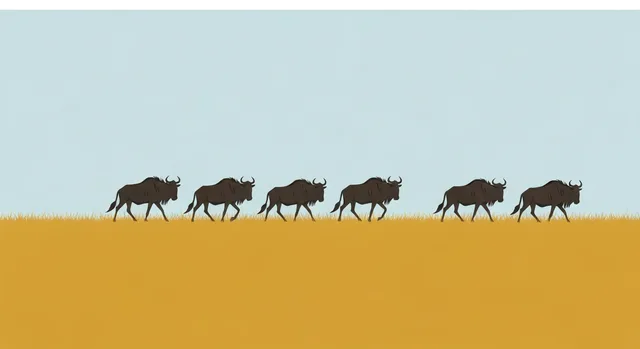
Ndutu sits at the southern edge of the ecosystem, on the boundary with the Ngorongoro Conservation Area, and its airstrip is the door to the calving country. The short-grass plains here — fed by mineral-rich volcanic ash from the Ngorongoro highlands — are some of the richest grazing in Africa, and the herds gather on them every year to give birth. The open, treeless ground lets the wildebeest see predators coming, and the new grass fuels the lactating mothers; in a window of roughly three weeks, around half a million calves arrive. When travellers fly in for this spectacle, Ndutu is very often the strip they use.
For visitors, calving season is a study in life and death on the plain, and the open country makes it the best window of the year for watching cheetahs hunt in the clear. Predators follow the food, so this is when lions, cheetahs and hyenas gather in numbers — raw, intense, unforgettable. Reaching the south by air drops you straight into that drama: you step off the plane onto the plains and are among the herds within a short transfer. The Ndutu airstrip is the threshold to the migration's most tender and most ferocious chapter at once.
At a glance: Ndutu Airstrip
A quick orientation before the detail. Everything here is evergreen — confirm current flight schedules, fees and camp specifics with your operator and official sources close to travel, and clarify the boundary's fee rules in advance.
- Where: the southern edge of the ecosystem, on the Ngorongoro Conservation Area boundary — the calving country.
- Role: the principal air gateway to the southern short-grass plains and their calving-season camps.
- Best for: calving season, the year's densest predator action, and the best window for cheetahs hunting in the open.
- Best months (30-year average): roughly December to March, peaking around February — verify for your exact dates.
- Getting there: a light-aircraft hop from Arusha or Kilimanjaro, often via other strips on the day's circuit.
- Baggage: soft duffel bags only, with firm weight limits — pack light and leave hard cases behind.
- Note: a seasonal strip; many camps here are mobile, and the boundary affects fees and rules — clarify with your operator.
How the light-aircraft hop works
Fly-in safaris to the Serengeti run on small turboprop aircraft along scheduled bush circuits, and a flight to Ndutu is one stop on those circuits rather than a private charter for most travellers. You will typically board at Arusha — reached in turn via Kilimanjaro International Airport — and the aircraft may touch down at one or two other strips on the way, dropping and collecting guests, before reaching Ndutu in the south. It is a milk-run by design, and that is part of its charm: you watch the plains and highlands unspool beneath you, and the hop that would have been a long road day becomes a scenic flight of around an hour or so.
Because these are scheduled light-aircraft services, the realities of small-plane travel apply in full. Baggage is restricted to soft duffel bags so they can be stowed in the aircraft's tight holds, and weight limits are firm and enforced — a safety matter, not a suggestion. Departure and arrival times can shift with demand, loads and weather, so transfer days need a little built-in flexibility, and you should confirm timings with your operator close to travel. On a guided fly-in trip a vehicle and guide meet your plane at the Ndutu strip and you are out among the herds in short order — which is the whole point of flying in.
A seasonal strip: when Ndutu matters
Ndutu is a seasonal proposition in a way the central strip is not. It matters most in the calving window — broadly December to March, peaking around February — when the herds blanket the southern plains, the predators gather, and the camps fill. This is the strip's reason for being: it exists to put travellers among the newborn calves and the cats that follow them, at the one time of year the south holds the migration's heart. Fly in during the window and you land into one of the great wildlife events on earth.
Outside that window the picture changes. As the short rains fade and the plains dry, the herds move on toward the centre and west, and the south grows quiet — beautiful still, but without the great concentrations that define it. The practical lesson is to treat Ndutu as a seasonal door rather than a year-round one: time your trip to the calving window, confirm which camps and the strip itself are operating for your dates, and verify the herds' likely position close to travel. As everywhere in this ecosystem, the December-to-March timing is a 30-year average, not a schedule — the herds follow the rains, not a calendar.
- December–March (30-year average): calving season, when the herds blanket the southern plains — peak around February.
- The densest predator action of the year, and the best window for cheetahs hunting in the open.
- Outside the window the south is quiet and the herds have usually moved toward the centre and west.
- Confirm which camps and the strip are operating for your dates — the south is a seasonal sector.
Mobile camps and the southern plains
The south's accommodation reflects its seasonal rhythm. Many of the camps that serve the Ndutu plains are mobile — light on the land, set up each year to sit close to the calving grounds, and packed down when the herds drift on. This is the migration-following style of safari at its purest: the camp moves to where the action is, so you wake among the herds rather than driving hours to reach them. Alongside the mobile camps sit a smaller number of more permanent properties near Ndutu, but the seasonal, movable camp is the signature of the calving sector.
That style shapes how you plan. Calving-season beds at Ndutu are limited and in sharp demand during the window, so the well-placed camps sell out far ahead — book early if February is your target. Mobile camps in particular are usually an easy transfer from the airstrip, since they are sited with the herds and the strip both in mind. Whichever you choose, keep camp and flight figures to your operator, since they change, and weigh a several-night stay over a rushed visit: the calving plains reward time, and the predator action unfolds on its own schedule.
The boundary quirk worth knowing
There is one detail about Ndutu that catches travellers out, and it is worth understanding before you book. The Ndutu area straddles the boundary between the Serengeti National Park and the Ngorongoro Conservation Area — two protected areas under different management, with their own fees and their own rules. The short-grass plains the herds use for calving sprawl across that line, which means a day's game drive, or even a camp's location, can involve both jurisdictions. In practice this affects park and conservation fees, and some activity rules, in ways your operator will factor into the trip.
None of this should put you off — it is simply something to clarify in advance rather than discover on arrival. Ask your operator how the fees work for your specific camp and itinerary, since the boundary means the cost structure here differs from a trip wholly inside the national park. Keep all fee figures to official sources, since they change and this page stays evergreen, and let your operator handle the permits. The reward on the other side of that small administrative wrinkle is the richest calving country in Africa, so the detail is well worth getting right.
Planning an Ndutu fly-in trip
A trip built around Ndutu follows a clear logic. Fix your southern nights first, in the December-to-March calving window and ideally around the February peak, and book them as far ahead as you can — the calving camps are limited and sell out early. Aim for several nights rather than a single rushed visit; the predator action unfolds on its own schedule, and patience on the open plains is richly rewarded. Then arrange the flights: a light-aircraft leg into Ndutu from Arusha or Kilimanjaro, with soft luggage only for the small planes, and a little flexibility built into your transfer days. Clarify the boundary's fee rules with your operator while you book.
From there, fold the south into a wider journey. Because Ndutu sits right on the Ngorongoro boundary, the calving plains pair naturally with the Crater — many travellers descend into Ngorongoro on the way in or out — and you can add central Seronera by light aircraft for resident big cats, with Tarangire on the road from Arusha and Zanzibar at the end. The same air network that brings you south stitches it all together. Keep park-fee and conservation-levy details to official sources, verify the herds' likely position for your exact dates close to travel, and let your operator weigh the routing. The discipline is simple: secure the right calving camp early, give yourself time, fly in, and let the plains deliver their drama.
Common questions about Ndutu Airstrip
Where is Ndutu Airstrip? At the southern edge of the ecosystem, on the boundary with the Ngorongoro Conservation Area — the door to the short-grass calving plains.
When should I fly into Ndutu? Roughly December to March, in the calving window, peaking around February — but treat this as a 30-year average and verify for your exact dates, as the south is quiet once the herds move on.
How do I get to Ndutu Airstrip? By light aircraft from Arusha or Kilimanjaro, usually on a scheduled bush circuit that may touch other strips on the way; a guide meets your plane on arrival.
Is Ndutu open all year? It is a seasonal sector. The strip and many camps matter most in the calving window and several camps here are mobile, so confirm which are operating for your dates.
Why does the boundary matter? Ndutu straddles the line between the national park and the Ngorongoro Conservation Area, which affects fees and some rules. Clarify how this works for your camp and itinerary with your operator.
What can I bring on the flight? Soft duffel bags only, within firm weight limits set by the light-aircraft operator. Confirm the current allowance with your operator before you travel.
Related guides

Ndutu Safari Guide
Everything to know before a Ndutu safari — the calving heartland on the southern Serengeti edge, why it sits in the Ngorongoro Conservation Area rather than the national park, its off-road and fee implications, the best season, where to stay and how it fits a wider itinerary.
Read guide
Where to Stay in Ndutu
Camps and lodges for the Ndutu calving season — seasonal canvas among the acacia woodlands and short-grass plains, plus the permit logic of the Serengeti–Ngorongoro boundary that runs straight through the calving grounds.
Read guide
Calving Season in the Serengeti (Ndutu)
Calving season on the southern Serengeti plains around Ndutu — when roughly half a million wildebeest are born in about three weeks, why it draws the densest predator action of the year, and how to plan a green-season safari around it.
Read guideMore in Getting There
6
Accessible Serengeti Safari Planning
How to plan an accessible Serengeti safari — adapted vehicles and transfers, level camps and bathrooms, airstrip and fly-in considerations, medical support and evacuation, and why a private, tailored trip is usually the key to travelling well with mobility or other needs.
Read guide
Arusha to the Serengeti
How to get from Arusha to the Serengeti — the overland drive through Ngorongoro, the light-aircraft fly-in, and the overnight-routing options — with the time, comfort and cost trade-offs of each.
Read guide
Bush Flight Luggage Rules for the Serengeti
How luggage works on a Serengeti safari — the strict soft-bag and weight rules for light bush aircraft, what counts toward your allowance, how to pack camera gear, and how the same bags ride in a safari vehicle.
Read guide
Driving to the Serengeti: Roads, Timing and the Long-Haul Reality
What driving to the Serengeti is really like — the road route from Arusha through Ngorongoro, gate timing, road conditions in the dry and the rains, vehicle choice, and why nearly everyone travels with an operator rather than self-driving.
Read guide
Drone Rules in the Serengeti: Why They're Restricted and What to Do Instead
Why drones are restricted in the Serengeti, why general visitors should not assume they can fly one, what a permit would realistically involve, and the better ways to capture sweeping aerial-style images of the plains — from a balloon flight to a long lens.
Read guide
Food & Drink on a Serengeti Safari
What eating and drinking on a Serengeti safari is really like — camp meals from budget to ultra-luxury, bush breakfasts and picnic lunches, sundowners and the bar, drinking water, and how camps handle dietary needs, allergies and children.
Read guide