
Southern Serengeti & Ndutu Camps
Seasonal camps on the southern Serengeti and Ndutu plains — where to sleep for the calving spectacle, the open short-grass plains, green-season predator action and easy access to the cheetah country of the south.

Photo: Dawn Westveld / Unsplash
- ✓The southern short-grass plains, around Ndutu on the Ngorongoro edge, are calving country — roughly December to March, with births usually peaking around February.
- ✓Camps here are mostly seasonal and mobile, pitched for the calving months and struck once the herds move on — that seasonality is a feature, not a flaw.
- ✓Calving brings the year's most intense predator action, and the open, near-treeless plains make this the best window for watching cheetahs hunt in the clear.
- ✓Much of the calving ground sits in the Ngorongoro Conservation Area rather than the park proper, which carries its own permit logic — verify with your operator.
- ✓Treat the season as a 30-year average: a good southern camp is placed for the herds' likely position, not a guaranteed date — verify your exact dates before booking.
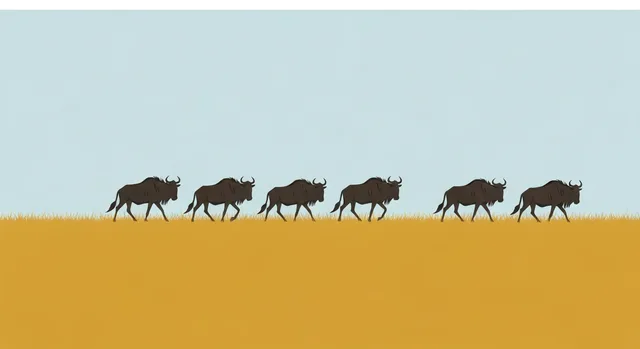
Calving country: why you sleep in the south
For a few weeks each year the southern Serengeti becomes the most dramatic nursery on earth. From roughly December to March the herds gather on the short-grass plains around Ndutu, on the Ngorongoro edge, and give birth — something like half a million wildebeest calves arriving in a window of only a few weeks, often peaking around February. The grass here is among the richest grazing in Africa, fuelled by mineral-laden volcanic ash from the highlands, and the open, near-treeless ground lets a wary mother see a predator coming. That is exactly why the herds choose it, and exactly why you sleep here if calving is what you have come to witness.
The spectacle is not only the births themselves but everything that follows the food. Predators concentrate on the calving grounds in numbers seen at no other time of year, so this is the most intense stretch of big-cat action in the Serengeti calendar — and because the plains are so open, it is the single best window for watching cheetahs hunt in the clear, across ground that hides nothing. It is raw, tender and brutal in equal measure, and for many travellers it is the most moving chapter of the whole migration.
This guide is about where to sleep to be among it. The short version: a seasonal or mobile camp on or near the southern plains around Ndutu, booked early, with enough nights to let the births and the hunts unfold on their own schedule. The honest framing holds throughout — calving is a process, not a scheduled show, and the timing is a long-run average to verify against your dates.
At a glance: the southern camps
A fast orientation before the detail. The south is dominated by seasonal and mobile camps that exist for the calving months — verify a specific camp's position and dates against the herds' likely whereabouts before you book.
- Best window: roughly December–March, with calving usually peaking around February.
- Why here: the richest short-grass grazing and open ground for a safe nursery — and the year's densest predator viewing.
- Camp style: mostly seasonal and mobile camps near Ndutu, pitched for calving and struck afterwards.
- Wildlife highlight: the best window for cheetahs hunting in the clear, plus intense lion and hyena action.
- Boundary note: much of the calving ground sits in the Ngorongoro Conservation Area, with its own permit logic — verify.
- Book early: the well-sited southern camps are limited and sell out furthest ahead.
Seasonal and mobile camps: how the south works
Accommodation in the south looks different from the permanent lodges of the central park, and for good reason. The plains are vast, shadeless and only seasonally full of life, so the camps that serve calving tend to be lightweight, serviced canvas operations — seasonal camps that open only while the herds are calving, and mobile camps that strike their tents and relocate once the wildebeest move on. That impermanence is the whole point: a camp that exists only when the herds are calving is a camp built to be among them, with the shortest possible morning transfer to the newborns and the hunts.
Staying in one is an elemental pleasure. Expect proper beds under canvas, en-suite bush bathrooms, communal meals cooked over a camp kitchen, and the unfiltered sound of the plains at night — sometimes including the herds grazing past in the dark. What you trade away is the swimming pool, the reliable power and the constant connectivity of a big lodge. For travellers who came to be close to the wild, those absences are features; for anyone who needs the comforts of a permanent property, a base on the Ngorongoro side or in the southern-central transition, with daily drives out to the calving grounds, is the gentler option.
Because the best southern sites are few and seasonal, they are among the first in the park to sell out — often a year or more ahead for the peak calving weeks. Book early, confirm in writing where the camp will be pitched for your exact dates, and pack soft duffel bags if you are flying in, since light aircraft enforce strict weight limits. As everywhere, weigh placement and style before price, and confirm current rates and fees with the operator rather than relying on figures that go stale.
- Seasonal camps: comfortable but open only for the calving months — strong for a calving-first trip.
- Mobile camps: serviced canvas that relocates with the herds, for the shortest transfer to the action.
- Want permanent comfort: base on the Ngorongoro side or the southern-central transition and drive out daily.
- Book early, confirm placement in writing, and pack soft bags for the strict light-aircraft weight limits.
Green-season predator action and open-plains cheetah
Calving falls in the green season — the lush, dramatic months when the short rains have greened the plains and the light turns cinematic — and that shapes both the wildlife and the experience. The concentration of vulnerable newborns draws lions, cheetahs, hyenas and jackals onto the calving grounds in extraordinary numbers, so a southern camp in this window offers the most intense predator viewing of the Serengeti year. You are likely to watch hunts that you would wait weeks to see elsewhere, played out against green grass and big skies.
The open ground is the south's signature gift to photographers and cat-lovers alike. Where the central park's bush can hide a sprinting cheetah, the southern short-grass plains hide nothing: this is the best place and time in the Serengeti to watch a cheetah hunt in the clear, from the first low stalk to the explosive chase. It is worth being honest that the green season also brings a real chance of afternoon storms and softer tracks underfoot, but for many travellers the trade — fewer crowds, lower rates, the most dramatic wildlife of the year — is one of the best-value propositions the Serengeti offers.
Booking a southern base well
Pulling it together: a great calving trip is mostly decided at the booking stage. Confirm in writing where your seasonal or mobile camp will be positioned for your exact dates, and cross-check that against where the herds usually calve for that month — a camp marketed for calving is only as good as its position when you arrive. Build in three or more nights so the births and the hunts have room to unfold, and book early, because the best southern sites are few and the first in the park to sell out.
Mind the boundary as you plan: much of the calving action happens in the Ngorongoro Conservation Area rather than the national park proper, which carries its own permit and access logic, so let your operator handle the paperwork and confirm what your itinerary covers. Pack soft bags for any fly-in, weigh placement and style before price, and verify current rates and fees with the operator and official sources. And, as everywhere in the Serengeti, walk away from any promise of a guaranteed spectacle — the operators worth trusting promise to place you well and give it time.
Who the south suits, and what to expect of the weather
A southern calving safari is not for everyone, and knowing whether it fits is half the planning. It rewards travellers who came for raw wildlife above polished comfort: photographers chasing cheetah hunts in the clear, wildlife-first couples and small groups happy in elemental canvas, and repeat safari-goers who have done the dry-season crowds and want the green season's drama and value instead. It suits anyone who finds the births and the hunts more moving than the famous river crossings — and many do, because the south offers tenderness and intensity in the same frame, often with far fewer vehicles around than the peak northern season.
It is a less natural fit for travellers who need the reliable comforts of a permanent lodge, who are uneasy with the simpler logistics of seasonal camps, or who cannot tolerate the chance of a wet afternoon. Families fall on both sides: the open plains and abundant wildlife thrill children, but the elemental camps and some minimum-age policies are worth checking before you book. The honest filter is the same as everywhere in the Serengeti — if comfort and certainty rank above proximity and drama for your group, lean towards a permanent base and drive in, or choose a different season entirely.
On the weather, set expectations clearly. Calving falls in the green season, so you should plan for warm days, dramatic skies and a genuine chance of afternoon storms, with tracks that can turn soft and heavy after rain. None of this spoils the experience — the rain is usually short, the light it brings is extraordinary, and the wildlife is at its most active — but it does mean packing for wet game drives and accepting that the green season is lusher and less predictable than the bone-dry north in August. For most travellers who choose the south, that trade is exactly the appeal.
- Strong fit: photographers, wildlife-first couples and groups, and repeat travellers who want green-season drama and value.
- Less ideal: comfort-first travellers, those uneasy with seasonal-camp logistics, and anyone who cannot tolerate a wet afternoon.
- Families: thrilling for children, but check elemental-camp comforts and any minimum-age policies first.
- Weather: warm days, dramatic skies and a real chance of short afternoon storms — pack for wet drives and softer tracks.
Related guides

Calving Season in the Serengeti (Ndutu)
Calving season on the southern Serengeti plains around Ndutu — when roughly half a million wildebeest are born in about three weeks, why it draws the densest predator action of the year, and how to plan a green-season safari around it.
Read guide
Southern Serengeti Plains Guide
The southern Serengeti plains are the open, treeless short-grass country on the Ngorongoro edge — the migration's calving grounds and the park's most cinematic emptiness. A guide to planning the southern plains: the seasonal herds, calving, the predators that follow, mobile camps and Ndutu-adjacent safari days.
Read guide
Where to Stay in Ndutu
Camps and lodges for the Ndutu calving season — seasonal canvas among the acacia woodlands and short-grass plains, plus the permit logic of the Serengeti–Ngorongoro boundary that runs straight through the calving grounds.
Read guideMore in Where to Stay
6
Accessible Lodges in the Serengeti
Accessibility-aware planning for a Serengeti safari — how to read a lodge for steps, showers, paths and vehicle transfers, where fly-in helps, what medical support exists in a remote park, and the questions to ask before you book.
Read guide
All-Inclusive Serengeti Lodges
What 'all-inclusive' actually means at a Serengeti lodge or camp, what tends to be quietly excluded, and how to read two quotes side by side so you are comparing the same trip — not the same word.
Read guide
Best Serengeti Camps for Big Cats
Where to stay in the Serengeti for the best lion, cheetah and leopard viewing — from the kopjes and river valleys of Seronera to the eastern plains and the calving grounds — and how to read placement, season and guiding before you book.
Read guide
Best Serengeti Camps for Photographers
How to choose a Serengeti camp if photography is the point of the trip — placement near the action, the right vehicle and bean-bag set-up, guides who think like photographers, and the logic of a private vehicle and the golden hours.
Read guide
Best Serengeti Safari Lodges & Camps
How to choose the best Serengeti lodge or camp — what separates a permanent lodge, a classic tented camp and a mobile camp, and how to match each to your sector, your season, your migration goal and your budget from honest value to ultra-luxury. The right lodge is the one in the right place for your dates.
Read guide
Best Small Camps in the Serengeti
Why the Serengeti's smallest camps — often just a handful of tents — deliver quieter guiding, attentive hosting and a more immersive sense of wilderness, who they suit, and how to choose and book an intimate camp well.
Read guide