
Serengeti in March
March in the Serengeti: late calving on the southern plains, building green-season storms, strong predator action and superb birding — all at softer prices, with the herds beginning to drift before the long rains.

Photo: Christin Noelle / Unsplash
- ✓March usually finds the herds still on the southern plains, with the tail end of calving and maturing calves swelling the numbers.
- ✓Green-season storms intensify towards month-end as the park moves toward the April–May long rains.
- ✓Predator action stays strong and the plains are lush, dramatic and quiet — with softer shoulder-season pricing.
- ✓Excellent birding: resident species in breeding colour join migrant flocks before they depart.
- ✓Timing is a 30-year average — late calving and the herds' first drift west vary with rainfall, so verify your dates.
Where the herds are in March
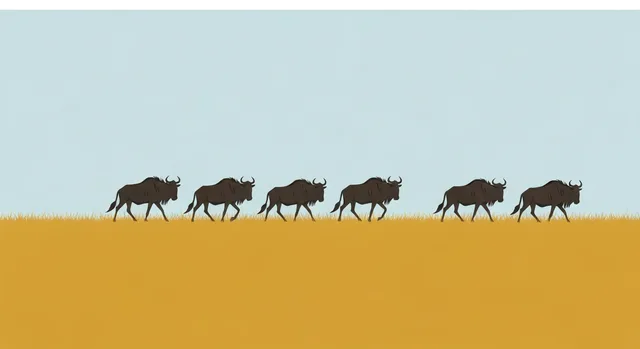
March is a month of transition. Through much of it the migration is still spread across the southern Serengeti and the Ndutu plains, where the last calves of the season are born and the earlier arrivals — now a few weeks old — bulk out the herds into vast, restless aggregations. The plains can be at their fullest, a horizon of grazing animals under big, building skies.
As the month wears on and the long rains approach, the herds begin to sense the change. In a typical year they start drifting north and west off the short-grass plains in the latter part of March, the opening move of the long clockwise loop toward the Western Corridor and, eventually, the far north. Exactly when this happens depends on the rains, so early March often still feels like calving season while late March can feel like the first stirrings of the move.
As always on this moving stage, confirm the live picture before you book. A camp perfectly placed in early March may find the herds have begun to shift by month-end.
March at a glance
A quick frame for planning. Set expectations with it, then check the migration's live position and current fees before committing.
- Migration: southern plains and Ndutu early; first drift north-west late month (30-year average; verify).
- Weather: green season deepening — warm days, more frequent storms toward month-end.
- Wildlife: maturing calves, strong predator action, lush plains; superb birding.
- Crowds & value: quiet, with shoulder-season rates softer than the dry-season peak.
- Best for: value-minded travellers, photographers, birders and those who love dramatic green-season skies.
- Best sector to base in: south / Ndutu, with central Seronera as a reliable all-rounder.
Weather and the turn toward the long rains
March sits at the hinge between the dry-ish green months and the long rains that define April and May. Early in the month you can still expect the green-season pattern — bright mornings, building afternoon cloud, short theatrical storms. By late March the rain tends to come more often and a little heavier as the long rains begin to set in, and some tracks start to soften.
The upside is everything the green season is loved for, dialled up: emerald plains, towering cloudscapes, soft light between showers, and far fewer vehicles than the peak. Pack layers for cool dawns, a proper light waterproof, and rain-and-dust protection for cameras. Mornings are usually your most reliable window for clear skies and active wildlife. None of this is guaranteed — but the odds of drama, both meteorological and wild, are high.
Birding and predators
March is one of the Serengeti's most rewarding birding months. The green season brings resident species into breeding plumage and full song, the plains and wetlands are busy, and the Palaearctic and intra-African migrants are still present in numbers before they head off — so you get the best of both worlds. Raptors, storks, rollers, bee-eaters and waterbirds all feature, and a good guide can turn a game drive into a serious bird list without ever losing sight of the cats.
And the cats are still very much the story. With herds and maturing calves concentrated on the southern plains for much of the month, predator action remains strong — lions on the herds, cheetahs hunting the open ground, hyenas working the edges. Sightings are never promised, but March keeps the high-density predator viewing of calving season alive while adding the birding bonus of the green months.
There is a particular pleasure to March game drives because the bush is at its most alive: insects and frogs are abundant after the rains, which fuels everything up the food chain, and the green flush keeps grazers — and therefore predators — on the open plains rather than dispersed in thick cover. A patient guide can string together a morning that takes in a cheetah on a termite mound, a flotilla of waterbirds on a seasonal pan, and a pride of lions sleeping off a kill, all under the towering skies that make the green season so photogenic.
Value, basing and combining
March is squarely shoulder season, which means quieter plains and softer rates than the July–October peak — one of the strongest value windows of the year for travellers happy to trade some rain for emptiness and drama. Base yourself near the herds in the south or at Ndutu early in the month; if you are travelling late March, keep your plans flexible in case the herds have begun to move, and lean on central Seronera as a dependable fallback.
March still combines well with the Northern Circuit. The Ngorongoro Crater and Tarangire slot naturally onto a drive-in route from Arusha, and a fly-in to a southern airstrip maximises plains time. Heavier tracks late in the month can make the road slower, so build in buffer. As ever, park fees, conservation levies and camp rates change over time — confirm current figures with official and operator sources rather than relying on quoted numbers.
Related guides

Serengeti Green Season Safari
Why the Serengeti's green season can be the best-value, most beautiful time to go — calving on the southern plains, dramatic light and storm skies, superb birding, lush landscapes, fewer vehicles and gentler rates.
Read guide
Birdwatching in the Serengeti
A traveller's guide to birding the Serengeti — the rollers, ostriches, raptors and wet-season migrants that fill the plains — and how to add birdwatching to a safari without losing the mammal focus.
Read guide
Budget Serengeti Safari
How to do the Serengeti on a budget without making unsafe, rushed or badly routed choices — where it is smart to economise, where it never is, and how to maximise days in the park for the fewest dollars.
Read guideMore in When to Go
6
Best Months for Serengeti Photography
Which Serengeti months deliver the photographs you want — dramatic light and dust, emerald plains, newborns, river crossings, big cats and fewer vehicles in your frame.
Read guide
Calving Season in the Serengeti
Calving season on the southern Serengeti plains around Ndutu — when roughly half a million wildebeest are born in about three weeks, why it draws the densest predator action of the year, and how to plan a green-season safari around it.
Read guide
Calving Season in the Serengeti (Ndutu)
Calving season on the southern Serengeti plains around Ndutu — when roughly half a million wildebeest are born in about three weeks, why it draws the densest predator action of the year, and how to plan a green-season safari around it.
Read guide
Calving Season vs River Crossings
Two faces of the Great Migration: the southern Ndutu calving in the green months, and the northern Mara crossings in the dry. Decide between them by wildlife, budget, crowds, predictability and the kind of drama you want.
Read guide
Christmas & New Year in the Serengeti
How to plan a Christmas or New Year safari in the Serengeti — green December plains, gathering herds, premium festive camps, family-friendly logistics and the flights that make a holiday trip work. Romantic, festive and worth booking early.
Read guide
Great Migration Planning Mistakes
The planning mistakes that make travellers miss the herds, overspend, or book the wrong Serengeti sector — and how to avoid each one so your dates, your camp and the migration actually line up.
Read guide