
Serengeti in July
July is when the Serengeti turns north and the Mara crossings begin. Peak dry season opens in earnest: dust, demand and drama in equal measure, with the year's most coveted spectacle starting to play out at Kogatende.

Photo: Husha Bilimale / Unsplash
- ✓July is high dry season — clear skies, thinning bush, wildlife concentrated on water, and the easiest game viewing of the year.
- ✓On a 30-year average the leading edge of the migration reaches the far north this month, and the first Mara River crossings around Kogatende become possible — though never schedulable.
- ✓Demand peaks: northern camps are scarce and book out far ahead, so July is a year-in-advance month for the best beds.
- ✓Expect dust, hard light and cold dawns; the trade-off is reliable, dense wildlife and the season's signature river drama.
- ✓No ethical operator can promise a crossing on a given day — give yourself several nights in the north to weight the odds.
The month everyone pictures
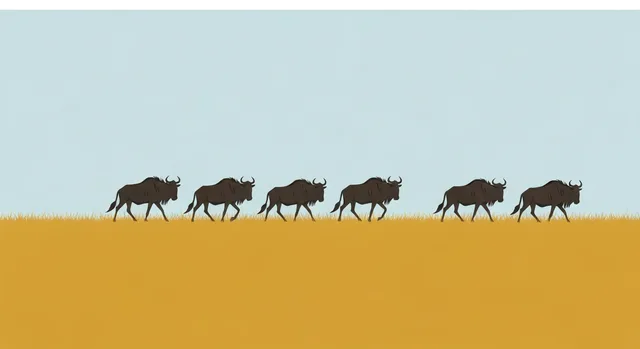
July is the Serengeti of the imagination: golden plains under an enormous dry sky, herds strung to the horizon, and the first churning crossings of the Mara River. The long dry season is fully open now, which means the grass is short and pale, the bush has thinned, and animals draw tight around the remaining water. For sheer density and ease of game viewing, few months rival it.
It is also the month the world arrives. July marks the start of peak season, when northern Tanzania's lodges fill and the most desirable camps near the river sell out a year ahead. The reward for the crowds and the cost is real: this is when the migration's most cinematic chapter begins to unfold, and when your odds of witnessing it climb sharply.
Where the herds usually are in July
By July the migration has generally turned north. After moving west through the Grumeti in June, the herds push up toward the far north of the park, where the Mara River cuts the crossing country around Kogatende. The leading columns often reach the river this month, and the first crossings — wildebeest piling on the banks, hesitating, then pouring into crocodile-dark water — become possible.
Hold the timing loosely. These are 30-year averages, and the herds answer to grazing and rainfall, not the calendar; a slow year can leave the bulk of the migration still strung between the Western Corridor and the north in early July. Peak crossing drama is usually August, with July as the building wave. If a crossing is your single must-see, base yourself in the north for several nights and accept the wait as part of it. Verify the current herd position with your operator before you commit.
- Most likely sector: central-to-northern Serengeti, with the leading edge reaching the Mara River.
- Possible event: first Mara crossings at Kogatende — unpredictable, never guaranteed.
- Resident lions, leopards and cheetahs around Seronera reward those who stay central.
Weather, crowds and the cost of July
July weather is classic dry season: bright, rainless days, cold dawns that bite in an open vehicle, and a fine, persistent dust that coats everything by midday. Pack warm layers for early game drives, sun protection for the harsh high-altitude light, and protection for camera gear against the dust. The light is hard at noon but turns golden and forgiving early and late — the hours the cats hunt.
The catch is demand. July is one of the busiest and most expensive stretches of the Serengeti year, and the squeeze is sharpest in the limited northern camps near the river. Vehicles cluster at popular crossing points, and the best beds vanish a year out. The way to enjoy July rather than fight it is to book early, travel with a patient guide who knows the quieter access routes, and weight your nights toward the action rather than rushing a single day in the north.

Which region and camp to base in
For a July trip built around the migration, the answer is the far north — but the choice is more nuanced than picking the most expensive camp. On the long-run average the leading edge reaches the Mara River around Kogatende this month, so a northern camp near the river places you closest to the building crossings. Mobile and seasonal camps positioned for the season sit nearest the action and move as the herds shift; permanent northern lodges offer more comfort with a slightly longer reach to the crossing points. If your dates are fixed and a crossing is the goal, weight your nights heavily toward the north — several nights near the river beats a single rushed day, because the spectacle is unscheduled and you are buying chances, not certainties.
There is a strong case for not putting every night in the north, though. The central Seronera sector holds some of the park's best resident lions, leopards and cheetahs year-round, so a couple of central nights make excellent insurance against a quiet crossing stretch and add genuine variety. A common, well-balanced July shape is a central leg for dependable big cats followed by a northern leg for the river — or the reverse. Because July opens peak season, the limited northern camps are scarce and sell out far ahead, so book the beds and any light-aircraft seats first and build the rest of the route around them.
- Northern camps near Kogatende: closest to July's building Mara crossings.
- Mobile/seasonal camps: positioned for the season and move with the herds.
- Central Seronera: reliable resident big cats as insurance against a quiet crossing day.
- A balanced shape: pair a central leg with a northern leg for variety and odds.
- Northern beds are scarce in July — book them and any flights first, far ahead.
Who July suits — and what to manage
July suits travellers for whom the Mara crossings are the whole point and who are prepared to book early and pay peak-season rates to weight the odds. It also rewards anyone who wants the deep dry season's reliable, dense general game viewing — short pale grass, thin bush and wildlife pinned to water make for some of the easiest sightings of the year, quite apart from the river. If you can travel only in the European-summer window, July delivers the Serengeti of the imagination, with the crucial caveat that the spectacle is a matter of luck rather than schedule.
Managing expectations matters most in July because the stakes feel so high. No ethical operator can promise a crossing on a given day — the herds cross when grazing, weather and collective nerve align, which can mean dawn, dusk or not at all — so the honest defence is several nights in the north, not optimism, and July often plays as the building wave before August's peak. Manage the crowds too: popular crossing points can hold a line of vehicles, so a patient guide who knows quieter access routes earns their keep. Expect cold dawns, hard light and persistent dust; pack warm layers and protect camera gear. And keep park fees, gate hours and conservation charges to current official sources — Tanzania National Parks (TANAPA) and your operator — rather than figures that date.
- Best for: crossing-focused travellers who book early and want dense dry-season game.
- Manage: crossings are weather-driven — likely-building in July, never scheduled.
- Crowds peak at popular viewpoints; a patient, knowledgeable guide helps most.
- Expect cold dawns, hard light and dust — warm layers and gear protection.
- Confirm current fees and gate hours with TANAPA and your operator, not fixed quotes.
Planning a July safari
For a July trip built around the crossings, the north is where you want to sleep. Mobile and seasonal camps near Kogatende place you closest to the river; a fly-in via Arusha to the northern airstrips saves the long overland hours and buys precious game-viewing time in a short window. If your dates are fixed and a crossing is the goal, more nights beats more sectors — give the herds time to perform.
If the crowds and prices give you pause, consider shading later into September, when the north stays strong but the pressure eases. Either way, July pairs naturally with the rest of the Northern Circuit: many travellers fly north for the crossings, then drop down to Ngorongoro and the central plains, or finish on the beaches of Zanzibar. Book the scarce parts — northern camps and flights — first, and build the rest around them.
Related guides

Mara River Crossings in the Serengeti
How to plan a Northern Serengeti river-crossing safari without false promises — when the Mara crossings happen at Kogatende, why timing is luck, where to stay, and how to watch with good wildlife etiquette.
Read guide
Northern Serengeti & Kogatende Guide
The complete guide to the Northern Serengeti — the Mara River, Kogatende, Lamai and the remote crossing country worth the flight. Dry-season migration timing, quieter game drives, where to stay, and how to plan a trip around the river.
Read guide
Where to Stay for the Mara River Crossings
The best Northern Serengeti camp areas for a chance at the Mara River crossings — Kogatende and the Lamai wedge — with honest trade-offs in distance, access, crowds and budget, and why timing is luck rather than a schedule.
Read guideMore in When to Go
6
Best Months for Serengeti Photography
Which Serengeti months deliver the photographs you want — dramatic light and dust, emerald plains, newborns, river crossings, big cats and fewer vehicles in your frame.
Read guide
Calving Season in the Serengeti
Calving season on the southern Serengeti plains around Ndutu — when roughly half a million wildebeest are born in about three weeks, why it draws the densest predator action of the year, and how to plan a green-season safari around it.
Read guide
Calving Season in the Serengeti (Ndutu)
Calving season on the southern Serengeti plains around Ndutu — when roughly half a million wildebeest are born in about three weeks, why it draws the densest predator action of the year, and how to plan a green-season safari around it.
Read guide
Calving Season vs River Crossings
Two faces of the Great Migration: the southern Ndutu calving in the green months, and the northern Mara crossings in the dry. Decide between them by wildlife, budget, crowds, predictability and the kind of drama you want.
Read guide
Christmas & New Year in the Serengeti
How to plan a Christmas or New Year safari in the Serengeti — green December plains, gathering herds, premium festive camps, family-friendly logistics and the flights that make a holiday trip work. Romantic, festive and worth booking early.
Read guide
Great Migration Planning Mistakes
The planning mistakes that make travellers miss the herds, overspend, or book the wrong Serengeti sector — and how to avoid each one so your dates, your camp and the migration actually line up.
Read guide