
Serengeti in September
September keeps the Northern Serengeti at full strength — strong river drama and superb game viewing — while the August crush eases. Dry, clear light, the herds still in the north, and a little more room to breathe.

- ✓September keeps the migration in the Northern Serengeti on a 30-year average, with Mara crossings still very possible around Kogatende.
- ✓Crowds and pressure ease from the August peak, making this many guides' favourite month for the crossing country.
- ✓Deep dry season continues: clear skies, thin bush, concentrated wildlife and beautiful low-angle light.
- ✓Crossings remain a matter of luck — never schedulable — so several nights in the north still beats a single rushed day.
- ✓A strong shoulder of peak season: much of August's wildlife with a little more value and space.
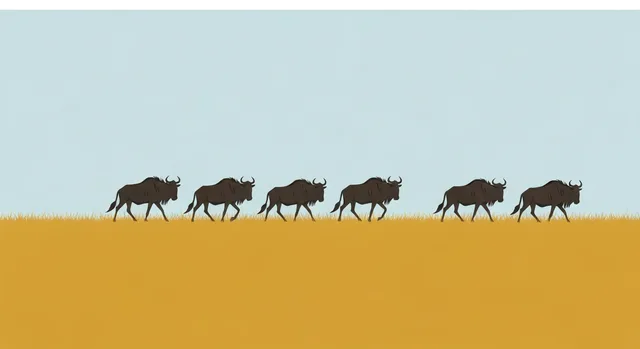
The connoisseur's crossing month
September is the month seasoned safari-goers quietly prefer. The Northern Serengeti is still full of herds, the Mara River still produces crossings, and the deep dry season still delivers thin bush and concentrated wildlife — but the absolute crush of August has begun to ease. Vehicles thin a little at the crossing points, the best camps loosen their grip, and the whole experience breathes more freely without losing the drama.
The light helps too. By September the dust and haze can soften the long views into something golden and cinematic, and the cool, dry mornings make for comfortable, clear-skied game drives. For travellers who want the northern spectacle without standing shoulder to shoulder for it, September is a sweet spot — strong on action, kinder on crowds.
Where the herds usually are in September
On the long-run average, September keeps the migration concentrated in the Northern Serengeti, with the herds moving back and forth across the Mara River around Kogatende and over the Kenyan border as grazing and rain dictate. Crossings remain a real prospect throughout the month — sometimes more relaxed than August's frantic surges, but no less thrilling when columns commit to the water.
The usual honesty applies: these positions are 30-year averages, and a particular year's rainfall can pull the herds north sooner or hold them later. Crossings cannot be scheduled by anyone — they hinge on the herds' collective nerve and the weather. Give yourself several nights in the north to weight the odds, and verify the live herd position with your operator before committing to dates. The reward for patience in September is often a quieter front-row seat than the month before.
- Most likely sector: Northern Serengeti and Kogatende, on and around the Mara River.
- Likely event: ongoing Mara crossings — still luck, never a guarantee.
- Excellent general game viewing as the deep dry season pins wildlife to water.
Weather and what to expect
September weather is reliably dry: bright, rainless days, cold dawns on the open plains, and the persistent fine dust of late dry season. The bush is at its thinnest, which makes spotting easier across the board — cats on the kopjes, elephants at the rivers, plains game strung across the gold. Pack warm layers for early drives, sun protection for the strong high-altitude light, and care for camera gear against the dust.
As a shoulder of peak season, September usually offers a touch more availability and value than August without a meaningful drop in wildlife. The northern camps are still in high demand and still worth booking well ahead, but the pressure is real rather than frantic. It is a fine month for a first crossing trip and an even finer one for a return visitor who knows to trade a little headline drama for a lot more space.
Which region and camp to base in
September keeps the north at the centre of the picture, so the basing logic mirrors August with a little more breathing room. On the long-run average the migration is still concentrated around Kogatende and the Mara River, so a northern camp near the crossing country gives you the closest reach to the action. Mobile and seasonal camps positioned for the season sit nearest and move as the herds drift back and forth across the river; permanent northern lodges trade a touch of proximity for comfort. The same rule applies as in the peak month — weight your nights toward the north, because crossings are unscheduled and time near the river is what improves your odds.
The September advantage is availability. As a shoulder of peak season it usually offers a little more room and value than August without a meaningful drop in wildlife, so you have more choice of camp and a slightly gentler rate — though the best northern beds are still in high demand and still worth booking well ahead. A central Seronera leg remains a smart insurance addition, with its reliable resident big cats guarding against a quiet crossing stretch and adding variety. Many guides quietly rate September as the best balance of the crossing year: strong action, beautiful light, and noticeably more space than the month before.
- Northern camps near Kogatende: closest to September's ongoing crossings.
- Mobile/seasonal camps: positioned for the season and move with the herds.
- Central Seronera: reliable resident big cats as insurance and variety.
- More availability and value than August, but book northern beds well ahead.
- Weight nights toward the north — time near the river improves the odds.
Who September suits — and what to manage
September suits the traveller who wants the northern spectacle without the absolute crush of August — return visitors who know to trade a little headline drama for a lot more space, first-timers who would rather have a quieter front-row seat, and photographers drawn to the golden, slightly hazy late-dry-season light. It rewards anyone who values the deep dry season's reliable general game viewing, with thin bush and concentrated wildlife making sightings easy across the board. If your dates are flexible and August's prices and crowds give you pause, September often delivers much of the same wildlife with a kinder edge.
The expectations to manage are the familiar ones, softened only slightly. Crossings still cannot be scheduled — they hinge on the herds' nerve and the weather, and September's surges are sometimes more relaxed than August's frantic ones but no less unpredictable — so several nights in the north remain the honest way to weight the odds. Crowds are real but rarely frantic; a patient guide who knows quieter access still helps. Expect cold dawns, strong high-altitude light and persistent dust; pack warm layers and protect camera gear. And keep park fees, gate hours and conservation charges to current official sources — Tanzania National Parks (TANAPA) and your operator — rather than fixed figures.
- Best for: space-minded return visitors, first-timers and light-chasing photographers.
- Manage: crossings are weather-driven — still very possible in September, never scheduled.
- Crowds ease from August but the best northern camps still need early booking.
- Cold dawns, strong light, dust — warm layers and camera-gear protection.
- Check current fees and gate hours with TANAPA and your operator, not fixed quotes.
Planning a September safari
Build a September trip around nights in the north. Mobile and seasonal camps near Kogatende place you closest to the Mara crossings, and a fly-in via Arusha to the northern airstrips saves the long overland hours, buying time for the patient waits that crossings reward. As ever, more nights in one strong sector beats spreading thin across many.
September also pairs beautifully with the rest of the Northern Circuit and beyond — fly north for the river, drop to the Ngorongoro Crater and the central plains for contrast, then perhaps finish on the warm sand of Zanzibar. If you want the northern action with a softer edge than August, this is the month to choose; book the scarce northern beds and flights first and arrange the rest around them.

Related guides

Northern Serengeti & Kogatende Guide
The complete guide to the Northern Serengeti — the Mara River, Kogatende, Lamai and the remote crossing country worth the flight. Dry-season migration timing, quieter game drives, where to stay, and how to plan a trip around the river.
Read guide
Mara River Crossings in the Serengeti
How to plan a Northern Serengeti river-crossing safari without false promises — when the Mara crossings happen at Kogatende, why timing is luck, where to stay, and how to watch with good wildlife etiquette.
Read guide
Serengeti Dry Season Safari
What the dry season means for a Serengeti safari — the famous Mara River crossings, the easiest game viewing of the year as wildlife concentrates around water, plus the realities of dust, crowds, premium prices and early-booking camps.
Read guideMore in When to Go
6
Best Months for Serengeti Photography
Which Serengeti months deliver the photographs you want — dramatic light and dust, emerald plains, newborns, river crossings, big cats and fewer vehicles in your frame.
Read guide
Calving Season in the Serengeti
Calving season on the southern Serengeti plains around Ndutu — when roughly half a million wildebeest are born in about three weeks, why it draws the densest predator action of the year, and how to plan a green-season safari around it.
Read guide
Calving Season in the Serengeti (Ndutu)
Calving season on the southern Serengeti plains around Ndutu — when roughly half a million wildebeest are born in about three weeks, why it draws the densest predator action of the year, and how to plan a green-season safari around it.
Read guide
Calving Season vs River Crossings
Two faces of the Great Migration: the southern Ndutu calving in the green months, and the northern Mara crossings in the dry. Decide between them by wildlife, budget, crowds, predictability and the kind of drama you want.
Read guide
Christmas & New Year in the Serengeti
How to plan a Christmas or New Year safari in the Serengeti — green December plains, gathering herds, premium festive camps, family-friendly logistics and the flights that make a holiday trip work. Romantic, festive and worth booking early.
Read guide
Great Migration Planning Mistakes
The planning mistakes that make travellers miss the herds, overspend, or book the wrong Serengeti sector — and how to avoid each one so your dates, your camp and the migration actually line up.
Read guide