
Serengeti in November
November is the green turn: the short rains break, the plains flush emerald almost overnight, and the herds swing south again. A quieter, better-value month of dramatic skies and renewal — with weather you plan around rather than fear.

Photo: Wolfgang Hasselmann / Unsplash
- ✓November usually brings the short rains, which break the dry season and turn the plains green within days on a 30-year average.
- ✓The herds generally begin or continue their southward swing this month, drifting back through the central Serengeti toward the southern plains.
- ✓Showers tend to be short afternoon storms rather than all-day rain, so morning game drives are often unaffected.
- ✓Crowds thin and rates ease from the dry-season peak, making November a strong-value, low-season month.
- ✓Treat all migration timing as long-run averages — the exact arrival of the rains, and the herds, swings by a couple of weeks either way; verify with your operator.
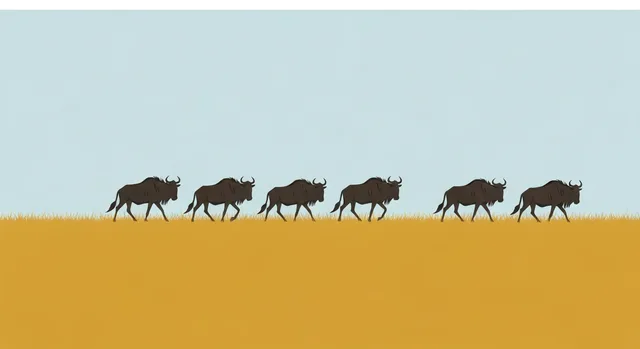
The green turn
November is the month the Serengeti exhales and turns green. After the long dry season, the short rains usually break sometime this month, and the change is fast and theatrical: parched golden plains flush to a vivid, impossible emerald within days, dust gives way to washed-clean air, and the whole ecosystem seems to reset. It is one of the most quietly beautiful times to be on the plains, and one of the least crowded.
There is romance in November's renewal that the headline crossing months cannot match. Towering build-up clouds pile over the horizon, late light slants gold between showers, and the bush hums with new life as resident herds and returning wildebeest spread across freshening grass. For travellers willing to trade certainty for atmosphere, space and value, the start of the green season is a rewarding secret.
Where the herds usually are in November
On the long-run average, November marks the migration's southward swing. As the short rains green the southern plains, the herds that spent the dry season in the north generally begin moving back down through the central Serengeti, heading for the nutrient-rich short-grass country around Ndutu where they will eventually gather to calve. Early in the month large numbers can still be scattered in the north and centre; by late November the leading edge is often well on its way south.
The usual honesty applies, and matters more in a transitional month: these are 30-year averages, and the precise timing depends entirely on when and where the rains fall. A late break can hold the herds north for longer; an early, even rain can pull them south fast. There are no river crossings to chase now — November is about following the green flush. If you want to be among the moving herds, a central or southern base gives you the best odds, but verify the live picture with your operator before booking.
- Most likely pattern: a southward drift from the north and centre toward the southern plains.
- Driver: the short rains greening the Ndutu short-grass country, pulling the herds down.
- No Mara crossings this month — the spectacle is renewal and movement, not the river.
Weather, light and what to pack
November weather is defined by the short rains, but the word 'rains' overstates it for most travellers. These are typically short, sharp afternoon storms — an hour of drama and downpour — rather than the all-day grey of the long rains in April and May. Mornings often dawn clear and washed-clean, which is exactly when you want to be out on a game drive; the storms tend to build through the heat of the day and clear by evening. The light between showers is some of the most cinematic of the year.
Pack for variety: light layers for cool, fresh mornings, a packable rain shell, and footwear that copes with the odd muddy track. Protect camera gear against sudden showers and the dust that lingers early in the month before the rains fully set in. Some tracks can become heavier going after rain, so a capable guide and vehicle earn their keep. The reward for a little weather flexibility is a green, glowing park with a fraction of the dry-season traffic.
It is worth understanding why November feels so different from the long rains of April and May. The short rains are exactly that — short — and they tend to arrive in localised bursts that pass quickly and leave the air sparkling. Days remain warm, the migratory birds arrive in force as the wet season opens, and the plains come alive with wildflowers and insects that feed a whole chain of life. For birdwatchers especially, November is a quietly brilliant month, with Eurasian migrants joining the resident species and the wetlands filling. The greenery also disperses some resident game more widely than the concentrated dry season, so a patient approach and a good guide matter — the wildlife is there, simply spread across a more generous, living landscape.

Planning a November safari
November rewards travellers who value space and value over guaranteed spectacle. With the dry-season peak over, demand and rates ease, availability opens up, and you can have kopjes and plains closer to yourself. Because the herds are on the move south, a central Seronera base keeps you flexible while a southern or Ndutu-leaning camp positions you ahead of the migration as it settles toward calving country. Mobile camps that follow the herds come into their own as the season turns.
As a green-season month, November combines beautifully with the rest of the Northern Circuit — pair the renewed plains with the Ngorongoro Crater and Tarangire, or finish on Zanzibar's warm sand. For travellers weighing the calendar, November offers a clear trade: a little less certainty about exactly where the herds are, in exchange for emerald plains, dramatic skies, low-season value and a park that feels gloriously uncrowded.
One practical note on the month's two halves. Early November can still feel like a continuation of the late dry season — dusty, hot, with the rains not yet fully broken and herds potentially still scattered northward. By the back half of the month the green flush is usually well established and the southward movement clearer. If your dates are flexible, leaning a little later in November often catches the more dramatic greening and the more decisive herd movement. Either way, build in a margin of patience: the green season rewards travellers who slow down, watch the light, and let the renewed plains reveal themselves rather than racing from sighting to sighting.

Related guides

Serengeti Green Season Safari
Why the Serengeti's green season can be the best-value, most beautiful time to go — calving on the southern plains, dramatic light and storm skies, superb birding, lush landscapes, fewer vehicles and gentler rates.
Read guide
Lobo Serengeti Guide
A guide to the Lobo area of the northern-central Serengeti — its hills, woodlands and granite kopjes, the return-migration possibilities that make it a strategic October–November base, and how Lobo fits a northern itinerary.
Read guide
Mobile Camps in the Serengeti
How seasonal mobile camps follow the migration around the Serengeti, what staying in one is really like, and who should choose canvas-that-moves over a permanent lodge.
Read guideMore in When to Go
6
Best Months for Serengeti Photography
Which Serengeti months deliver the photographs you want — dramatic light and dust, emerald plains, newborns, river crossings, big cats and fewer vehicles in your frame.
Read guide
Calving Season in the Serengeti
Calving season on the southern Serengeti plains around Ndutu — when roughly half a million wildebeest are born in about three weeks, why it draws the densest predator action of the year, and how to plan a green-season safari around it.
Read guide
Calving Season in the Serengeti (Ndutu)
Calving season on the southern Serengeti plains around Ndutu — when roughly half a million wildebeest are born in about three weeks, why it draws the densest predator action of the year, and how to plan a green-season safari around it.
Read guide
Calving Season vs River Crossings
Two faces of the Great Migration: the southern Ndutu calving in the green months, and the northern Mara crossings in the dry. Decide between them by wildlife, budget, crowds, predictability and the kind of drama you want.
Read guide
Christmas & New Year in the Serengeti
How to plan a Christmas or New Year safari in the Serengeti — green December plains, gathering herds, premium festive camps, family-friendly logistics and the flights that make a holiday trip work. Romantic, festive and worth booking early.
Read guide
Great Migration Planning Mistakes
The planning mistakes that make travellers miss the herds, overspend, or book the wrong Serengeti sector — and how to avoid each one so your dates, your camp and the migration actually line up.
Read guide